-
by sayum
24 August 2026 3:22 PM







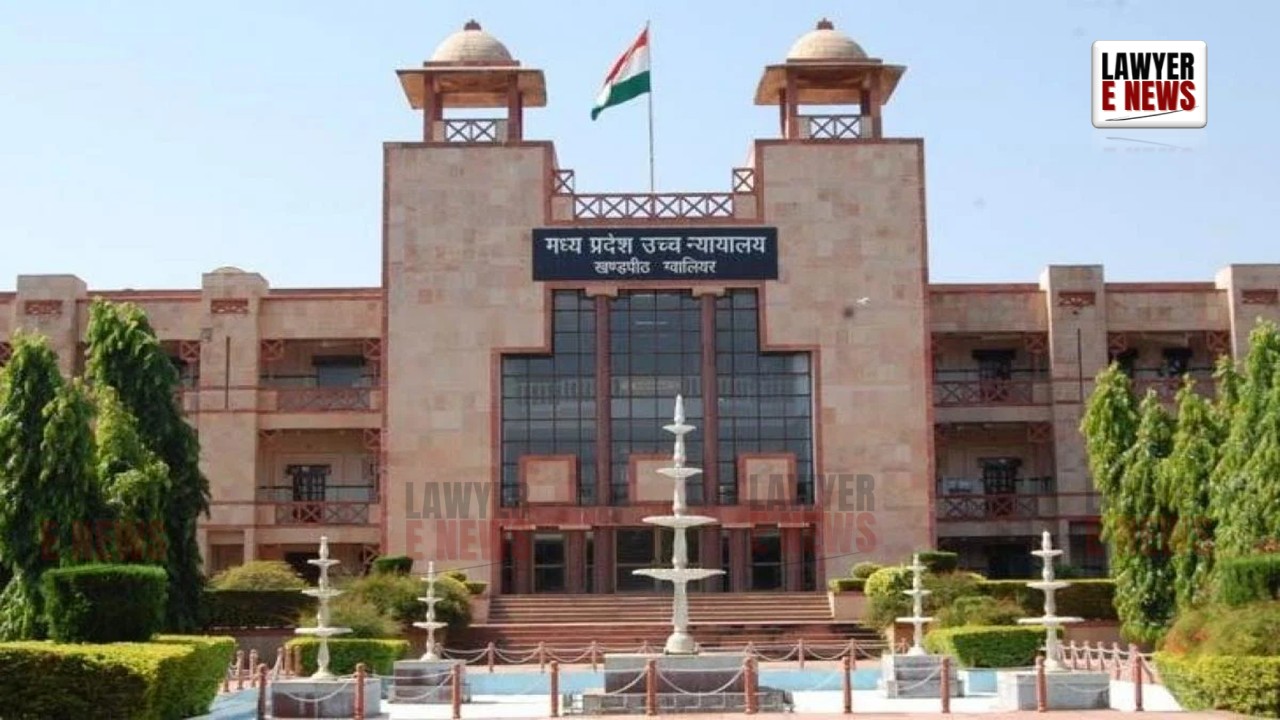
“A party cannot take advantage of their own wrong in failing to cooperate with reconstruction”— In a seminal ruling the High Court of Madhya Pradesh (Gwalior Bench), comprising Justice G. S. Ahluwalia, held that the non-availability of the original Trial Court record due to destruction does not automatically lead to the dismissal of a First Appeal, specifically when the respondents fail to cooperate in the reconstruction process.
“Record Destroyed in 2006”: The Procedural Quagmire
The Court was adjudicating a First Appeal arising out of a civil suit instituted in 1969. The appeal, originally filed in 1976, had a chequered history, having been dismissed in default in 1989 and eventually restored by the Supreme Court in 2024 with a direction to decide the matter on merits. However, upon taking up the matter, it was discovered that the Trial Court record had been destroyed in 2006.
The respondents raised a preliminary objection, arguing that since the original order sheets and written statements were unavailable and could not be fully reconstituted, the appeal should be dismissed, and the Trial Court’s decree affirmed. They relied on the Supreme Court’s decision in Shyam Deo Pandey Vs. State of Bihar.
“Acquittal of Liability Merely on Non-Availability of Record Would Encourage Dubious Persons”: Court Rejects Dismissal Plea
Justice Ahluwalia strongly rejected the respondents' contention, observing a pattern of non-cooperation where the respondents refused to provide copies of documents in their possession to assist in reconstructing the file. The Court held that the destruction of records cannot be a ground to defeat the valuable statutory right of a First Appeal under Section 96 of the CPC.
Distinguishing the Shyam Deo Pandey judgment as applicable to criminal proceedings involving Article 21 liberties, the High Court relied on State of U.P. Vs. Abhai Raj Singh. The Court observed that allowing a party to escape liability merely because the record is destroyed would "encourage dubious persons and detractors of justice."
The Court laid down that where the written statement is missing, but the Trial Court’s judgment elaborately discusses the defense’s stand, the Appellate Court can proceed based on the available judgment, pleadings, and documents. The Court noted, "Written Statements are the documents of the respondents, but they did not co-operate with the Court in reconstruction of the record. Therefore, they cannot be allowed to take advantage of their own wrong."
Fiduciary Relationship Between Brothers”: The Sham ‘Dastbardari’
On the merits, the dispute centered on a "Dastbardari" (Relinquishment Deed) executed in 1966 by the plaintiff (younger brother) in favor of the defendant (elder brother). The plaintiff alleged the deed was obtained through undue influence to defeat a partition suit filed by their sister.
The Court held that a fiduciary relationship existed between the elder and younger brother. The Court found the transaction unconscionable as the deed was executed without consideration and was intended solely to frustrate the sister's legal rights. The Court invoked Section 16 of the Contract Act, ruling that the burden of proof shifted to the dominant party (the elder brother) to prove the absence of undue influence, which they failed to discharge.
The High Court allowed the appeal, setting aside the 1973 judgment of the Additional District Judge, Gwalior. The "Dastbardari" deed was declared null and void, and the Court held that the destruction of the lower court record was not an impediment to reversing the decree when the available evidence and judgment clearly pointed to a miscarriage of justice.
Date of Decision: 27/11/2025