-
by sayum
11 August 2026 2:00 PM







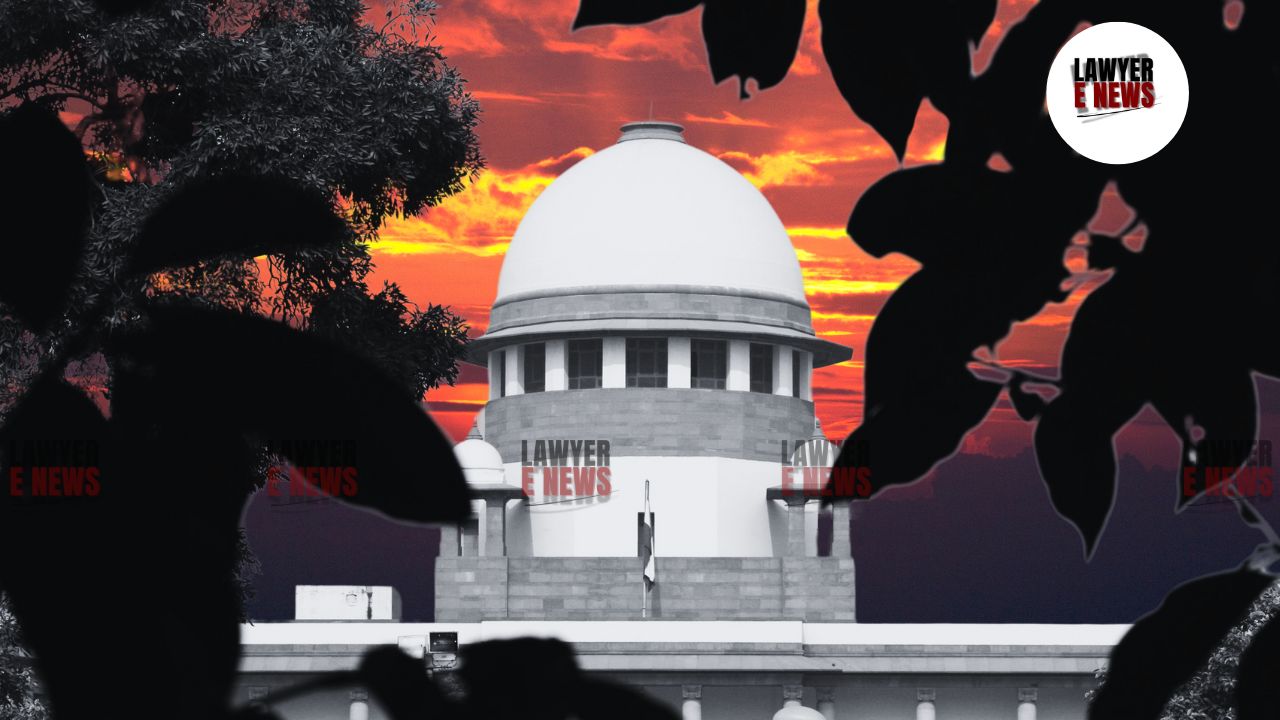
“A person who is not a party to a document may treat it as non-existent and sue for their right as if it did not exist” — Supreme Court of India delivered a landmark ruling in Hussain Ahmed Choudhury & Ors. vs. Habibur Rahman (Dead) Through LRs & Ors. [Civil Appeal No. 5470 of 2025], decisively holding that a person not party to a sale deed is not required to seek its cancellation under Section 31 of the Specific Relief Act, 1963, in order to establish their own legal title. The judgment overturns the decision of the Gauhati High Court, reaffirming that a declaratory suit need not include prayers for setting aside void instruments not binding on the plaintiff.
The Court observed, “The plaintiff not being the executant of the sale deed... was therefore, not obligated to sue for its cancellation under Section 31 of the Act, 1963.”
The case revolved around land measuring over eight bighas, the subject of a Gift Deed executed in 1958 by Haji Abdul Aziz Choudhury in favour of his grandson, Siraj Uddin Choudhury, the predecessor of the appellants. As per Muslim personal law, the grandson was not a natural heir due to the predeceasing of his father, thus necessitating the gift.
The dispute arose when the respondent, Habibur Rahman, purchased a portion of the same land in 1997 from relatives who had no legal title. The plaintiff was forcibly dispossessed in 1999, leading to a suit for declaration of title, confirmation of possession, and mandatory injunction.
While both the Trial Court and the First Appellate Court ruled in favour of the plaintiffs, the Gauhati High Court reversed these findings solely on the ground that the plaintiffs did not seek cancellation of the 1997 sale deed.
The central issue before the Supreme Court was: “Whether the suit of the plaintiff for declaration of title based on a valid Gift Deed should fail as the plaintiff omitted to pray for the consequential relief of cancellation of the sale deed or a declaration that the same is not binding on him?”
The Supreme Court categorically rejected the High Court’s reasoning. Justice J.B. Pardiwala, speaking for the Bench, held: “A person who is not a party to a document can treat it as non-existent and sue for their right as if it did not exist.”
The Court drew upon several authoritative precedents, most notably the Privy Council’s decision in Bijoy Gopal Mukerji v. Krishna Mahishi Debi, where it was stated: “There is, in fact, nothing for the Court either to set aside or cancel as a condition precedent to the right of action of the reversionary heir.”
The Court also referenced Suhrid Singh v. Randhir Singh, emphasizing: “Where the executant of a deed wants it to be annulled, he has to seek cancellation... But if a non-executant seeks annulment, he has to only seek a declaration that the deed is not binding on him.”
Clarification on Sections 31 and 34 of Specific Relief Act
The Court undertook a detailed interpretation of Section 31 (relating to cancellation of instruments) and Section 34 (declaratory relief). It clarified:
“The proviso to Section 34 does not bar a suit for declaration when the further relief, such as cancellation of the deed, is not directly flowing from the relief of title. The declaration of title is as good as a relief of cancellation when the sale deed is void and non est.”
Refuting the High Court’s reliance on Mohd. Noorul Hoda v. Bibi Raifunnisa, the Court explained that such precedent applies only when the plaintiff is a party or claims through the party to the instrument. In contrast, the appellants in the present case had no such connection with the sale deed executed in 1997.
Importance of Plaint and Judicial Discretion
The Court reiterated that relief can be granted based on the substance of the plaint, stating:
“The plaintiff had averred that the vendors of the 1997 sale deed had no title. This itself reflected the plaintiff's intention not to be bound by any instrument they may have executed.”
It also noted that procedural missteps should not thwart substantive justice: “Courts have ample inherent powers... to afford the relief which the justice of the case requires.”
The Supreme Court allowed the appeal, restoring the decree passed by the Trial Court and upheld by the First Appellate Court. The impugned judgment of the Gauhati High Court was set aside.
The ruling reinforces a critical legal doctrine — where the title is based on a valid, prior registered document and the contesting document is void, non-binding, and executed by strangers to title, a declaratory suit is sufficient.
“Declaration of title is as good as cancellation where the sale deed is void and non est.”
This decision is a significant reaffirmation of legal principles protecting rightful owners from being unduly burdened by technicalities when asserting their title, especially in cases involving fraudulent or baseless claims over immovable property.
Date of Decision: April 23, 2025