-
by sayum
24 August 2026 3:22 PM








“A Private Settlement Cannot Override Statutory Divorce Requirements Under Hindu Marriage Act,” In a judgment reinforcing the supremacy of codified Hindu matrimonial law over unsubstantiated personal customs, the Delhi High Court upheld a Family Court decree declaring a Hindu marriage void, holding that a vague and unproven claim of ‘customary Panchayati divorce’ cannot override statutory conditions under the Hindu Marriage Act, 1955.
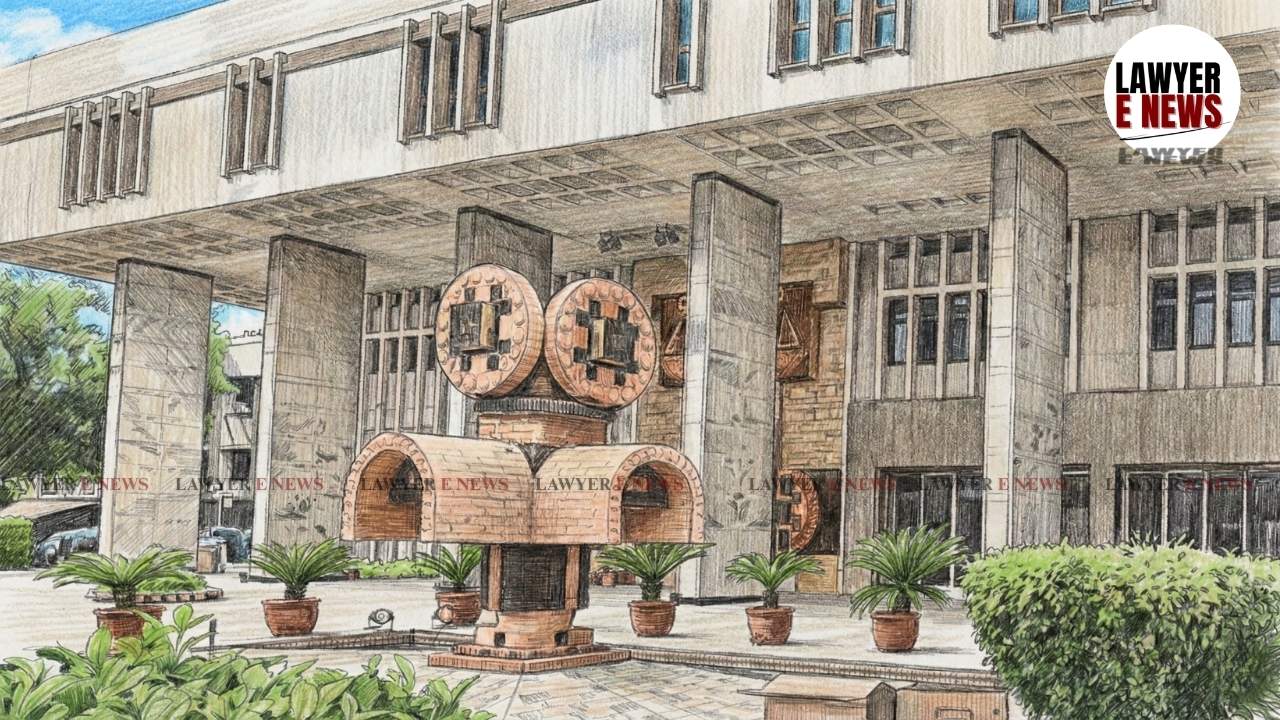
A Division Bench comprising Justice Anil Kshetrapal and Justice Harish Vaidyanathan Shankar dismissed the appeal filed by the woman challenging the Family Court’s judgment dated 07.06.2024, which had annulled her marriage under Section 11 read with Section 5(i) of the Hindu Marriage Act, for being solemnised during the subsistence of a prior undissolved marriage.
“Custom Contrary to Statutory Law Must Be Pleaded and Proved Rigorously”
The Appellant claimed that her previous marriage to one Sanjay had been dissolved through a customary divorce by village Panchayat on 23.05.2009. However, the High Court found that no credible or legal proof of such a custom or its observance was produced during the trial.
"A party asserting a custom contrary to the codified Hindu law carries a heavy burden. It must be shown through clear, consistent, and corroborated evidence that such custom has been followed uninterruptedly, is reasonable, and has obtained the force of law in the community concerned," the Court held, citing a string of precedents including Bhimashya v. Janabi, Saraswathi Ammal v. Jagadambal, and Yamanaji H. Jadhav v. Nirmala.
The Court rejected the Family Court’s partial finding that such a custom existed in the community, observing:
"The finding of the Family Court on Issue No.1 is clearly erroneous. It is liable to be set aside despite the absence of a cross appeal, as permitted under Order XLI Rules 22 and 3 of the CPC."
“A Child’s Birth Does Not Validate a Void Marriage”: Court Applies Section 11 of HMA Strictly
The couple in question had married on 16.05.2010, and their son was born in March 2011. Despite this, the Court held that the birth of a child cannot validate a marriage that is otherwise void in law.
Referring to Section 5(i) of the HMA, which prohibits bigamy, the Court observed:
"If a person marries while having a living spouse, the marriage is void ab initio under Section 11 of the Act. The birth of a child does not confer legitimacy on a void marriage, nor can it be invoked to cure a statutory illegality."
“Mere Agreement Between Parties Is Not a Divorce”: Court Criticises Misuse of Panchayat Divorce Claims
The core evidence presented by the Appellant was a photocopy of an unsigned divorce deed dated 25.09.2013, claimed to have been executed before a Panchayat. The document, however, was:
Not exhibited in original;
Not signed by or authenticated by any Panchayat members;
Neither the scribe nor any attesting witness was examined;
Did not mention the Panchayat proceedings or any customary practice.
The Court remarked:
"Such a document is a mere private settlement, at best. It cannot be construed as a valid ‘customary divorce’ within the meaning of Section 29(2) of the Hindu Marriage Act."
“Family Law Is Not Exempt from Proof Standards”: Interested Witnesses and Oral Assertions Held Insufficient
The Appellant relied on the testimony of her father (RW-2), maternal uncle (RW-3), and two villagers (RW-4 and RW-5). However, the Court rejected this evidence as lacking probative value. RW-4, a former Deputy Sarpanch, admitted he never attended the alleged Panchayat meeting. RW-5 similarly conceded non-participation.
"A custom must be proved by independent, disinterested evidence or judicial recognition," the Court said. "The evidence in this case is wholly inadequate to establish a community-wide practice of Panchayat divorce."
“Statutory Conditions Cannot Be Circumvented Through Unverified Local Practices”
The Delhi High Court invoked the overriding effect of Section 4 of the Hindu Marriage Act, which renders any custom or usage inconsistent with the Act’s provisions ineffective. The exception under Section 29(2), which saves rights conferred by valid customs, must be invoked with caution, the Court reiterated.
"Custom cannot be a matter of vague assertion or family belief. It is a legal exception, not a personal exemption from law," the judgment emphasized.
Appeal Dismissed, Marriage Declared Null and Void
Having failed to prove the alleged Panchayati divorce, the Appellant stood legally married to her first husband when she married Respondent No.1 in 2010. The Court affirmed the Family Court’s decision to declare the second marriage null and void under Section 11 of the Hindu Marriage Act, finding no cause to interfere with the judgment.
“There is no legal infirmity in the impugned judgment. The appeal stands dismissed,” concluded the Bench.
Strengthening the Role of Codified Family Law Over Informal Community Practice
This ruling marks a significant reaffirmation that marriage and divorce in Hindu law are governed primarily by statutory provisions, not unwritten or loosely followed social customs. Where personal law is codified, custom cannot be presumed; it must be proven with precision.
By rejecting vague claims of customary divorce, the Court has once again clarified that “validity of marriage is a matter of law, not local sentiment.”
Date of Decision: 28 November 2025