-
by sayum
26 August 2026 10:38 AM







Public Discourse Based on Official Documents Cannot Be Criminalized –
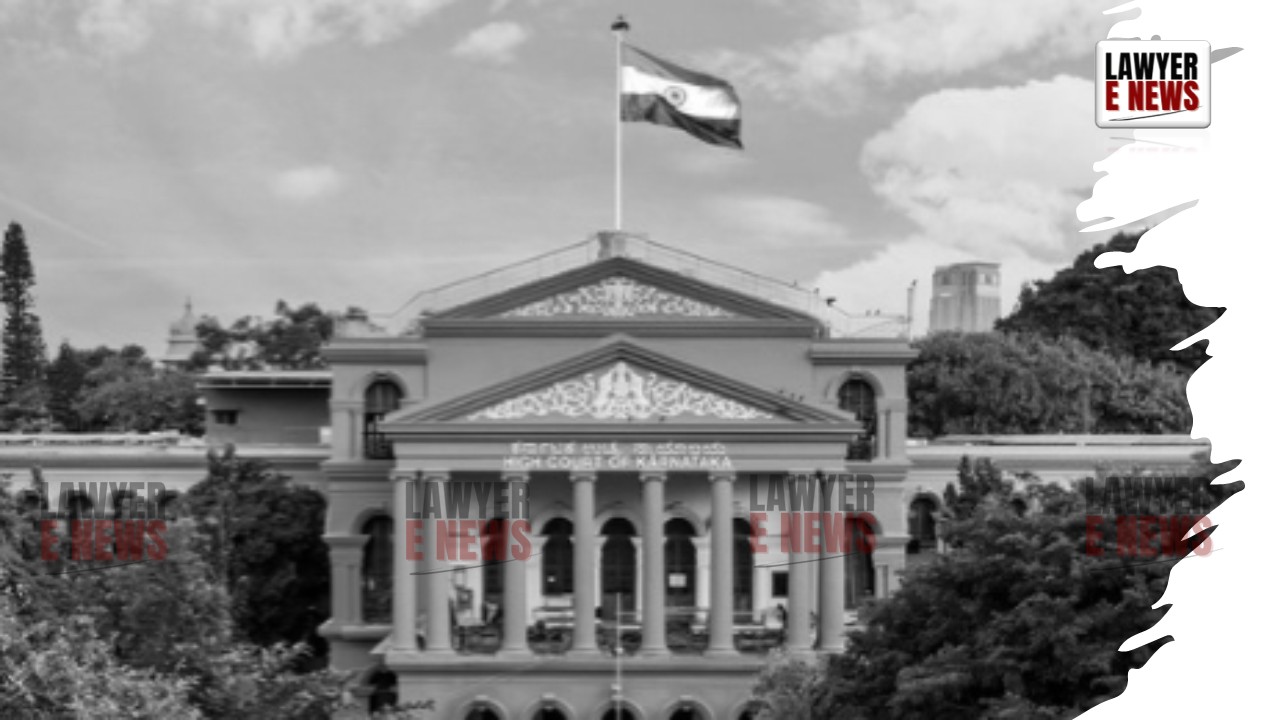
Karnataka High Court has ruled that a journalist cannot be prosecuted for analyzing government budget allocations and questioning policy decisions, declaring that a factual critique of a government document does not amount to hate speech or an attempt to create enmity between religious groups. Quashing an FIR filed against veteran journalist Rahul Sivasankar under Sections 153A and 505 of the IPC, the Court observed that "the registration of a crime on such flimsy grounds is nothing but a reckless act on the part of the police."
Delivering the judgment in Rahul Sivasankar v. State of Karnataka, Justice M. Nagaprasanna made it clear that the freedom to engage in public debate, especially when based on government records, is fundamental to democracy and cannot be curtailed under the pretext of preventing communal disharmony.
A Tweet on Budget Allocations That Led to Criminal Charges
The case arose from a tweet posted by Rahul Sivasankar on February 16, 2024, where he analyzed the Karnataka government’s budgetary allocations to different religious institutions. The tweet highlighted that ₹330 crores had been allocated for Wakf property development, the construction of a Haj Bhavan in Mangaluru, and Christian community welfare, while the state government retained control over ₹450 crores in annual Hindu temple donations. The journalist questioned why the government opposed legislative efforts to free Hindu temples from state control, concluding with the remark: "This is secularism 101!"
Following the post, a complaint was filed by N. Ambaresh, a municipal councillor from Kolar, who alleged that the tweet was intended to create enmity between religious communities. The CID, Bengaluru, registered an FIR under Sections 153A and 505 IPC, leading Sivasankar to approach the High Court for quashing the case.
High Court’s Findings: No Criminal Offense in Budgetary Criticism
Analyzing the content of the tweet, the High Court ruled that it merely reproduced figures from the official budget and did not contain any inflammatory language or incitement to violence. Justice Nagaprasanna observed: "The tweet is an extract from a public document—the state budget. It invites public discourse, applause, and criticism alike. There is not even a modicum of incendiary language or motivation to spread discord."
Rejecting the police’s claim that the tweet promoted enmity, the Court held that "expressing discontent over government policies does not amount to hate speech unless it clearly incites violence." The judgment emphasized that "a public critique based on verifiable facts cannot be treated as an act of spreading communal disharmony."
The High Court relied on several Supreme Court judgments, including:
• Javed Ahmad Hajam v. State of Maharashtra, where the Supreme Court ruled that "criticism of government actions does not constitute an offense under Sections 153A or 505 IPC unless there is a direct call for violence."
• Patricia Mukhim v. State of Meghalaya, which held that "a journalist’s responsibility is to highlight societal concerns, and such speech is protected under Article 19(1)(a) of the Constitution."
• Balwant Singh v. State of Punjab, which reaffirmed that "a person’s words must have a real tendency to incite violence or disrupt public order to attract criminal liability."
Applying these principles, the Karnataka High Court ruled that "the right to dissent and criticize government policies is a fundamental part of democracy. If every criticism of budget allocations is treated as hate speech, democracy itself will not survive."
FIR Quashed, Police Action Called a "Misuse of Law"
Striking down the criminal case, the High Court ruled: "This Court finds no merit in allowing the investigation to continue, as it would amount to gross abuse of the process of law. The registration of an FIR on such flimsy grounds reflects a lack of understanding of constitutional freedoms and democratic principles."
The Court quashed the FIR in Crime No. 6 of 2024 registered by the CID, Bengaluru, and warned against the misuse of penal provisions to silence legitimate criticism.
This ruling in Rahul Sivasankar v. State of Karnataka reaffirms that "a journalist’s analysis of government budgetary policies cannot be treated as hate speech or public mischief." The judgment establishes that "Sections 153A and 505 IPC must be applied strictly, with clear evidence of intent to incite violence or enmity."
Justice Nagaprasanna, in his concluding remarks, emphasized: "Freedom of speech is the cornerstone of democracy. If lawful criticism of government actions is criminalized, the very foundation of constitutional governance will be at risk."
With this ruling, the Karnataka High Court has reinforced the fundamental right to free expression, ensuring that journalists and citizens can engage in public discourse without fear of criminal prosecution.
Date of Decision: 17 March 2025