-
by sayum
04 August 2026 1:39 PM







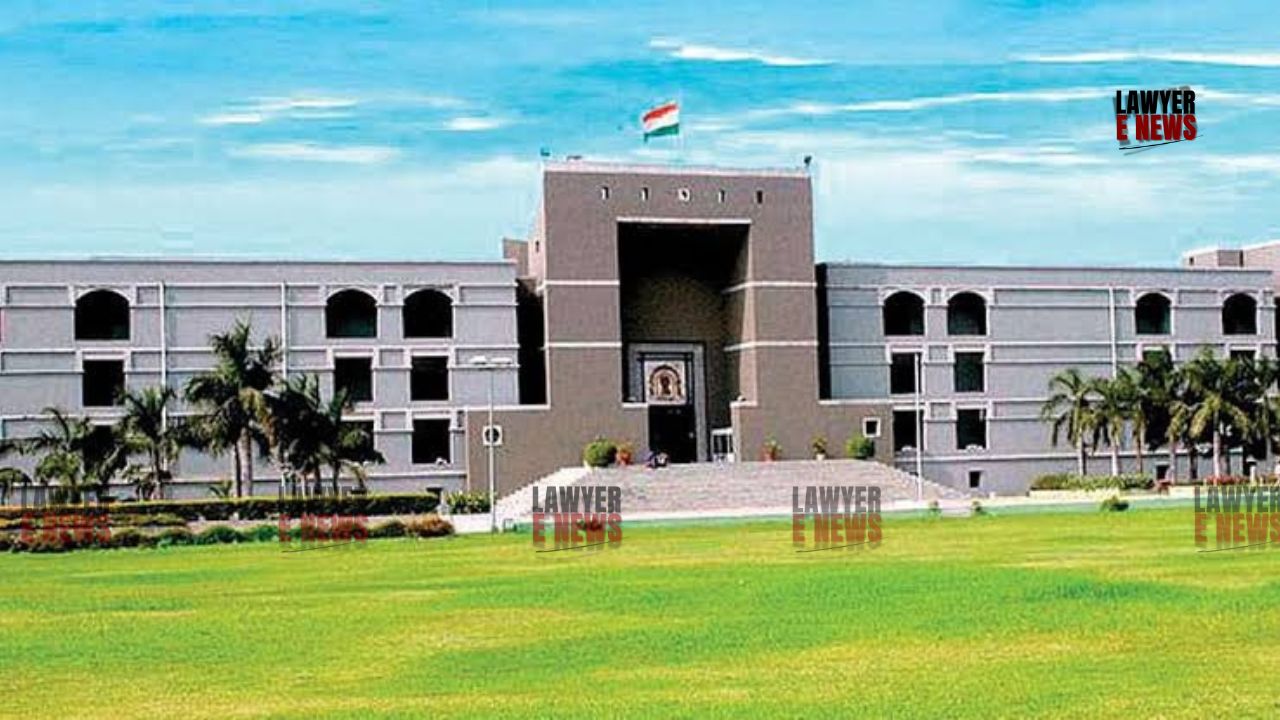
“Kar Vivad Samadhan Scheme Does Not Grant Immunity for Criminal Cases Instituted Before September 1, 1998” – In a significant judgment dated 17 November 2025, the Gujarat High Court addressing key issues of vicarious liability in criminal law, retrospective application of tax settlement schemes, and false declarations under excise laws.
While the Court quashed the criminal complaint against Directors (Petitioners Nos. 3 to 9) for lack of specific allegations of personal involvement, it refused to grant similar relief to the Company and its Managing Director, holding that a prima facie case of forgery and excise evasion was made out against them.
"Mere Designation as Director Does Not Attract Criminal Liability in Absence of Active Role or Statutory Provision"
Delivering the primary finding on criminal liability of directors, Justice Doshi categorically observed:
“The principle of vicarious liability is unknown to criminal jurisprudence unless specifically provided by statute. The criminal liability cannot be based on designation alone, but must rest on the role they played in the company’s affairs.”
Relying on Supreme Court rulings including Sanjay Dutt v. State of Haryana (2025 INSC 34), S.K. Alagh v. State of UP (2008) 5 SCC 662, and Pooja Ravinder Devidasani v. State of Maharashtra (2014) 16 SCC 1, the Court emphasized that:
“There is no presumption that every officer of a company knows about the transaction in question. Personal involvement or a statutory provision imposing liability is a necessary precondition for prosecution.”
Given that the complaint contained no averments indicating any personal role, mens rea, or statutory linkage for Directors (Petitioners 3 to 9), the Court quashed the complaint against them, reaffirming the doctrine of Separate Legal Personality.
The petitioners approached the High Court under Section 482 CrPC, seeking quashing of a criminal complaint dating back to 1994 for alleged forgery (Section 468 IPC), criminal conspiracy (Section 120B IPC), and offences under Section 9 of the Central Excise and Salt Act, 1944, along with Rule 173Q of the Central Excise Rules, 1944.
The complaint was based on a raid conducted in 1985 by the Central Excise Department, which alleged that the company misdeclared the thickness of glass sheets to underreport excise duty liability. The then Collector held in 1990 that the company had evaded over ₹25.79 lakhs in duty through misdeclaration, leading to confiscation orders, fines, and penalties.
Subsequent appeals were filed before CEGAT (now CESTAT), and while proceedings continued, the company availed the Kar Vivad Samadhan Scheme, 1998 to settle tax arrears. The company paid ₹9.55 lakhs under the scheme, and received a certificate of full and final settlement dated 30 June 1999.
However, in 2015, petitioners received summons in a criminal complaint (originally filed in 1994), leading to the present petition to quash the same.
“Kar Vivad Samadhan Scheme Does Not Apply to Pre-1998 Prosecutions”: No Immunity from Criminal Proceedings Already Instituted
Rejecting the petitioners’ reliance on the Kar Vivad Samadhan Scheme, 1998, the Court ruled that the scheme does not provide retrospective immunity from prosecutions already launched prior to 01.09.1998.
Justice Doshi clarified:
“The Kar Vivad Samadhan Scheme, 1998 operates prospectively and not retrospectively. It provides immunity from instituting proceedings—not from continuing proceedings already initiated.”
The Court referred to Section 94 of the Finance (No. 2) Act, 1998, which states that immunity is granted only from the institution of fresh proceedings under the relevant tax enactments. Since the criminal complaint was filed in 1994, the petitioners’ payment of tax under the scheme in 1999 did not absolve them of pending criminal liability.
The Court distinguished the present case from Hira Lal Hari Lal Bhagwati v. CBI (2003) 5 SCC 257, where prosecution was launched after settlement under the scheme and was thus barred. Here, the prosecution had already commenced before the declaration.
False Declaration Made to Tax Authority Amounts to Forged Document: Prima Facie Case Against Company and MD
On the core allegation of forgery under Section 468 IPC, the petitioners had argued that discrepancies in internal glass thickness logs could not constitute forgery under the IPC.
However, the Court categorically rejected this submission:
“False declaration made before the tax authority with the intent to evade tax, attracts the definition of ‘forged document’ under Section 464 of the IPC.”
The Court held that the prima facie act of misrepresenting product thickness to claim a more favorable tax treatment constituted deceitful preparation of a document, satisfying the ingredients of forgery under IPC.
Consequently, the Court dismissed the petition filed by Petitioner No. 1 (Company) and Petitioner No. 2 (Managing Director), holding that they must face trial.
Relief Granted Only to Directors; Company and MD Must Face Trial
Summing up, the Court passed the following operative directions:
“The complaint and proceedings in Criminal Case No. 1686 of 2013 (originally C.C. No. 1524 of 1994) are hereby quashed and set aside qua Petitioners 3 to 9. The petition is dismissed qua Petitioner No.1 – M/s Gopal Glass Works Ltd. and Petitioner No.2 – Jayantilal Jethalal Shah (MD).”
This ruling reaffirms fundamental principles of criminal law, especially the non-applicability of vicarious liability without statutory backing, and strict interpretation of immunity provisions under tax settlement schemes.
Date of Decision: 17 November 2025