-
by sayum
10 August 2026 1:57 PM







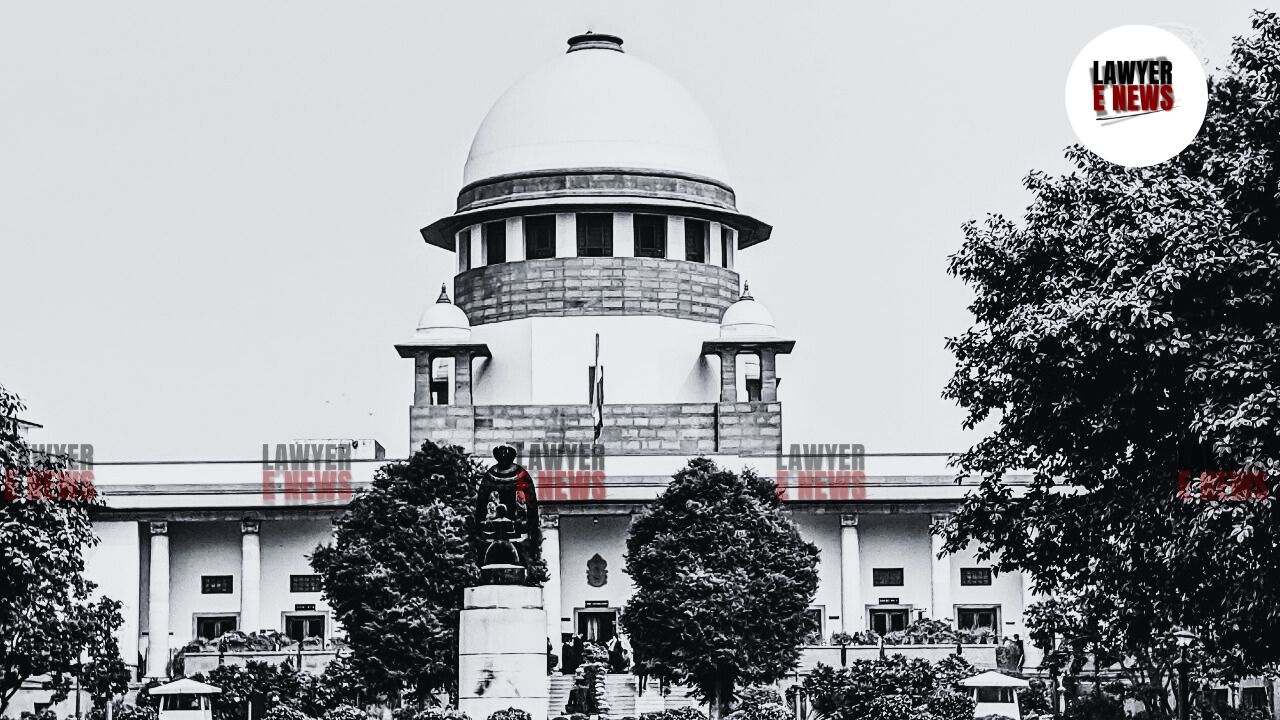
“Employment Contracts Are Not Dictated by Charity but by Fair Commercial Needs—Public Sector Cannot Be Left Defenceless Against Attrition”: In a judgment balancing employee rights with institutional discipline, the Supreme Court of India upheld the validity of a clause in a public sector bank appointment letter that required an officer to pay Rs. 2 lakh as liquidated damages if he resigned within three years of joining. The Court ruled that such a clause is not a restraint on trade, nor is it unconscionable or opposed to public policy.
“The restrictive covenant was in furtherance of the employment contract and not in restraint of trade… it ensured continuity and operational efficiency,” held a Bench comprising Justices Joymalya Bagchi and Pamidighantam Sri Narasimha, setting aside the judgment of the High Court that had struck down the clause as unconstitutional and violative of public policy.
“What Is Not a Restraint on Freedom, Cannot Be a Breach of Fundamental Rights”
The respondent, Prashant B. Narnaware, joined Vijaya Bank as a Senior Manager in 2007 after voluntarily resigning from a previous post in the same bank. His appointment letter—clause 11(k)—stipulated that if he resigned before completing three years of service, he would have to pay Rs. 2 lakh as liquidated damages. He executed an indemnity bond to that effect.
Two years into the job, he resigned to join another bank, paid Rs. 2 lakh under protest, and filed a writ petition challenging the clause as a violation of Articles 14 and 19(1)(g) of the Constitution and as void under Sections 23 and 27 of the Contract Act.
The High Court accepted his plea. But the Supreme Court reversed it, stating:
“Negative covenants operative during the period of the contract of employment… are generally not regarded as restraint of trade.”
The Court leaned on the landmark ruling in Niranjan Shankar Golikari v. Century Spinning to reaffirm that service-linked covenants do not offend the constitutional or contractual safeguards when they are fair, proportionate, and commercially justified.
“No Public Policy Is Violated by Seeking Stability from Senior Executives”
The respondent argued that the clause amounted to an unconscionable imposition through a standard-form contract, leaving him no option but to sign under pressure. But the Court rejected this plea:
“Unequal bargaining power may raise concerns in law, but not every standard form contract becomes invalid merely because one party had more leverage.”
The judgment revisited the precedent in Central Inland Water Transport Corp. v. Brojo Nath Ganguly but carefully distinguished the present case:
“What the employer sought was not dominion over the employee, but a predictable tenure in exchange for managerial responsibility and public accountability.”
The Court emphasized that in the liberalized economy of post-1990s India, public sector banks are no longer monopolies and must compete with private institutions. Attrition of experienced personnel to the private sector hurts public institutions not just financially but operationally.
“To ensure retention of experienced staff is inalienable to the interests of such undertakings. The clause merely required an employee to either stay or compensate—that is not oppression.”
“Liquidated Damages Are Not a Windfall—They Are Insurance Against Administrative Loss”
The Court took particular note of the challenge to the quantum of Rs. 2 lakh being termed excessive and violative of Section 74 of the Indian Contract Act. The bank had submitted that the amount covered the cost of recruitment, training, and the operational burden of initiating a new hiring cycle.
“An untimely resignation would require the bank to undertake a prolix and expensive recruitment process involving open advertisement and competitive procedures,” the Court noted.
“The sum of Rs. 2 lakh is not an expropriation—it is a calibrated disincentive to discourage frivolous attrition.”
The Court also dismissed the argument that paying the amount under protest invalidated the clause, observing:
“Respondent was in a senior managerial position with a lucrative salary… the clause did not render resignation illusory. He chose to resign and accepted the consequences.”
In setting aside the High Court’s ruling, the Supreme Court has sent a strong message to public sector employers and employees alike: that contractual commitments are not lightly undone, and public interest is not served by freeing employees from obligations they knowingly undertake.
“Employment terms that safeguard institutional stability are not contrary to freedom—they are instruments of accountable liberty,” the Court concluded.
The judgment affirms that public sector institutions are entitled to impose minimum service conditions, especially when such terms are not excessive, and when compensation for breach is objectively justified.
Date of Decision: May 14, 2025