-
by sayum
25 August 2026 6:19 AM







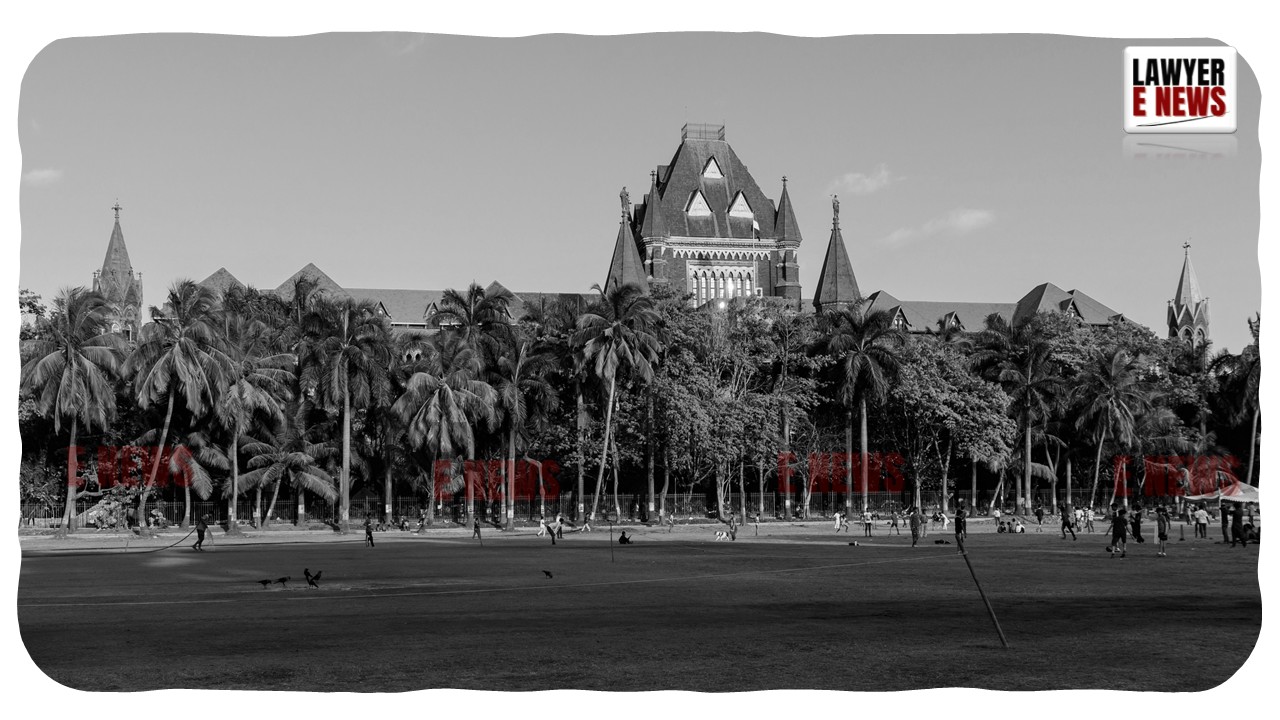
“Where Injured Eye-Witnesses Withhold Names of Known Accused for Hours, Possibility of False Implication Cannot Be Ruled Out”, In a judgment that underscores the importance of judicial scrutiny when prior enmity exists between parties and evidence lacks independent corroboration, the Bombay High Court acquitted five men who had been convicted for the brutal murder of Nikhil More and the attempted murder of two others in Nashik in 2017. The Division Bench of Justice Manish Pitale and Justice Manjusha Deshpande delivered the ruling in a set of criminal appeals filed by Roshan Pagare, Arif Qureshi, Sharad Pagare, Amar Gangurde, and John Kajale, holding that the trial court had gravely erred in convicting them solely on the basis of the injured eyewitnesses' testimony, which was "neither wholly reliable nor corroborated."
The High Court observed that the "inexplicable delay in naming the accused, the unnatural conduct of the eyewitnesses, the failure to recover any weapons, and the absence of scientific or independent evidence" were critical factors that “shattered the credibility of the prosecution’s case.”
“Testimony of Injured Witnesses Must Inspire Confidence — And Here, It Did Not”
At the core of the trial court’s 2020 conviction was the reliance on the testimony of Suraj Khode (P.W.4) and Amol Nikam (P.W.5), both of whom were injured in the alleged attack that claimed the life of Nikhil More. However, the High Court took a diametrically opposite view, asserting that such reliance was unsafe without corroboration—especially when the third purported eyewitness, Sachin Kadam (P.W.6), had been found wholly unreliable by the same trial court.
Referring to the inconsistencies and omissions in their accounts, the Bench held, “The ocular version of P.W.4 and P.W.5, when discredited by their own contradictions and further tainted by the discarded testimony of P.W.6, becomes insufficient to sustain a conviction for murder.”
The Court noted with concern that despite being medically declared fit to give statements at 11:50 p.m., the two injured eyewitnesses did not disclose the identity of the attackers until 4:30 a.m., by which time the FIR was eventually registered. This gap, the Court observed, “leaves sufficient room for embellishment and deliberation.”
A Case Built on Sand: No Recovery, No Forensic Link, No Independent Witnesses
The judgment elaborates how the prosecution’s case crumbled under the weight of its own inconsistencies. The High Court reiterated that none of the weapons allegedly used in the assault—sickles, choppers, a knife, or the pistol—were lawfully recovered, and the ballistic report was conclusively negative. Even the postmortem report, which mentioned a firearm injury, could not be scientifically linked to any of the accused.
In a stern reminder of the dangers of leaning on weak evidence, the Court said, “When the ballistic report negates the use of the firearm and the recovery itself is disbelieved, the entire edifice of the prosecution’s theory stands on shaky ground.”
Equally significant was the prosecution’s failure to produce neutral witnesses, despite the fact that the incident occurred in a populated locality and multiple individuals were involved in transporting the injured to the hospital. The Court noted, “Absence of independent witnesses, especially when all panch witnesses are found to be friends of the deceased and injured, strikes at the root of fair investigation.”
“Previous Enmity Is a Double-Edged Sword – It Cuts Both Ways”
One of the central contentions raised by the defence, which the Court found persuasive, was the longstanding animosity between the deceased, the injured eyewitnesses, and the accused, including cross-FIRs, previous attacks, and murder cases involving the same parties. The High Court agreed that enmity, while it may provide motive, also makes the prosecution’s case vulnerable to the charge of deliberate false implication.
In a particularly notable observation, the Bench remarked, “This is one case where the unnatural conduct of the injured eye-witnesses creates a serious doubt about the appellants having been falsely implicated.”
The Court found that Suraj Khode and Amol Nikam had themselves been accused in earlier violent cases, including one where a brother of the accused was the victim, raising serious doubts as to whether they had simply named known rivals in a bid for revenge.
Lack of Corroboration and Doubt in Ocular Evidence Are Fatal to Conviction
Relying on the classic three-fold classification laid down by the Supreme Court in Vadivelu Thevar v. State of Madras (AIR 1957 SC 614), the Court classified P.W.4 and P.W.5 as witnesses who were “neither wholly reliable nor wholly unreliable.” The Court reiterated the legal position that in such situations, “the testimony must be corroborated in material particulars,” which was entirely missing in the present case.
The Bench drew further support from the Supreme Court’s recent verdicts in Naresh @ Nehru v. State of Haryana (2023) and Rai Sandeep v. NCT of Delhi (2012), reiterating that:
“The evidence of a witness must be of such sterling quality that it can be accepted on its face value without hesitation. In the present case, it falls woefully short of that benchmark.”
Acquittal Warranted in Light of Serious Doubts and Flawed Conviction
Finding that the trial court had convicted the appellants on a weak and suspicious foundation, the Bombay High Court unequivocally set aside the convictions and ordered the immediate release of all five appellants, unless required in any other case.
Before their release, each appellant was directed to execute a personal bond of ₹25,000/- under Section 481 of the Bharatiya Nagarik Suraksha Sanhita, 2023, corresponding to Section 437A of the CrPC, as a procedural safeguard in the event of a State appeal.
The final line of the judgment summarised the judicial caution that must govern criminal convictions:
“The incident did occur, but the evidence falls short of proving that these appellants were the perpetrators. In the absence of sterling evidence and credible corroboration, no conviction can stand.”
Date of Decision: 1st December 2025