-
by sayum
24 August 2026 3:22 PM







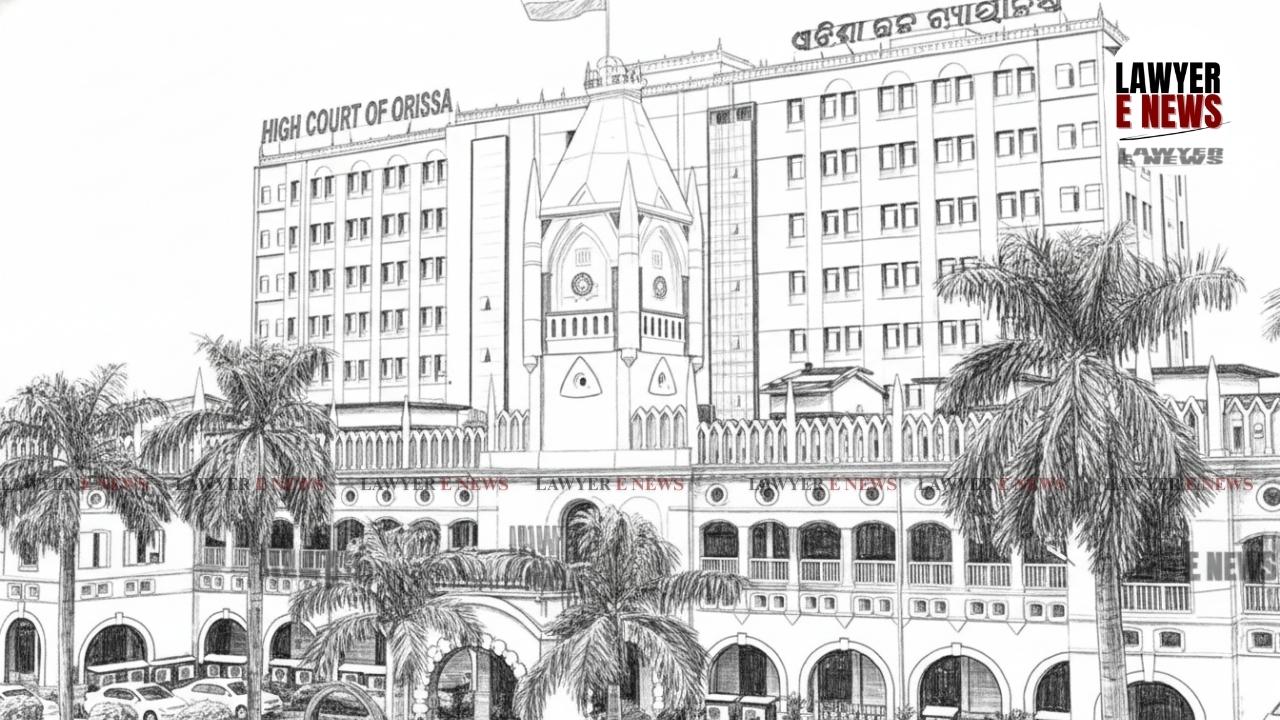
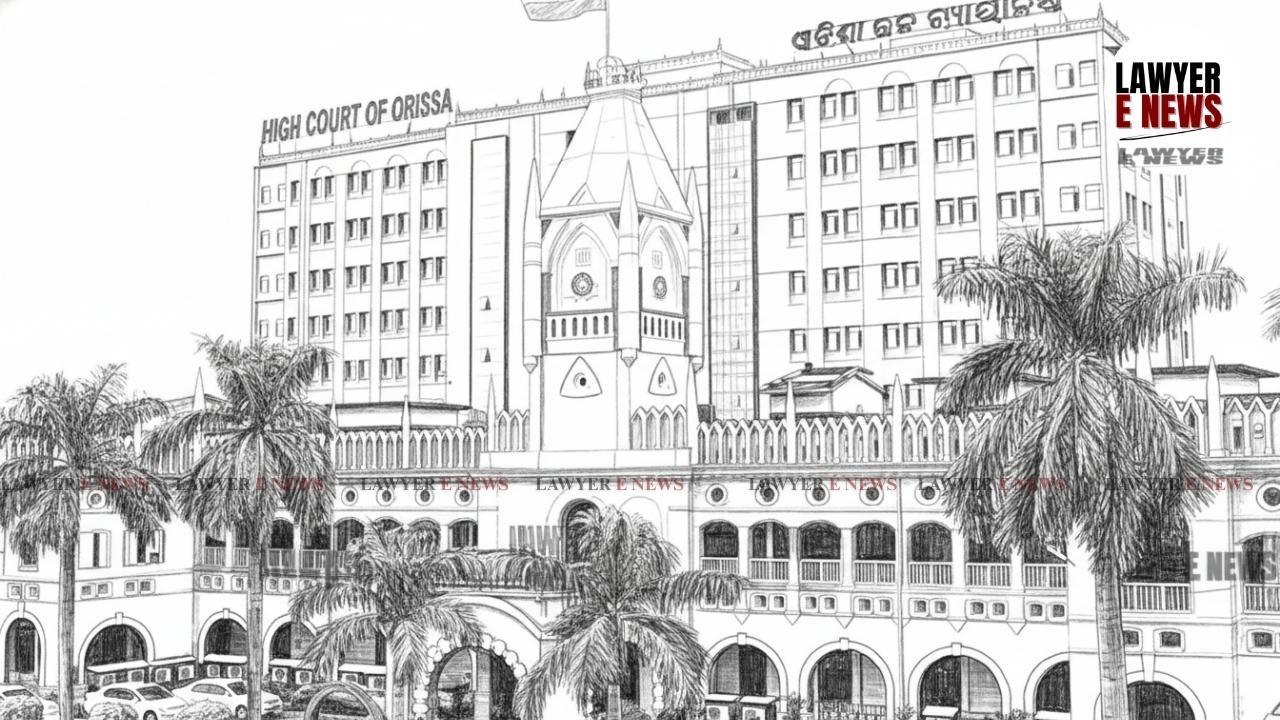
“The State Cannot Hold a Citizen’s Vehicle Hostage Indefinitely in the Name of Enforcement – Law Must Be Enforced Through Legal Mechanisms, Not Administrative Inertia” - In a landmark decision safeguarding procedural rights and property protections under mining law, the Orissa High Court quashed the prolonged seizure of a commercial Hyva truck detained for allegedly transporting minor minerals without transit permit, and directed its immediate release.
Justice Dr. Sanjeeb K. Panigrahi held that although the seizure was made by a competent officer, the prolonged detention of the vehicle without initiating any statutory proceedings under the Mines and Minerals (Development and Regulation) Act, 1957 (MMDR Act) or the Odisha Minor Minerals Concession Rules, 2016 (as amended in 2023) was unconstitutional, amounting to an infringement of Articles 14, 19(1)(g), and 21 of the Constitution.
“The continued detention of the petitioner’s Tata Signa Hyva truck for nearly five months without any formal proceeding is unsustainable. Such a situation offends the constitutional guarantee of fairness.”
“Prolonged Custody of Seized Vehicles Without Legal Process Defeats Rule of Law” – High Court Follows Sunderbhai and Bishwajit Dey Doctrines
The Court drew from the seminal judgment in Sunderbhai Ambala Desai v. State of Gujarat [(2003) 12 SCC 218], reiterating that:
“Whatever be the situation, it is of no use to keep such seized vehicles at the police stations for a long period... appropriate orders must be passed for their release with security.”
Similarly, in Bishwajit Dey v. State of Assam [2023 SCC OnLine SC 1154], the Supreme Court had noted:
“Keeping a vehicle in police custody serves no purpose... If the vehicle is not released, it will be wasted and suffering the vagaries of the weather, its value will only reduce.”
Relying on these principles, Justice Panigrahi emphasized:
“With modern techniques, essential evidence such as photographs or samples can be preserved without physically holding the entire truck hostage.”
“Legal Authority for Seizure Exists, But Procedural Vacuum Thereafter is Unlawful” – Sub-Inspector Validly Seized the Vehicle, Not Tahasildar
The petitioner had challenged the seizure as ultra vires on the ground that the Tahasildar of Niali, who supervised the raid, was not empowered under Rule 51(1)(ii) of the OMMC Rules to seize vehicles involved in illegal mineral transportation.
The Court rejected this argument, clarifying:
“While the raid was supervised by the Tahasildar, the record shows that the actual seizure was carried out by the Sub-Inspector of Police, Niali P.S. — a competent authority under the Rules. Therefore, the seizure per se cannot be held void.”
However, the Court held that despite lawful seizure, the failure to initiate penalty, confiscation, or prosecution proceedings rendered the continued detention legally unjustifiable.
“Vehicle Cannot Be Kept in Limbo Indefinitely—State Must Either Impose Penalty or Initiate Confiscation”
The Court severely criticized the inaction of the Mining Officer and enforcement authorities for failing to follow through after seizure:
“The only action taken was an intimation to the Mining Officer and a later request for ownership verification... no notice of confiscation or penalty proceeding has been served, nor has any compounding fee been demanded.”
Noting that the vehicle is a depreciating asset, the Court observed:
“The petitioner’s livelihood has been crippled as his commercial truck lies unused. No societal interest is served by the vehicle’s stagnation. On the contrary, its release will restore economic utility.”
The Court also referred to its own decision in Rajesh Kumar Sahu v. State of Odisha [2025 SCC OnLine Ori 866], where prolonged custody of a vehicle in an NDPS matter was disapproved on similar grounds:
“By its very nature, a vehicle is intended for active use and mobility, and its prolonged immobility in official custody serves no substantive legal or practical purpose.”
“Indefinite Seizure Without Confiscation or Trial Violates Article 21” – Court Orders Conditional Release with ₹2 Lakh Security
Directing the immediate release of the Tata Signa Hyva truck (OD-05-BY-3505), the Court imposed the following conditions:
Justice Panigrahi added:
“The authorities shall also bear in mind the mandate of the Supreme Court that seized property must be preserved, not destroyed by inaction.”
“The Right to Property Includes the Right to Timely Legal Remedy” – Proceedings Must Be Concluded Within 8 Weeks
Calling out the administrative limbo caused by official inaction, the Court directed:
“The Opposite Parties are directed to initiate and conclude appropriate proceedings — either for penalty under Rule 51(1)(xi) or prosecution under Section 22 of the MMDR Act — within eight weeks.”
The Court reminded the State that delayed enforcement effectively denies the citizen a legal forum to defend himself:
“The petitioner cannot even avail the remedy of interim release under Section 451/457 Cr.P.C. if no confiscation case is filed. This de facto deprives him of property and livelihood without adjudication.”
Seizure Upheld, Detention Illegal — Vehicle to Be Released, State Ordered to Act Without Delay
The High Court allowed the writ petition, affirming the legality of the seizure but condemning the unjustified five-month detention without follow-up:
“The vehicle’s seizure may be valid, but its continued detention, in absence of penalty or prosecution, amounts to unlawful deprivation of rights under Articles 14, 19(1)(g), and 21.”
The petition was disposed of with clear directions for release and expeditious adjudication. The interim order stood vacated. No costs were awarded.
Date of Decision: 17 October 2025