-
by sayum
26 August 2026 10:38 AM







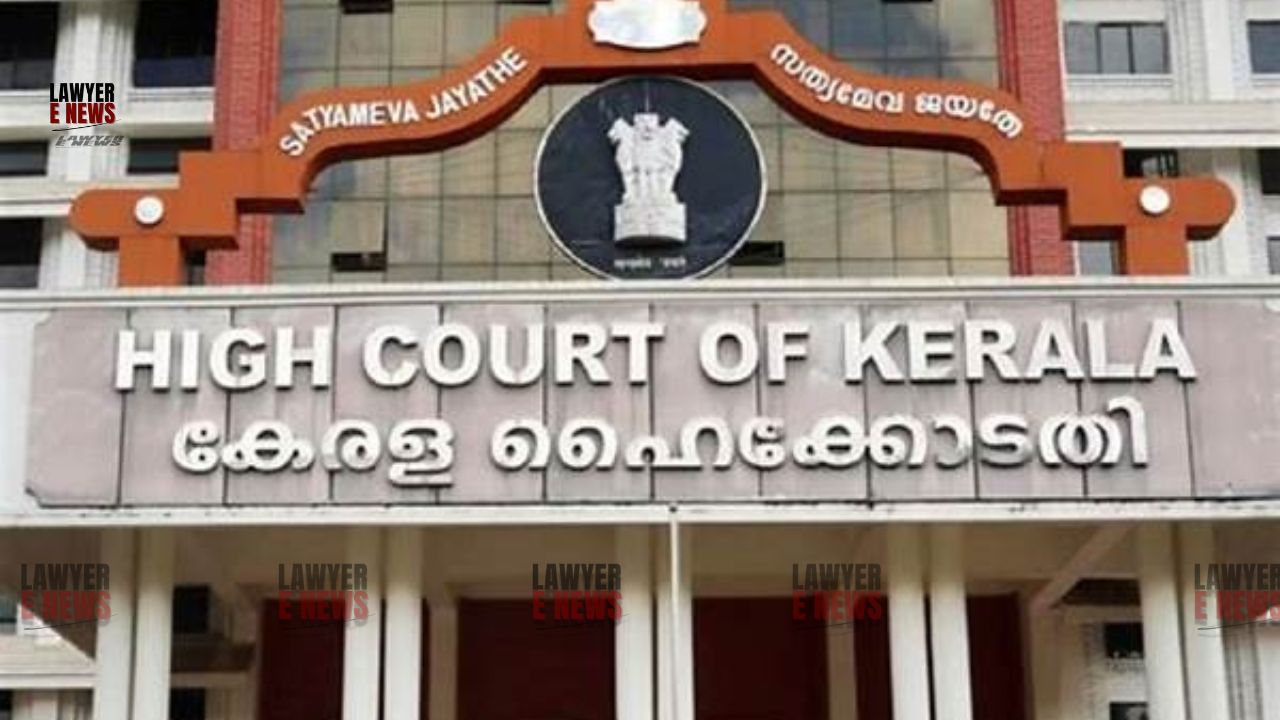
The Kerala High Court has ruled that bail must be the rule rather than the exception and that a consensual relationship cannot be retrospectively termed as rape solely because a promise of marriage was later broken. Granting bail to the accused in a sexual assault case, the Court emphasized that allegations of rape under false pretenses must be carefully examined to distinguish genuine cases of coercion from consensual relationships that turned sour.
Delivering the judgment in Akshay S. Nair v. State of Kerala, Justice P.V. Kunhikrishnan held that pre-trial detention should not be used as a form of punishment and that courts must ensure allegations of sexual assault are assessed in light of established legal principles. Citing the Supreme Court’s ruling in Mahesh Damu Khare v. State of Maharashtra, the Court observed that a prolonged physical relationship does not automatically become non-consensual just because one party later refuses to marry.
The Court remarked, "Bail cannot be denied merely on the gravity of allegations; judicial discretion must weigh the circumstances, evidence, and legal principles before depriving a person of liberty.”
A Relationship Turns Into a Criminal Case as Allegations of Deception Arise
The petitioner, Akshay S. Nair, aged 26, was accused under Sections 376(2)(n), 354, and 506 of the Indian Penal Code in connection with Crime No. 133/2025 of Kasaba Police Station, Palakkad. The prosecution alleged that he engaged in a sexual relationship with the complainant between January 2022 and June 17, 2023, under the promise of marriage but later refused to marry her. The complainant further accused him of threats, alleging that he warned her against taking legal action by claiming to possess intimate images of her.
The accused had been in judicial custody since March 12, 2025, and argued that the relationship was consensual and that no deception had occurred at the outset. The prosecution opposed the bail, contending that he had emotionally and physically exploited the complainant before abandoning her.
High Court Observes That Bail Cannot Be Denied Arbitrarily in Cases of Failed Relationships
The Court, after reviewing the allegations and the legal precedents, found that the complainant had engaged in a prolonged relationship with the accused and that the prosecution had not presented conclusive evidence that her consent was vitiated solely due to a false promise of marriage. Justice P.V. Kunhikrishnan referred to the Supreme Court’s judgment in Mahesh Damu Khare v. State of Maharashtra, where it was held that a woman’s consent must be examined in the context of the entire relationship rather than based on subsequent events.
The Court emphasized that ”not every promise of marriage that remains unfulfilled amounts to rape. The law distinguishes between a genuine case of inducement under false pretenses and a relationship where consent was given for reasons beyond just marriage.”
Citing Chidambaram P. v. Directorate of Enforcement, the Court reiterated that bail is a fundamental right unless custodial interrogation is necessary or there is a risk of the accused influencing the trial. The Court also referred to Jalaluddin Khan v. Union of India, which warned against mechanically denying bail, stating that prolonged incarceration before conviction violates personal liberty and the presumption of innocence.
Supreme Court’s Precedents Applied as Bail is Granted with Strict Conditions
Allowing the bail application, the High Court imposed stringent conditions to ensure the trial proceeded without interference. The accused was directed to execute a ₹50,000 bond with two solvent sureties, appear before the investigating officer when required, and avoid any direct or indirect contact with the complainant. He was also barred from leaving the country without prior permission, with a clear warning that any violation would lead to cancellation of bail.
Justice P.V. Kunhikrishnan, in concluding the judgment, stated that “the courts must balance the rights of victims with the fundamental principle that no individual should be punished before conviction. Bail is meant to ensure participation in the trial, not as a preemptive punishment.”
A Landmark Ruling That Reinforces the Right to Bail in Sexual Assault Allegations
The Kerala High Court’s decision in Akshay S. Nair v. State of Kerala reaffirms the fundamental principles governing bail, ensuring that judicial discretion is exercised based on legal precedent rather than public sentiment. The judgment reinforces that failed relationships must not automatically translate into criminal liability unless deception is conclusively established. The ruling serves as a significant safeguard against wrongful incarceration while upholding the necessity of due process in cases involving allegations of sexual assault.
Date of decision: 19/03/2025