-
by sayum
04 August 2026 1:39 PM







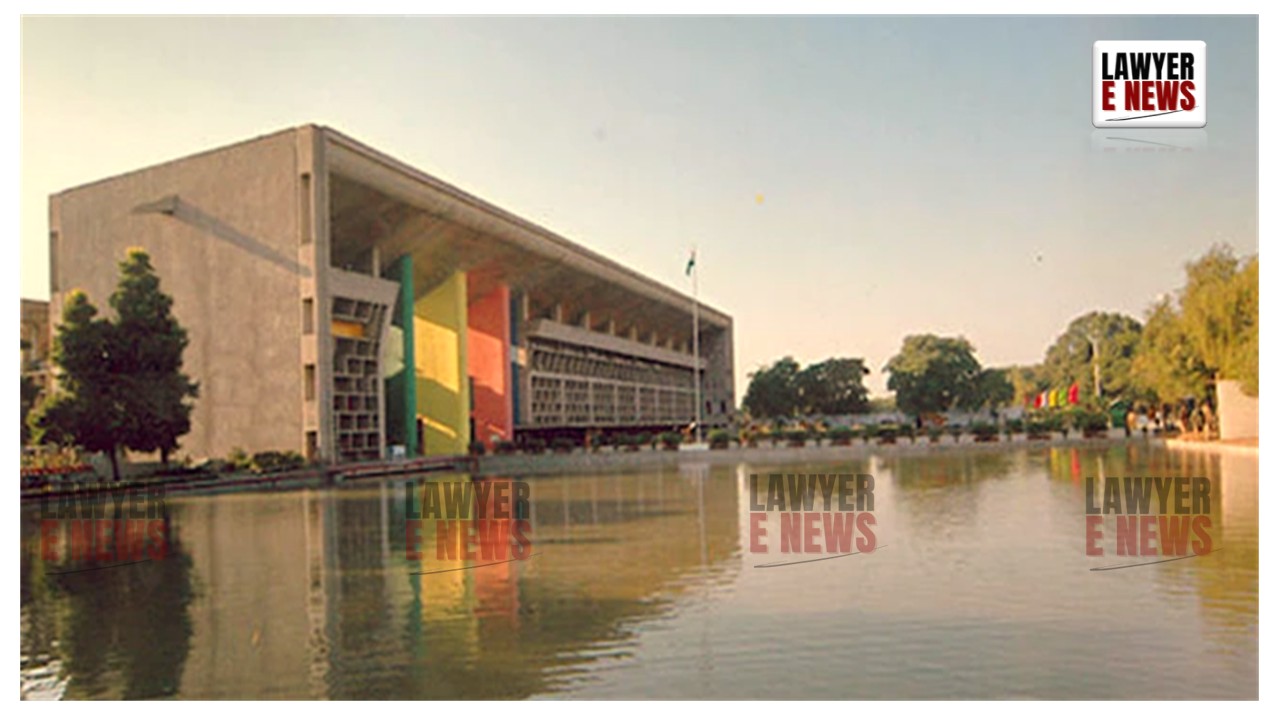
"Victim of Negligent Death Cannot Consent: Rule of Law Must Prevail Over Private Settlement" – Punjab and Haryana High Court delivered a significant judgment reaffirming that criminal liability for causing death by negligence under Section 304-A of the Indian Penal Code, 1860 cannot be erased by a private compromise with the deceased’s family. Justice Sumeet Goel, while dismissing the quashing petition, held that "such offences are not private in nature and have a serious societal impact", and thus cannot be resolved merely through monetary or familial settlements.
This ruling underscores a growing judicial emphasis on victim-centric justice and public accountability in criminal prosecutions involving fatal consequences. The judgment rejected the compromise reached between the convict and the father of the deceased, highlighting that such settlements, however amicable or well-intentioned, cannot extinguish the criminal culpability already adjudicated through trial.
JCB Driver Convicted in Fatal Road Mishap, Seeks Post-Conviction Quashing on Basis of Compromise
The case arose from an unfortunate incident dated 08.06.2022, when Gurjit Singh, a young man traveling on a motorcycle, was struck by a JCB machine allegedly driven rashly and negligently by the petitioner Satnam Singh, leading to his death on the way to the hospital. An FIR bearing No. 48 was registered under Sections 304-A and 279 IPC at Police Station Ajitwal, District Moga.
Subsequently, the trial culminated in a conviction on 04.04.2024 by the Judicial Magistrate First Class, Moga. However, a compromise deed dated 07.04.2024 was later entered into between the father of the deceased and the convict, with monetary compensation of ₹13 lakhs forming part of the arrangement. The petitioner, relying on this compromise, approached the High Court under Section 528 of the Bharatiya Nagarik Suraksha Sanhita, 2023 (BNSS) (akin to Section 482 CrPC), seeking quashing of both the FIR and the conviction.
"Victim is Dead, Cannot Consent to Compromise"
The primary legal issue before the Court was: "Whether an FIR and subsequent conviction under Section 304-A IPC can be quashed based on a compromise with the legal heirs of the deceased?"
In a well-reasoned judgment spanning multiple pages, the Court ruled in the negative, observing that:
“The deceased, being the primary aggrieved party (i.e. the real victim), is no longer capable of expressing consent or grievance, rendering any compromise with the informant or complainant incongruous with this foundational principle.”
Justice Goel stressed that the right to settle or withdraw in cases of death due to criminal negligence cannot be exercised by relatives on behalf of the deceased, as doing so would reduce the gravity of the offence to a civil wrong.
Referring to the judgment in Daxaben v. State of Gujarat, AIR 2022 SC 3530, the Court noted:
“Crimes like murder, rape, bride-burning, and abetment to suicide are not private wrongs. Similarly, causing death by negligence cannot be reduced to a private dispute resolved through monetary compensation.”
"Inherent Powers Not for Privatization of Criminal Liability"
Justice Goel embarked on a deep dive into the evolution of victimology in Indian criminal jurisprudence, emphasizing the transition from offender-centric to victim-sensitive justice. Drawing from the foundational principles laid down in Gian Singh v. State of Punjab (2012), Narinder Singh (2014), and State of M.P. v. Laxmi Narayan (2019), the Court reiterated that:
“Section 482 CrPC (now Section 528 BNSS) preserves the High Court’s inherent power to prevent abuse of process or to secure ends of justice — but this power must be exercised sparingly and with due regard to the nature of offence.”
Notably, the Court emphasized that Section 304-A IPC/Section 106 BNS is not a compoundable offence under statutory provisions. Even though there is no express bar on quashing such FIRs, the inherent power cannot be exercised in cases involving loss of human life, merely because the relatives of the deceased have accepted compensation.
The Court observed:
"The inherent powers of this Court ought not be employed for privatization of criminal liability... Penal absolution is not a purchasable commodity."
Addressing the moral hazard of allowing such compromises, the Court warned:
“Such an outcome is antithetical to the Rule of Law, which demands that the severity of a crime and penal consequences must remain insulated from private financial arrangements.”
The Court also invoked the wisdom of Justice Krishna Iyer, quoting:
“Victim reparation is still the vanishing point of our criminal law... This deficiency must be rectified by the legislature.” (Rattan Singh v. State of Punjab, AIR 1980 SC 84)
Accordingly, the compromise, even if genuine and well-intentioned, was held insufficient to override the judicially established guilt of the accused. The conviction stood undisturbed.
Public Interest Overrides Private Settlement in Fatal Offences
Summing up the judgment, the Court unequivocally held that:
“In an offence of death caused by rash and negligent driving, the real victim is the deceased. A compromise with the surviving family members cannot undo the public wrong.”
The petition seeking quashing of FIR and conviction was dismissed, with a caveat that the appellate court may independently adjudicate the appeal on merits without being influenced by this dismissal.
Date of Decision: 20 November 2025