-
by sayum
11 August 2026 2:00 PM







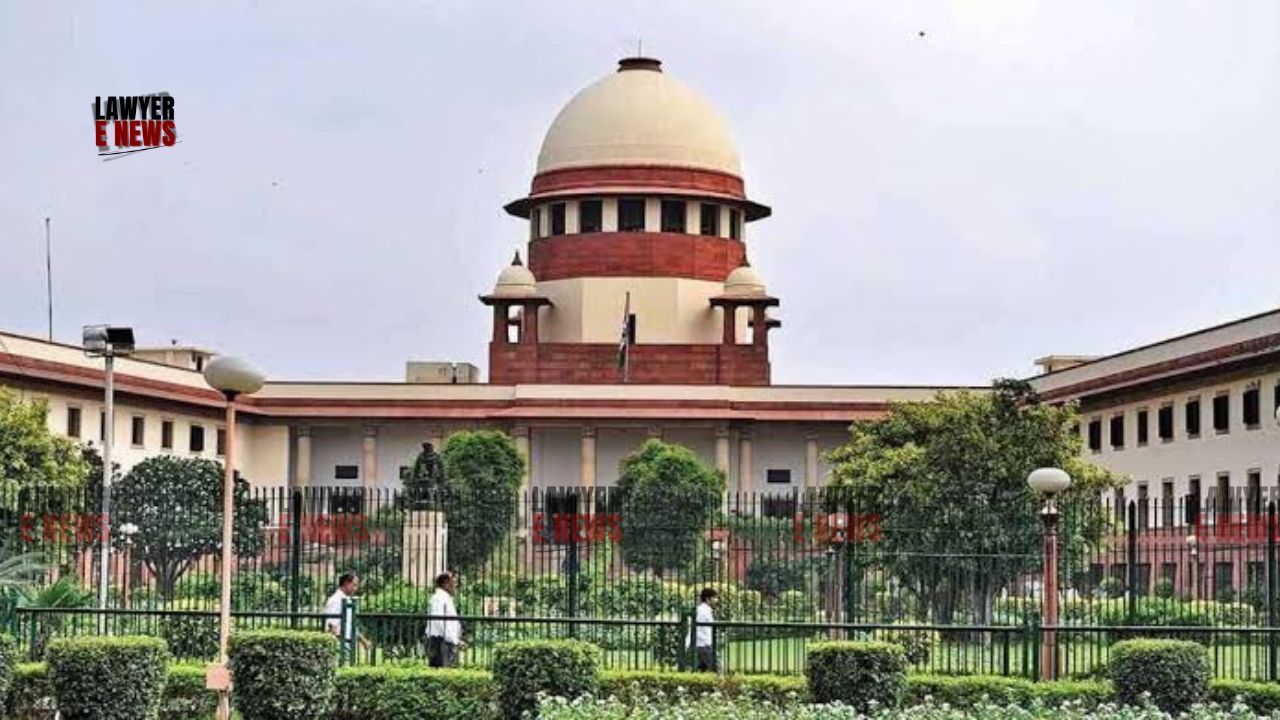
“Cause of action cannot be deferred by making a highly belated representation and awaiting its outcome”, - In a judgment that significantly clarifies the scope of limitation in service matters, the Supreme Court of India ruled that mere filing of a belated representation does not revive a stale claim. The Court held that claims brought long after the cause of action had arisen, without any statutory support or explanation for delay, are barred by limitation, and cannot be entertained merely on the basis of a later rejection of representation.
Referring to Sections 20 and 21 of the Administrative Tribunals Act, 1985, the Court emphasized that delay and laches are fatal in service jurisprudence, and stressed that courts and tribunals must enforce statutory timelines strictly, unless there are exceptional circumstances warranting condonation.
Accepted Benefits Without Demur, Then Claimed Higher Entitlement Years Later
Respondent S. Lalitha was appointed as a TV News and Film Librarian at Doordarshan Kendra, Bangalore, in 1985. She was granted financial upgradations under the ACP and MACP schemes, receiving benefits in 1999, 2008, and 2015. Notably, she accepted the benefits under the MACP scheme without objection.
Years later, in October 2016, she made a representation claiming that she should have been granted higher grade pay under the older ACP scheme, arguing that her entitlement dated back to March 2009. This representation was rejected within a month, and she approached the Central Administrative Tribunal (CAT), which allowed her application. The High Court later upheld the Tribunal’s order, relying on a previous decision in B.D. Kadam v. Union of India.
“Whether rejection of a non-statutory, belated representation can give rise to a fresh cause of action?”
The Court examined whether the respondent's application was within the limitation prescribed under Section 21 of the Administrative Tribunals Act. The respondent argued that the cause of action arose only when her representation was rejected in November 2016. However, the Supreme Court firmly rejected this argument:
“Filing of such belated representation, which was rejected in no time, did not have the effect of postponing the cause of action and stretching the period of limitation.”
The Court observed that the respondent never questioned the MACP benefits granted to her in 2010 and 2015, and instead waited until 2016 to raise a claim under the ACP scheme—seven years after the alleged entitlement arose.
Tribunal and High Court Ignored a Vital Limitation Objection: Court Sets the Record Straight
The Court found that both the Tribunal and the High Court failed to rule on the maintainability objection, despite it being legally sound. Emphasizing the importance of timely action, the Court referred to multiple precedents, including:
C. Jacob v. Director of Geology and Mining: “Representation and relief” cannot become a tool to reopen settled issues.
Union of India v. M.K. Sarkar: “A belated representation... cannot furnish a fresh cause of action.”
Shiv Charan Singh Bhandari v. State of Uttaranchal: “A grievance relating to promotion cannot be given a new lease of life at any point of time.”
Summarizing the legal position, the Court stated: “What assumes cruciality... is whether the representation that has been made and rejected... is statutorily provided in the service rules.”
The Court categorically held: “The O.A. was time-barred and should not have been entertained by the Tribunal. The High Court too erred in law...”
“Tribunals must not permit dead claims to be revived under the guise of rejected representations”
In strong terms, the Court warned against misuse of representations as a legal strategy:
“The due diligence exercised by a conscientious officer... cannot be taken undue advantage by the respondent by urging that the law declared in the aforesaid decisions would not be applicable in her case because of factual dissimilarities.”
The judgment drew a clear distinction between statutory representations, which may be relevant for limitation purposes, and non-statutory representations, which cannot legally extend the limitation period under Section 21.
Relief Retained on Humanitarian Grounds: “During the winter years of her life... she can live a life of dignity and purpose”
While the Court held that the claim was barred by limitation, it noted that the respondent had retired in 2018 and already received the benefits pursuant to the Tribunal’s order. Invoking its extraordinary powers under Article 142, the Court declined to order recovery of the amounts already disbursed:
“During the winter years of her life, financial support will become essential to ensure that she can live a life of dignity and purpose... we refrain from directing the respondent to refund any surplus amount received...”
The appeal was disposed of without disturbing the financial relief already granted, only by exercise of Article 142 of the Constitution. The Supreme Court, however, laid down a binding legal precedent on the limitation period applicable under the Administrative Tribunals Act:
“Cause of action cannot be deferred by making a highly belated representation and awaiting its outcome.”
Date of Decision: April 24, 2025