-
by sayum
10 August 2026 1:57 PM








"From the Application for Allotment to the Sale Deed and Subsequent Correspondence, All Documents Are Made in the Name of ISKCON Bangalore" - Supreme Court of India delivered a significant judgment in the high-profile property dispute between two rival factions of the International Society for Krishna Consciousness (ISKCON) in the matter of Prasannatma Das v. K.N. Haridasan Nambiar & Ors., Civil Appeal Nos. 3821-3822 of 2023 & connected matters. The Court decisively ruled that the immovable property in Bangalore, subject to two decades of litigation, belongs to ISKCON Bangalore, not ISKCON Mumbai, rejecting the latter's claims of branch ownership and fraudulent acquisition.
“From the date of the sale deed, no application was made by ISKCON Mumbai to correct the BDA record” – Supreme Court affirms validity of land allotment to ISKCON Bangalore
In a pivotal judgment delivered on 16 May 2025, the Supreme Court resolved the long-standing and highly publicized dispute between ISKCON Bangalore and ISKCON Mumbai over the ownership and control of a sprawling property in Bangalore’s Rajajinagar. The Court unequivocally affirmed that ISKCON Bangalore, a society registered under the Karnataka Societies Registration Act, is the lawful owner of the disputed Schedule ‘A’ land, thereby upholding the decree in its favour and overturning the High Court’s contrary findings. The judgment is expected to bring finality to an intense legal battle that has witnessed multiple appeals, interim oversight committees, and conflicting judicial observations over nearly two decades.
The origins of the dispute trace back to two competing suits: Suit No. 7934 of 2001, filed by ISKCON Bangalore against ISKCON Mumbai seeking a declaration of ownership over the Bangalore property; and Suit No. 1758 of 2003, filed by some devotees claiming control over ISKCON Bangalore. Both suits revolved around the question of which entity – ISKCON Mumbai or ISKCON Bangalore – had the legal and operational authority over the temple and associated properties in Bangalore.
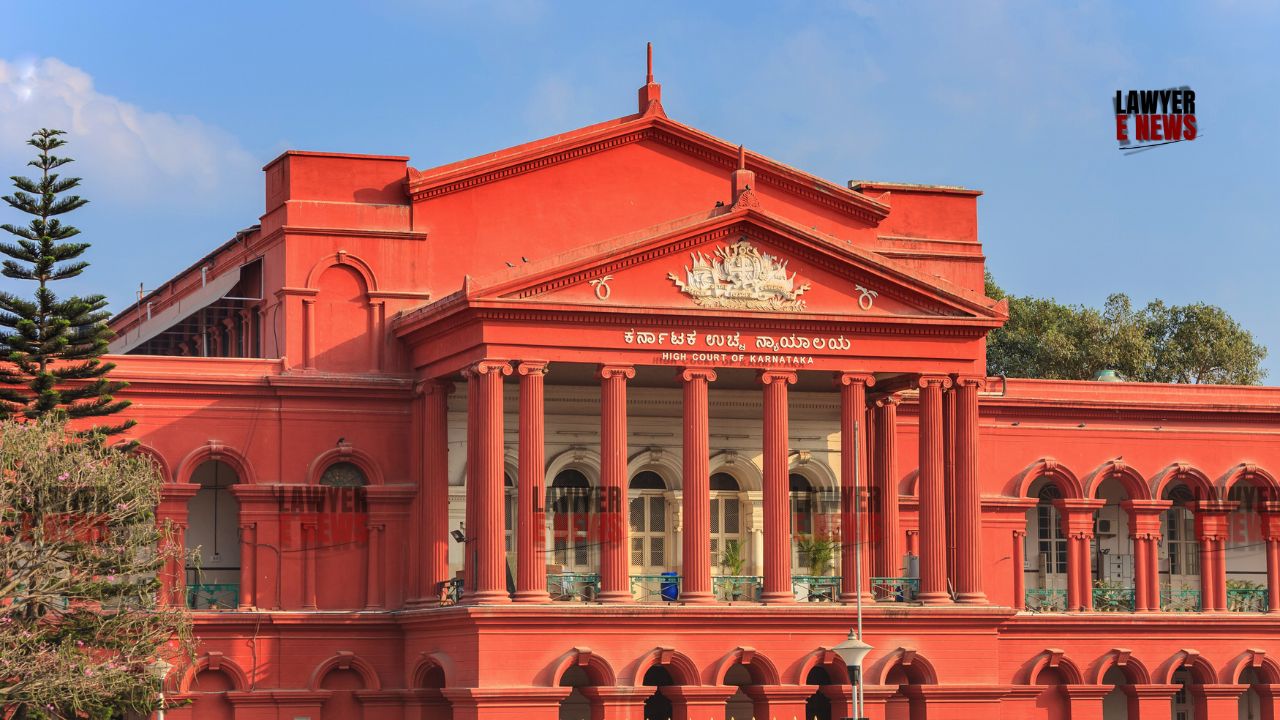
The Trial Court decreed in favour of ISKCON Bangalore, but the Karnataka High Court, in a judgment dated May 23, 2011, reversed this finding, allowing ISKCON Mumbai’s counter-claim. The High Court concluded that the Bangalore property was in fact acquired by ISKCON Mumbai through its alleged branch office in Bangalore. Aggrieved by the decision, ISKCON Bangalore and others appealed to the Supreme Court.
The primary legal question was: Who was the rightful owner of the property described in Schedule ‘A’ — ISKCON Mumbai, or ISKCON Bangalore?
The Court thoroughly examined documentary evidence, including the application for allotment dated 5 February 1987, sale deed dated 3 August 1988, and the exemption granted under the Urban Land (Ceiling and Regulation) Act, 1976. Each of these crucial documents identified ISKCON Bangalore as the applicant, purchaser, and beneficiary.
The Court held: “From the application for allotment to the sale deed and subsequent correspondence, all documents are made in the name of ISKCON Bangalore... There is nothing on record to show that any correspondence was made by ISKCON Mumbai with any authority claiming that the allotment of Schedule ‘A’ property was made to it.”
It rejected ISKCON Mumbai’s contention that Madhu Pandit, then President of the Bangalore center, acted in his capacity as an officer of ISKCON Mumbai:
“There is no indication in the application that it was signed by Madhu Pandit in his capacity as the President of the Bangalore branch of ISKCON Mumbai.”
Further, the Court criticized ISKCON Mumbai’s failure to produce any contemporaneous documents showing their own application or authority over the allotment process:
“No application is shown to have been made by ISKCON Mumbai or its Bangalore branch.”
The judgment also dismissed the High Court's finding that documents had been manipulated by Madhu Pandit:
“There is nothing placed on record to show that the application (Exh.P-51) was manipulated or fabricated. That is not even the case of ISKCON Mumbai.”
Findings on the Functioning of ISKCON Bangalore
The Court acknowledged that ISKCON Bangalore may have been dormant for some time after registration but stated that this had no bearing on the validity of the land allotment. Emphasizing the principle of ownership, the Court stated:
“The application for allotment is specifically made by ISKCON Bangalore, registered under the Karnataka Societies Registration Act… the High Court could not have held that the allotment was to ISKCON Mumbai through its branch in Bangalore.”
It further noted that ISKCON Mumbai failed to register the Bangalore property under the Maharashtra Public Trusts Act (MPT Act), despite having done so for other properties — a lapse that weakened their ownership claim.
On Allegations of Fraud and Manipulation
Dismissing allegations of fraudulent acquisition and document tampering, the Supreme Court said: “It is not the case of ISKCON Mumbai that Schedule ‘A’ property was purchased benami by it in the name of ISKCON Bangalore.”
It emphasized the settled law that title flows from the deed and not the source of funds: “The source of funds for acquiring property does not decide the title to the property.”
The Supreme Court restored the Trial Court’s decree in favour of ISKCON Bangalore, firmly establishing it as the owner of the temple and associated properties in Bangalore. The findings also stress the importance of clear documentary evidence in property disputes and underline the legal distinction between societies and their branches. The Court’s refusal to entertain speculative fraud allegations without proof further cements the requirement of strict evidentiary standards in civil litigation.
Date of Decision: 16 May 2025