-
by sayum
25 August 2026 12:32 PM







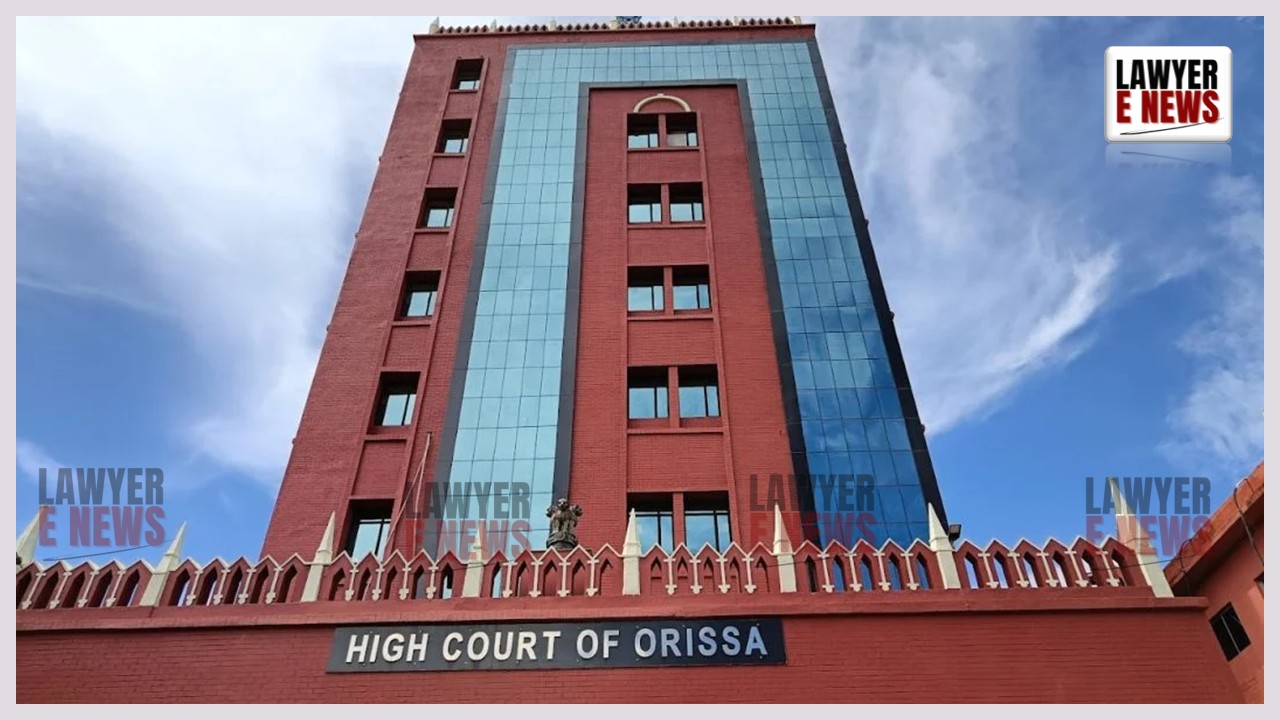
"2096 Days Too Late, and Too Implausible", In a firm rejection of what it called an “implausible and unacceptable explanation,” the Orissa High Court refused to condone an extraordinary delay of 2096 days (nearly 6 years) in an application seeking restoration of a Second Appeal dismissed for non-compliance with Court directions.
Justice Sashikanta Mishra, presiding over CMAPL No. 283 of 2025 in Sangram Keshari Pradhan & Anr. v. Sailabala Giri & Ors., held that the petitioners’ attempt to pin the blame on their 66-year-old mother for the long procedural lapse was "patently unbelievable." The Court observed:
“When the adult sons are available and one of them has already deposed before the Trial Court categorically stating that he himself was looking after the case, it cannot be believed for a moment that the elderly mother would be personally looking after the case without informing her sons.”
“Dismissal Was Not for Absence, But Disobedience” – Court Rejects Excuses Over Cause List and Counsel’s Absence
The second appeal in question—RSA No. 235 of 2014—was dismissed on 25.11.2019, with a categorical observation that the defects pointed out earlier had not been removed, despite a peremptory order dated 14.10.2019.
The order explicitly noted:
“Heard learned counsel for the appellants. In spite of chance being given by the peremptory order of this Court dated 14.10.2019, the defect has not been removed. The RSA thus stands dismissed.”
This, the Court stressed, established that counsel was present and heard, ruling out the petitioners' claim that the matter was dismissed for non-appearance due to a wrongly printed name in the cause list.
“The Second Appeal was dismissed for non-removal of defects. The cause list explanation simply does not hold water.”
“Litigation Cannot Be Left to Elderly Parents While Adult Sons Remain Silent” – Judicial Disbelief Over Family Dynamics
The heart of the petitioners' case rested on the claim that they were unaware of the appeal's dismissal because their mother had been handling the case after the death of their father. The supposed ignorance lasted nearly six years, until they stumbled upon the caveat petition filed by the respondents in 2025.
But this version was dismantled by the Court through the petitioners’ own evidence.
Petitioner No.1 had deposed as DW-1 before the Trial Court and admitted under oath that he was managing the case on behalf of all defendants. This directly contradicted the new claim that the mother alone was handling litigation.
Justice Mishra pointedly observed: “Such justification cannot support condonation under law.”
“Law of Limitation Requires Diligence, Not Convenient Amnesia” – No Sufficient Cause Shown, Delay Not Condoned
Citing the absence of any “sufficient cause” for condoning such an extraordinary delay under Order XLI Rule 19 of the CPC, the Court found that the petitioners’ story failed both on facts and plausibility.
“This Court is not satisfied that the long delay in filing the application for restoration has been adequately explained.”
Accordingly, the Interlocutory Application (IA) seeking condonation was dismissed, and the connected CMAPL followed suit as a natural consequence.
“Restoration Requires Action, Not Excuses”: Court Reinforces Discipline in Procedural Compliance
While the judgment did not rely on precedent, it strongly reaffirmed settled principles: dismissal for non-removal of defects is not a mere procedural formality, and restoration after years of silence cannot be entertained based on excuses lacking documentary or logical credibility.
This ruling sends a clear message to litigants:
Litigation is a serious business; adult litigants must own responsibility, and cannot outsource accountability to family members under vague pretexts.
Date of Decision. 05 Dec 2025