-
by sayum
25 August 2026 6:19 AM







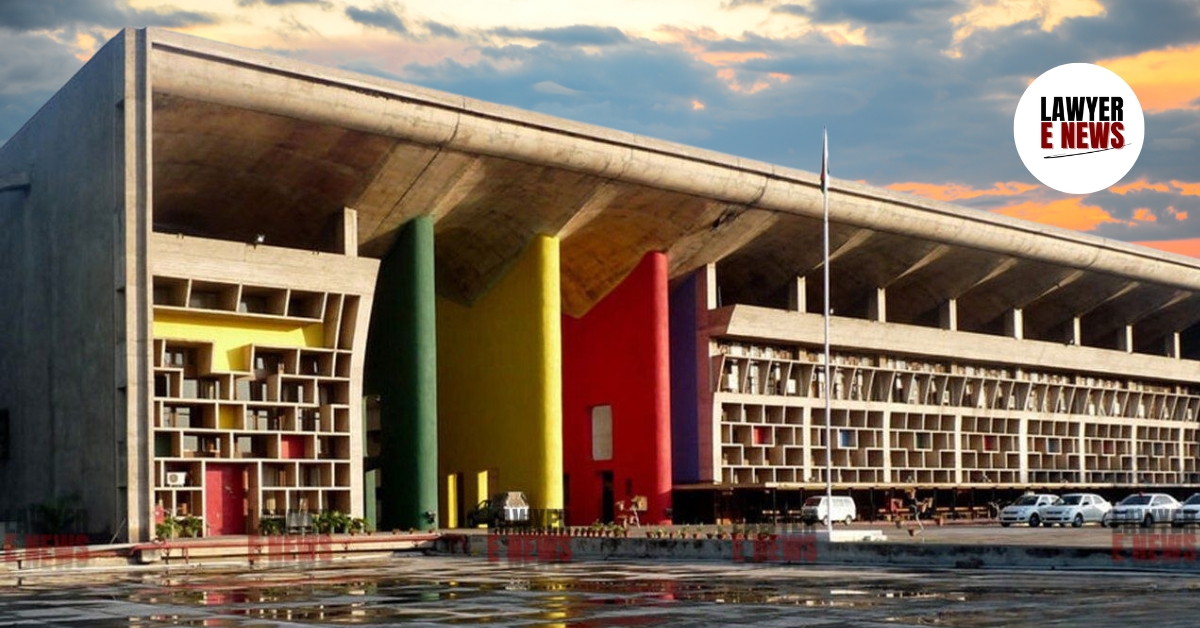
“No Leniency for Bribe-Takers in Uniform — Gravest Misconduct Requires Sternest Response, Even After Decades of Service”, Punjab and Haryana High Court upheld the dismissal of a Haryana Police Assistant Sub-Inspector (ASI) from service for accepting a bribe, firmly rejecting the plea that his 32 years of unblemished service merited leniency. High Court ruled that corruption in uniformed service is the gravest form of misconduct, and length of service or pension entitlement cannot be a shield once guilt is established.
Justice Jagmohan Bansal, dismissing the writ petition, emphatically observed:
“If an officer despite being found guilty of corruption is awarded punishment less than dismissal from service, there would be no other occasion to award punishment of dismissal. Rule 16.40 has been specifically inserted in Punjab Police Rules to deal with cases of corruption. No lenient view is warranted.”
The judgment decisively closes the door on arguments that disciplinary authorities must consider an officer’s prior service record while punishing acts of proven corruption.
“SP Is Competent to Dismiss ASI — Plea of Lack of Authority Misconceived”: High Court Follows Recent Precedents
One of the key contentions raised by the petitioner was that the Superintendent of Police (SP) lacked the authority to dismiss him, as his appointing authority was the Deputy Inspector General (DIG). The High Court, however, rejected this argument, citing its own recent precedent in Naresh Kumar v. State of Haryana, 2025 SCC OnLine P&H 2865.
Justice Bansal ruled:
“This Court has already held that Superintendent of Police is the appointing authority of Assistant Sub Inspectors and Sub Inspectors. He has power to inflict punishment of dismissal from service.”
Accordingly, the challenge to SP’s authority was declared “misconceived and liable to be turned down.”
“District Magistrate’s Approval Not Needed in Corruption Cases — Rule 16.40 Applies, Not 16.38”
Another significant issue raised by the petitioner was that the inquiry against him was initiated without approval from the District Magistrate, allegedly in violation of Rule 16.38 of the Punjab Police Rules (PPR).
The Court found this contention inapplicable in corruption cases, relying on its recent judgment in Narender Kumar v. State of Haryana, 2025 SCC OnLine P&H 3242. Therein, it was held that Rule 16.40 PPR specifically governs corruption cases, and Rule 16.38 does not apply.
Justice Bansal observed:
“The petitioner was found involved in corruption. He was arrested and made to face trial. In such cases, permission under Rule 16.38 is not required.”
Thus, approval of the District Magistrate was not a precondition, and the inquiry was held to be procedurally valid.
“Natural Justice Was Fully Complied With — Inquiry Report Supplied, Hearing Granted, No Prejudice Shown”
The petitioner further argued that he was not given an opportunity to comment on the inquiry report before punishment was proposed. However, the Court closely examined Rule 16.24 of the PPR, which lays out the complete departmental inquiry procedure, and held that the rule does not require the disciplinary authority to seek prior comments on the inquiry report if a show-cause notice is issued with full disclosure.
“The Disciplinary Authority supplied the inquiry report and called upon the petitioner to show cause. He filed his reply and was given a personal hearing. There was full compliance of natural justice.”
The Court noted that the petitioner did not raise the issue during departmental proceedings, and was now attempting to invoke a technical ground that does not constitute a violation of law.
“Proposed Punishment Can Be Mentioned — Instructions of 1975 Are Not Binding After 42nd Constitutional Amendment”
The petitioner also invoked a 1975 State instruction which prohibited mentioning the proposed penalty in the show cause notice. The High Court dismissed this claim, pointing to the constitutional amendment of Article 311(2) through the 42nd Amendment, which removed the requirement of a second opportunity to make a representation on proposed punishment.
Quoting the Constitution Bench ruling in Union of India v. Tulsi Ram Patel, (1985) 3 SCC 398, the Court held:
“There is no need to issue a show cause notice with respect to proposed punishment. The instructions of 1975 are merely advisory and have lost their significance after the amendment.”
Thus, mentioning the proposed penalty does not vitiate the disciplinary process, and the petitioner’s reliance on administrative instructions was ruled untenable.
“Single Act of Corruption Qualifies as Gravest Misconduct Under Rule 16.2 — Long Service No Excuse”
The petitioner emphasized his 32 years of service and commendation certificates, invoking Rule 16.2 of the PPR, which states that length of service and claim to pension shall be considered while awarding dismissal.
While acknowledging the language of Rule 16.2, the Court clarified that even a single act of corruption qualifies as gravest misconduct, citing the landmark judgment of the Supreme Court in State of Punjab v. Ram Singh, (1992) 4 SCC 54.
Justice Bansal quoted:
“It is not the repetition of acts complained of, but their quality, insidious effect and gravity. A single act of corruption despite long service may entail dismissal. The answer is obviously no leniency.”
In the present case, the petitioner had been caught red-handed in a trap for accepting bribe. Although he was later acquitted on technical grounds, the departmental inquiry concluded his guilt, and hence dismissal was fully warranted.
“Judicial Review Is Not Appellate Review — High Court Cannot Re-Appreciate Evidence in Service Matters”
The Court reiterated the limited scope of judicial review under Articles 226/227 in disciplinary matters. It referred to several key Supreme Court rulings including Union of India v. Subrata Nath, 2022 LiveLaw (SC) 998; P. Gunasekaran, (2015) 2 SCC 610; Syed Yakoob, AIR 1964 SC 477; and Central Council for Research in Ayurvedic Sciences v. Bikartan Das, 2023 SCC OnLine SC 996.
Justice Bansal observed:
“The Court does not act as an appellate forum. It does not re-weigh the evidence. Only if the findings are perverse, or there is a violation of procedure, will the Court interfere. That is not the case here.”
The High Court found no such procedural lapses or perversity, and thus declined to substitute its views for those of the disciplinary authorities.
“Corruption in Uniform Cannot Be Tolerated — Petition Dismissed”
In conclusion, the High Court ruled that none of the grounds raised by the petitioner warranted interference, and that the dismissal order passed by the Superintendent of Police was well within the legal framework and disciplinary rules.
“It is very difficult to get an FIR registered against a police officer. There is no allegation of mala fide or bias. Interference in such matters discourages higher police officials from acting against erring subordinates.”
Accordingly, the writ petition was dismissed, and all pending applications stood disposed of.
Date of Decision: 02 December 2025