-
by sayum
12 August 2026 1:53 PM







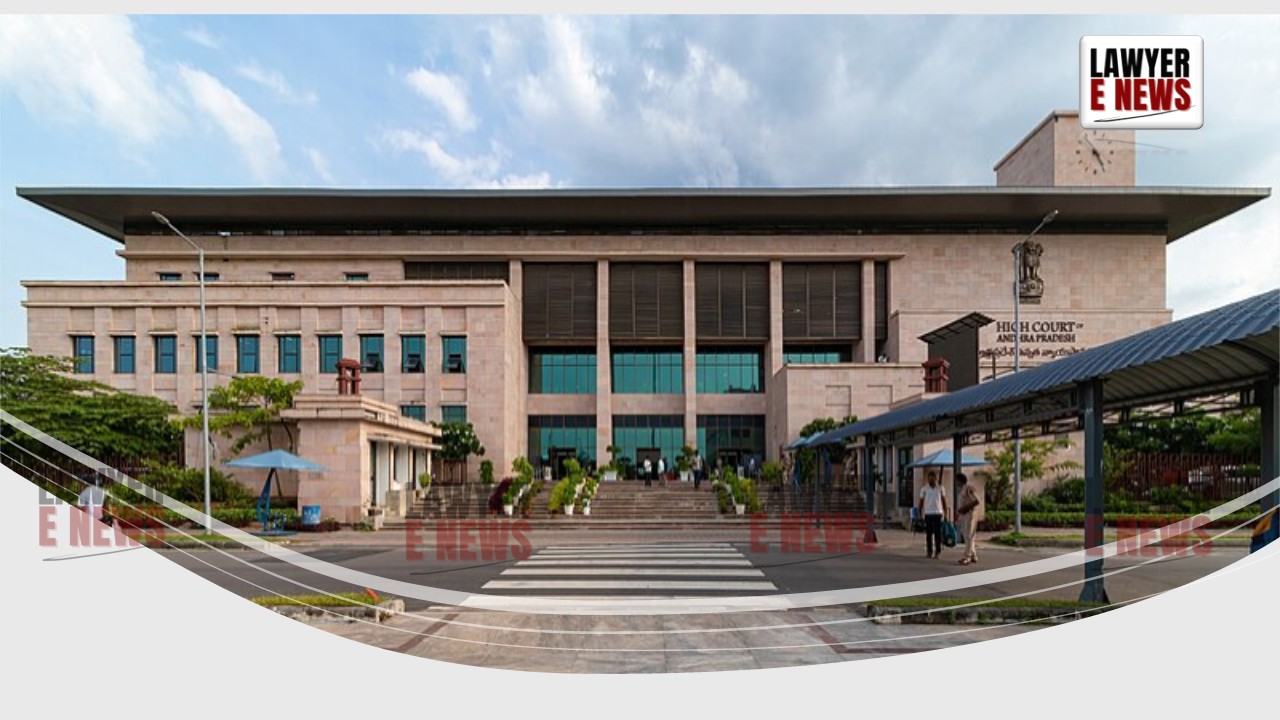
Readiness and Willingness to Perform Contract Must Be Proved - Andhra Pradesh High Court dismissed the appeal filed by V. Surya Rao, who sought specific performance of a sale agreement dated November 29, 1989, holding that the plaintiff failed to prove his continuous readiness and willingness to perform his part of the contract.
Upholding the decision of the Additional Senior Civil Judge, Guntur, which had denied specific performance and instead granted a refund of the advance amount, the Court ruled, "In a suit for specific performance, it is not enough for the plaintiff to merely claim readiness and willingness—he must establish it through clear and convincing evidence. Mere oral assertions cannot substitute for legal compliance."
"Buyer Seeks to Enforce 1989 Sale Agreement—Sellers Claim Default in Payment"
The dispute arose when Surya Rao, the plaintiff, sought to enforce an agreement of sale dated November 29, 1989, executed by C. Anji Reddy and his wife, the defendants, for the purchase of five acres of land at ₹1,80,000 per acre. The plaintiff had paid ₹2,50,000 as advance and alleged that the defendants breached the agreement by refusing to hand over possession of the land and attempting to sell it to third parties.
The plaintiff claimed that as per the terms of the contract, the defendants were required to deliver possession by January 31, 1990, after removing the standing cotton crop. He further alleged that he was always ready and willing to pay the balance amount and execute the sale deed, but the defendants deliberately delayed the transaction and violated the contract.
The defendants, however, countered that the plaintiff was a real estate broker with no financial capacity to complete the transaction. They argued that the plaintiff failed to pay the balance amount by the agreed deadline of August 1, 1990, and instead began dividing the land into plots and selling it to third parties without their consent.
The trial court, after evaluating the evidence, refused to grant specific performance but directed the defendants to refund the advance amount of ₹2,50,000 with interest. Dissatisfied with this decision, the plaintiff filed an appeal before the Andhra Pradesh High Court.
"Readiness and Willingness Must Be Demonstrated—Burden Lies on the Plaintiff"
The High Court, analyzing the case, ruled that the plaintiff failed to establish his readiness and willingness to fulfill the contract, stating, "Readiness and willingness must be proved not just at the time of filing the suit but throughout the proceedings, up to the final decision of the case."
Citing the Supreme Court’s rulings in Janardan Das v. Durga Prasad Agarwalla (2024 INSC 778) and K.S. Vidyanadam v. Vairavan (1997) 3 SCC 1, the Court observed, "Mere assertions in the plaint do not suffice—there must be documentary evidence showing concrete steps taken by the buyer to complete the transaction."
The Court noted that the plaintiff did not issue any legal notice to the defendants before filing the suit, which was a crucial omission in proving his willingness to perform the contract. The judgment emphasized, "The absence of a legal notice indicating readiness to pay the balance consideration is a serious lapse. It raises doubts about the plaintiff’s true intent to complete the sale."
"Plaintiff Entered Into Third-Party Agreements Without Completing Original Sale"
The Court also took serious note of the fact that the plaintiff had started selling plots from the disputed land to third parties without first obtaining a registered sale deed from the defendants. Examining the evidence, the Court found that the plaintiff executed an unregistered sale agreement in favor of a third party for 2,000 square yards on January 12, 1990, before even completing his own purchase.
Condemning this conduct, the Court ruled, "A buyer who, without securing title in his own name, starts selling the property to others cannot claim specific performance. Such actions indicate commercial exploitation rather than a genuine intent to complete the original contract."
"Time Limits in Contracts Cannot Be Ignored—Delay Affects Equitable Relief"
The Court emphasized that even if time is not the essence of a sale contract, unreasonable delay by the plaintiff can affect his entitlement to specific performance. Relying on the Supreme Court’s ruling in Chand Rani v. Kamal Rani (1993) 1 SCC 519, the Court reiterated, "Where an agreement specifies a timeline for payment and the buyer fails to comply, courts will not automatically grant specific performance just because the suit is filed within the limitation period."
The Court found that the plaintiff failed to adhere to the agreed deadline of August 1, 1990, and did not provide evidence of financial capacity to make the payment even thereafter. It held, "Equitable relief cannot be granted where the plaintiff himself has defaulted. The trial court was justified in denying specific performance and granting only a refund of the advance amount."
"Appeal Dismissed—Refund Order Upheld"
Dismissing the appeal, the High Court ruled, "The plaintiff has not demonstrated continuous readiness and willingness to perform his obligations under the contract. His failure to make timely payments, coupled with his sale of plots to third parties without acquiring title, disentitles him to specific performance."
The Court upheld the trial court’s order directing the defendants to refund ₹2,50,000 with interest, concluding, "There is no merit in the appeal. The judgment of the trial court stands confirmed."
"A Landmark Judgment on Specific Performance—Buyer’s Conduct is Key"
This ruling establishes a strong precedent in cases involving specific performance of contracts, reaffirming that:
• A mere agreement of sale does not guarantee specific performance—buyers must show continuous readiness and willingness to complete the transaction.
• Failure to issue a legal notice or demand payment raises doubts about the buyer’s true intent.
• Engaging in third-party sales without securing title weakens the buyer’s case for specific performance.
• Courts will not grant specific performance if the plaintiff fails to comply with agreed timelines, even if limitation periods are not violated.
The Andhra Pradesh High Court has reaffirmed that contractual obligations must be honored in both letter and spirit, ensuring that buyers cannot take advantage of agreements while failing to fulfill their own commitments.
Date of Decision: 17 March 2025