-
by sayum
04 August 2026 1:39 PM







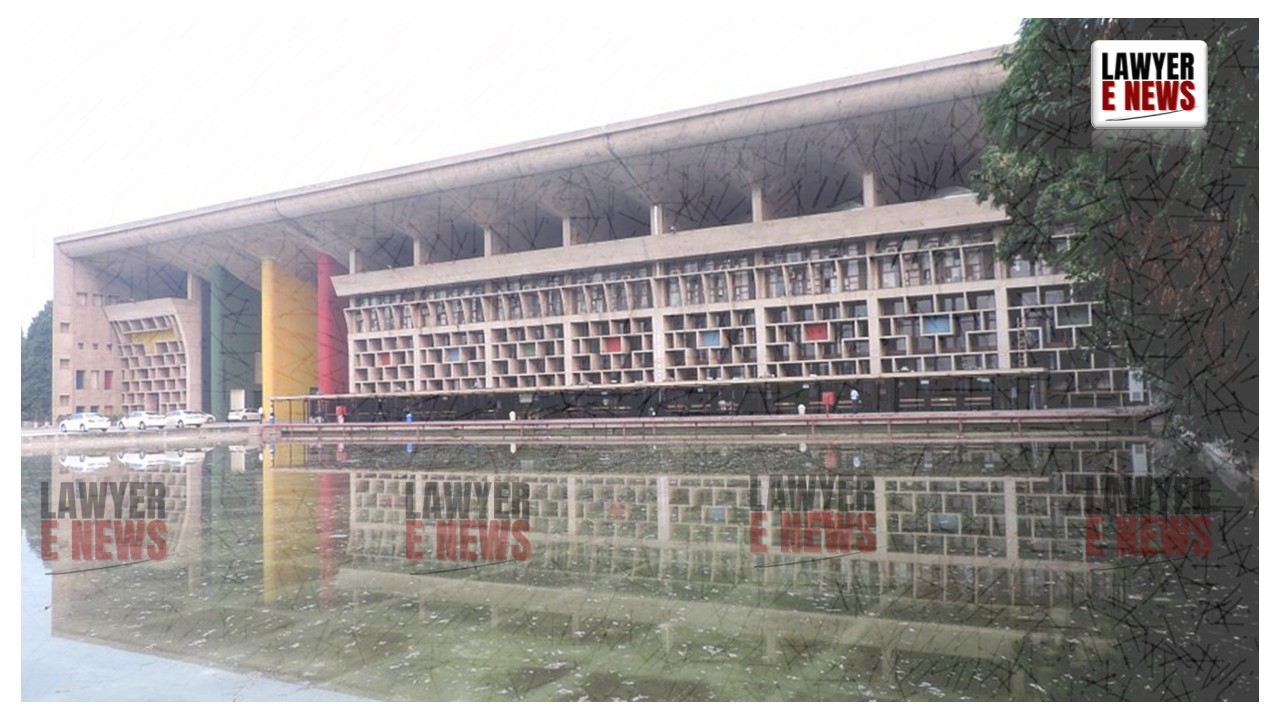
“Technicalities of Law Are the Handmaid of Justice, Not Its Master….If a Piece of Evidence Is Relevant and Material, It Cannot Be Shut Out in the Name of Technicalities” – Punjab and Haryana High Court delivered a significant judgment affirming the wide and purposeful scope of Section 311 of the Code of Criminal Procedure, 1973. Dismissing the accused’s challenge to a trial court order permitting the prosecution to introduce a video clip as additional evidence at the stage of defence evidence, Justice Surya Partap Singh emphasized that, “the very purpose of law, i.e., dispensation of justice, cannot be allowed to take a back seat in the name of technicalities.” The Court held that so long as the discretion is exercised judiciously and in pursuit of the truth, late-stage evidence may be permitted—even if it causes delay—because the ends of justice must prevail over procedural objections.
The Case Revolved Around an Alleged Abuse of Process – But the Court Saw an Effort to Uncover the Truth
The revision arose from a long-standing trial that began in 2018, in which the prosecution, during the final phase of trial—specifically when the case was fixed for defence evidence—sought permission to produce a video clip allegedly showing a crucial link between the accused and the offence. The petitioner, Dalbir Singh, strongly objected to this move, arguing that the evidence had been in the prosecution’s possession all along and its sudden production at the fag end was an abuse of process meant to plug evidentiary gaps. His counsel relied on the Supreme Court’s recent decision in Ashutosh Pathak v. State of U.P., 2025(2) Crimes 332, to argue that allowing such evidence after seven years of litigation would defeat the accused's right to a speedy and fair trial under Article 21 of the Constitution.
However, the prosecution contended that the video clip was crucial and its prior omission was inadvertent. It was neither a calculated strategy nor an act of malice. Rather, it was a necessary correction to ensure the full facts reached the court. The trial judge had accepted this explanation and allowed the prosecution’s application under Section 311 CrPC. The petitioner, aggrieved by this decision, approached the High Court in revision.
Section 311 CrPC Is Not a Procedural Trap But a Tool for Justice – Court Refuses to Interfere
While analyzing the legal issue, the High Court offered a robust reaffirmation of the purpose behind Section 311. The Court noted:
"A perusal of the record shows that the learned trial Court has exercised its jurisdiction in favour of the prosecution, while allowing it to lead additional evidence at the fag end of trial. Here, this fact cannot be ignored that the purpose of a trial is always to impart justice."
Quoting and relying upon Supreme Court decisions in Vijay Kumar v. State of U.P., (2011) 8 SCC 136, and Zahira Habibullah Sheikh (5) v. State of Gujarat, (2006) 3 SCC 374, the High Court observed that judicial discretion under Section 311 CrPC must be exercised “not arbitrarily or capriciously,” but with a clear aim to avoid “failure of justice on account of mistake of either party.” The Court emphasized that Section 311 is not confined to either the prosecution or defence—“the section is a general section which applies to all proceedings, enquiries and trials under the Code.”
The Court categorically rejected the petitioner’s argument that the evidence should be barred due to its timing. Justice Singh observed that “if a piece of evidence is relevant and material, in the name of technicalities of law, such evidence cannot be denied to be brought on record.” It was further held that relevance and truth must take precedence over delay.
Hostility of Witnesses Does Not Invalidate Relevance – Admissibility Will Be Judged at Trial
The accused also contended that the video clip was unreliable as the witnesses who allegedly prepared it had turned hostile. The Court refused to accept this as a valid ground to block its production. It held:
"Relevance of material outweighs credibility concerns at this stage – Admissibility and weight to be assessed at trial."
The Court clarified that the assessment of credibility is not to be pre-judged during interlocutory stages but must be tested during full trial. The fact that the witnesses had turned hostile did not render the evidence legally inadmissible.
Delay Alone Cannot Defeat Justice – Speed Must Serve Substance, Not Undermine It
On the crucial argument that allowing the evidence would prolong an already delayed trial, the Court invoked the Supreme Court’s view in Ashutosh Pathak, noting that “if the witness is essential for a just decision, he may be allowed to be examined by way of additional evidence.” Justice Surya Partap Singh observed that the right to a fair trial under Article 21 must be interpreted not just as a right to speed, but also as a right to truth and substantive justice.
The Court acknowledged the protracted nature of the trial but concluded that delay, while undesirable, cannot be the sole ground to exclude evidence which may be vital to the ends of justice. It reiterated that the wider the discretion under Section 311, the greater the responsibility to apply judicial mind, which the trial court had demonstrably done in this case.
Final Word – Discretion Properly Exercised, Truth Must Prevail
In conclusion, the Court held:
"Once the discretion has been exercised with a motive to advance the cause of justice, there is no scope for indulgence or interference in the discretion exercised by the learned trial Court."
The revision petition was found to be devoid of merit and dismissed accordingly. The prosecution was thus allowed to present the video clip as additional evidence in the ongoing trial, reinforcing the primacy of substance over form in criminal adjudication.
The Judgment Is a Reminder That Justice Is a Process Aimed at Truth, Not Mere Speed
This judgment reflects a broader judicial philosophy—that rules of procedure are meant to ensure fair trials, not to obstruct them. The discretion under Section 311 CrPC is meant to aid in the discovery of truth and prevent miscarriages of justice due to omissions, inadvertent or otherwise. As the Court rightly declared:
"Technicalities of law are handmaid of justice."
The decision stands as a precedent that reaffirms the courts’ power to look beyond procedural lapses when the larger goal is to serve justice, not just close files.
Date of Decision: October 16, 2025