
-
by sayum
25 August 2026 12:32 PM







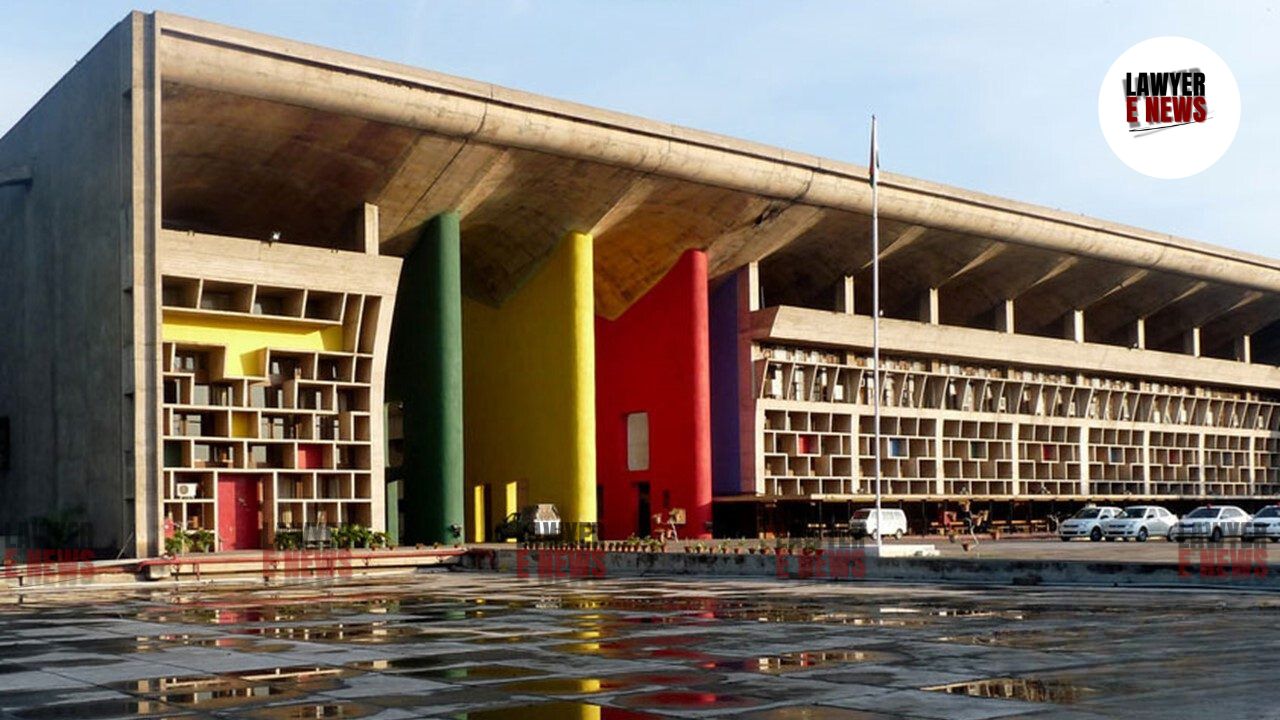
“Grave Suspicion Surrounds the Will”, In a reportable judgment Punjab & Haryana High Court dismissed a Regular Second Appeal under Section 100 CPC, upholding concurrent findings that the Will dated 03.04.2013 was surrounded by grave suspicious circumstances and had not been duly proved.
Justice Nidhi Gupta reaffirmed that where both the Trial Court and First Appellate Court have concurrently rejected a Will on appreciation of evidence, the High Court cannot interfere in second appeal unless perversity or misreading of evidence is demonstrated. No such substantial question of law arose in the present case.
Suit Challenging Will and Mutation
The dispute arose from agricultural land owned by Nand Kaur alias Bibi, who died on 28.05.2013. She had four sons and four daughters. The plaintiff, claiming as one of the legal heirs, sought declaration of ownership to the extent of 1/8th share and challenged a Will dated 03.04.2013 allegedly executed by Nand Kaur in favour of only two sons.
The plaintiff contended that the Will was forged and fraudulent. Mutation had been sanctioned by the District Revenue Officer in favour of the beneficiaries on the basis of the Will.
The Trial Court partly decreed the suit, declaring the plaintiff owner of 1/8th share and setting aside the Will and consequent mutation. The First Appellate Court affirmed the decree. Aggrieved, defendants No. 1 and 2 preferred the present second appeal.
“Execution Shortly Before Death and Posthumous Registration Raise Suspicion”
The High Court noted that the Will was allegedly executed on 03.04.2013, while the testator died on 28.05.2013. Evidence revealed that she had remained ill for 5–6 months prior to her death.
Moreover, the Will was not registered during her lifetime. It was registered only on 14.08.2013, after her demise.
The First Appellate Court had categorically held that execution of a Will shortly before death of an admittedly ill testator, coupled with posthumous registration, constituted suspicious circumstances requiring strict proof.
The High Court endorsed this reasoning, observing that the burden lay heavily on the propounders to dispel such suspicion in terms of the law laid down in H. Venkatachala Iyengar v. B.N. Thimmajamma.
“Physical Appearance of the Will Itself Creates Grave Doubt”
Both Courts below had undertaken a visual appraisal of the document.
It was observed that the first six lines were written closely, whereas subsequent lines had progressively increasing gaps. The thumb impression of the testator appeared on the extreme left instead of at the end of the document.
The Trial Court recorded that “the space between the lines have been increased in the latter half of the said Will to reach the thumb impression of the testator,” suggesting that the Will appeared to have been written on a blank paper already bearing the thumb impression.
The High Court referred to its earlier judgment in Kartar Singh v. Dilber Singh, which held that where a Will appears written on a blank paper already bearing the thumb impression of the testator, such circumstance is gravely suspicious.
The burden was on the propounders to dispel this suspicion. They failed to do so.
Attesting Witnesses Deny Execution
The appellants argued that one attesting witness had supported the Will and that one attesting witness was sufficient under Section 68 of the Evidence Act.
However, the High Court noted that two attesting witnesses — PW2 Saravjit Kaur and PW3 Nikka Singh — categorically denied execution. They stated that their thumb impressions had been obtained on blank papers under false pretence of a family settlement.
PW3 further deposed that he never saw the testator executing any Will.
In the face of such categorical denial and surrounding suspicious circumstances, reliance on a solitary supporting witness was insufficient.
Scribe’s Testimony Further Weakens the Case
The evidence of PW4 Jamna Dass, the scribe, significantly weakened the genuineness of the document.
He admitted that he was not a regular deed writer and ran a grocery shop. He had not written the original Will in Punjabi but had only translated it into Hindi. He did not see the testator affix her thumb impression. He admitted that the gap between the last lines was due to an attempt to reach a thumb impression already present on the paper.
These admissions fortified the inference that the Will was not executed in the manner required under Section 63 of the Indian Succession Act.
Exclusion of Natural Heirs Without Explanation
The testator had four sons and four daughters, yet the Will allegedly bequeathed property only to two sons without assigning any reason for exclusion of others.
Though exclusion of natural heirs by itself is not conclusive, in the present factual matrix — particularly when there was no evidence of estrangement — it added to the chain of suspicious circumstances.
Revenue Findings Not Binding on Civil Court
The appellants placed heavy reliance on the mutation sanctioned by the District Revenue Officer.
The High Court held that findings of revenue authorities are not binding on civil courts. Further, the affidavits relied upon before the revenue authority were not put to the plaintiff’s witnesses during cross-examination and therefore had no evidentiary value.
FIR and Criminal Proceedings: No Merit in Appellants’ Plea
The appellants contended that attesting witnesses had resiled under fear of an FIR alleging forgery.
The Court noted that although conviction was initially recorded in the criminal case, the FIR and conviction were later quashed on compromise. Thus, the argument that witnesses deposed falsely due to fear stood falsified.
“Concurrent Findings Cannot Be Reopened Under Section 100 CPC”
The High Court emphasized that in second appeal under Section 100 CPC, interference is permissible only when substantial questions of law arise or findings are perverse or based on misreading of evidence.
The concurrent findings rejecting the Will were based on detailed appreciation of oral and documentary evidence and consistent with settled principles laid down in H. Venkatachala Iyengar.
No perversity, misapplication of law, or substantial question of law was demonstrated.
The Regular Second Appeal was dismissed. The concurrent judgments declaring the plaintiff owner of 1/8th share and setting aside the Will dated 03.04.2013 and consequent mutation were affirmed.
Pending applications were disposed of.
The judgment reiterates that proof of a Will is not a mere procedural formality. Where suspicious circumstances exist — execution shortly before death, posthumous registration, unusual document format, denial by attesting witnesses, and inconsistent scribe testimony — the propounder must remove every cloud of doubt.
Failure to dispel suspicion is fatal. And once two courts have concurrently returned such findings, the High Court will not convert a second appeal into a third round of factual adjudication.
Date of Decision: 09 February 2026





