-
by sayum
19 August 2026 1:58 PM







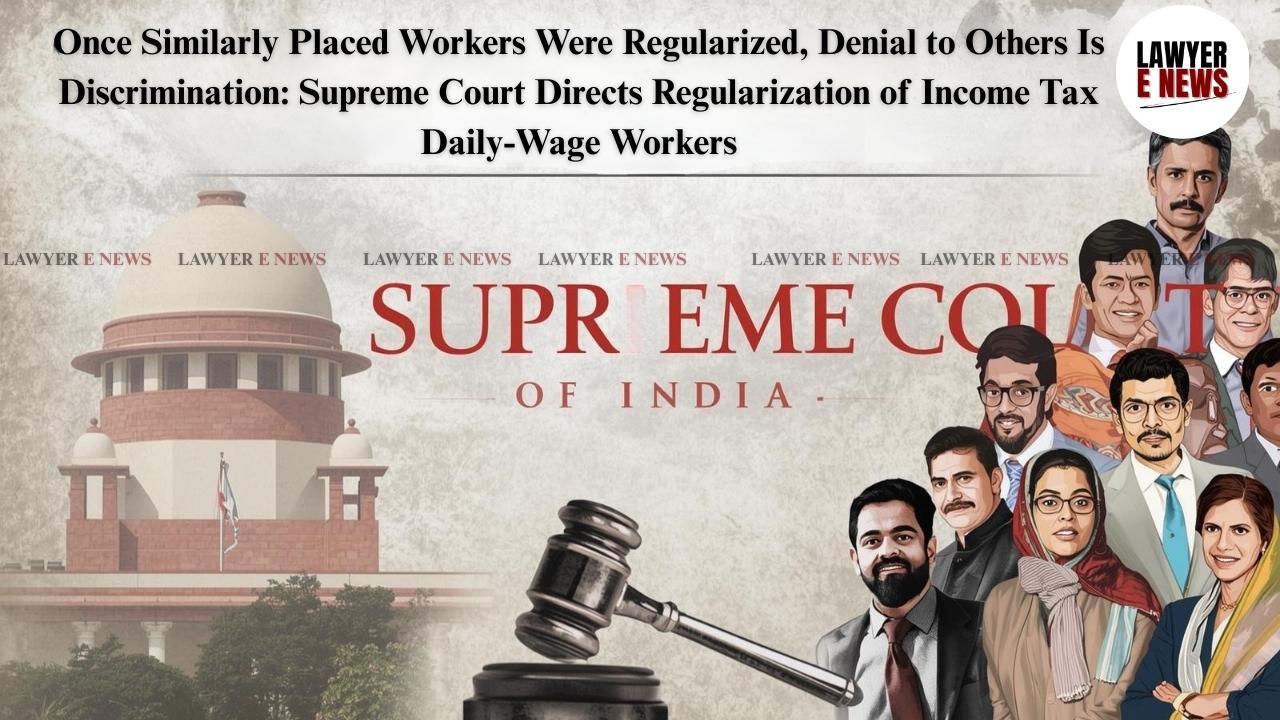
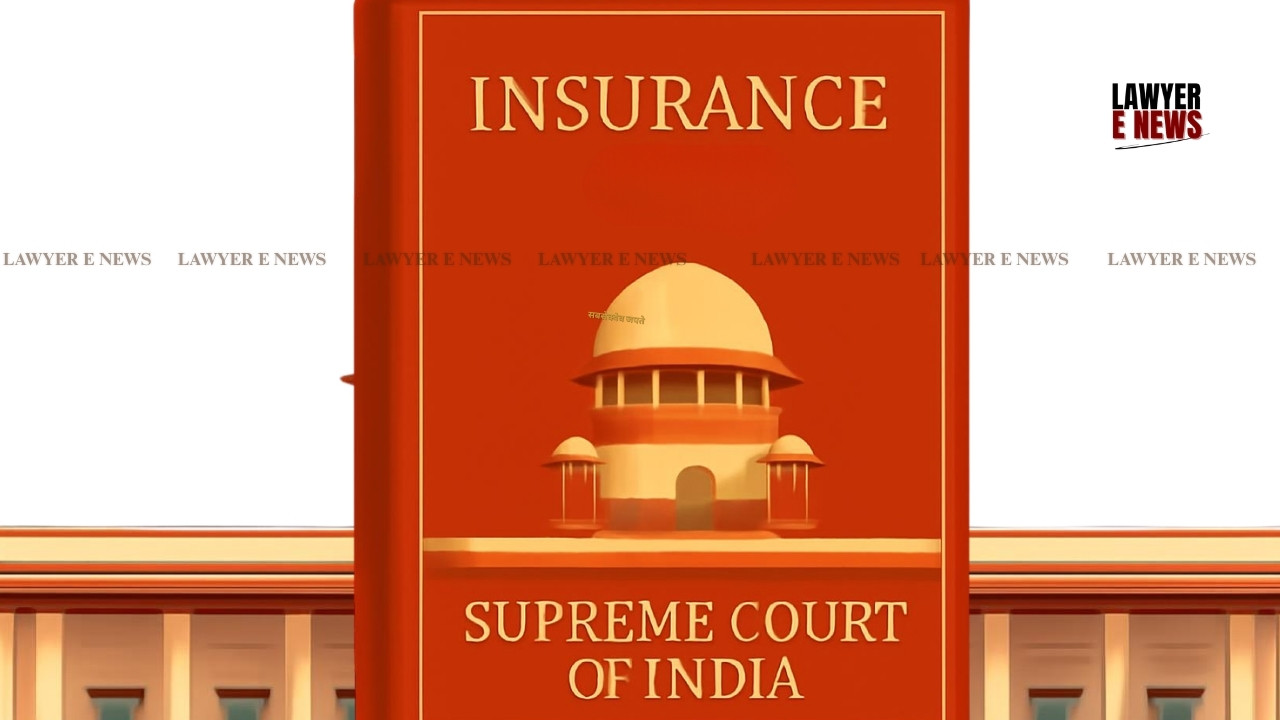
“Umadevi Cannot Be Weaponized To Deny Legitimate Claims Of Long-Serving Employees”, In a significant ruling reinforcing the principle of equality in public employment, the Supreme Court of India on 13 February 2026, held that denial of regularization to daily-wage workers of the Income Tax Department, despite similarly situated employees having been regularized earlier, amounted to discrimination under Articles 14 and 16 of the Constitution.
A Bench comprising Justice J.K. Maheshwari and Justice Atul S. Chandurkar set aside the Madhya Pradesh High Court’s judgment dated 26.08.2019 and directed that the appellants’ services be regularized with effect from 01.07.2006, granting them consequential benefits within three months.
The Court emphatically ruled that mechanical reliance on Secretary, State of Karnataka v. Umadevi (3) to deny regularization was unsustainable where parity with similarly placed employees was clearly established.
Long-Serving Casual Workers Denied Regularization
The appellants, registered with the Employment Exchange, were engaged between 1993 and 1998 as Sweepers and Cook in the Office of the Commissioner of Income Tax, Gwalior. They continued to work for years as casual/daily-wage employees with the expectation that they would be conferred temporary status and eventually regularized.
After their representations failed, they approached the Central Administrative Tribunal, Jabalpur Bench, in OA No. 719 of 2012 seeking regularization. The Tribunal rejected their claim on 13.05.2015, holding that they had not completed ten years of continuous service as on 10.04.2006, the cut-off date indicated in Umadevi (3).
The High Court of Madhya Pradesh affirmed the Tribunal’s decision on 26.08.2019. Aggrieved, the appellants approached the Supreme Court.
Meanwhile, the Department had begun outsourcing the very work performed by these appellants under circulars dated 04.07.2011 and 10.01.2012 — a fact that would later weigh heavily with the Court.
The Supreme Court examined:
“Whether denial of regularization solely on the ground of non-completion of ten years’ service as on 10.04.2006 was sustainable in light of regularization granted to similarly placed employees?”
“Whether the appellants’ appointments were ‘illegal’ or merely ‘irregular’?”
“Whether outsourcing of the same work demonstrated its perennial and indispensable nature?”
The Union of India argued that in absence of ten years’ service as on 10.04.2006 and in absence of sanctioned posts, regularization could not be granted under Umadevi (3).
The appellants, however, relied upon earlier Supreme Court decisions in Ravi Verma v. Union of India (2018) and Raman Kumar v. Union of India (2023), where similarly situated daily-wage workers in the same department had been regularized from 01.07.2006 on the ground of discriminatory treatment.
Parity Established: Names Found In The Same Official List
A crucial factor in the Court’s reasoning was the official list of daily-wage workers as on 31.10.2005, where the names of the present appellants appeared alongside those of Ravi Verma and others whose services had already been regularized by orders of the Supreme Court.
The Court observed that these names continued in subsequent lists dated 11.11.2005 and 31.01.2008.
It categorically held:
“The present appellants are, therefore, similarly situated as the appellants in Ravi Verma and Ors.”
Referring to Raman Kumar, the Court reiterated that:
“The Income Tax Department could not have discriminated in the matter of regularizing the services of similarly situated employees.”
Thus, denial of regularization to the present appellants, while granting it to others from the same list, violated the mandate of Articles 14 and 16.
Outsourcing Proved Perennial Nature Of Work
The Bench placed significant reliance on Jaggo v. Union of India (2024), particularly its observations on outsourcing and perennial work.
Quoting from Jaggo, the Court emphasized:
“The recurring nature of these duties necessitates their classification as regular posts, irrespective of how their initial engagements were labelled. It is also noteworthy that subsequent outsourcing of these same tasks to private agencies after the appellants’ termination demonstrates the inherent need for these services.”
The Court further reiterated:
“The decision in Uma Devi (supra) does not intend to penalize employees who have rendered long years of service fulfilling ongoing and necessary functions of the State.”
And in a powerful observation cautioning against misuse of precedent:
“It is regrettable that its principles are often misinterpreted or misapplied to deny legitimate claims of long-serving employees… This selective application distorts the judgment’s spirit and purpose, effectively weaponizing it against employees who have rendered indispensable services over decades.”
Illegal vs. Irregular Appointments: A Critical Distinction
The Court reaffirmed the distinction drawn in Umadevi and clarified in Jaggo and Vinod Kumar between “illegal” and “irregular” appointments.
It noted that appointments made after Employment Exchange sponsorship and interview could not be termed illegal or backdoor entries. At best, they were irregular.
The Court stressed that:
“Courts must look beyond the surface labels and consider the realities of employment: continuous, long-term service, indispensable duties, and absence of any mala fide or illegalities in their appointments.”
Thus, reliance solely on procedural technicalities to deny regularization was found contrary to fairness and equity.
Supreme Court’s Final Directions
Allowing the appeal, the Court held that the Tribunal and High Court erred in mechanically applying Umadevi (3).
The judgment of the High Court dated 26.08.2019 was set aside.
The Court directed:
“The services of the appellants be regularized from 01.07.2006 on the same terms as made applicable in Ravi Verma and Ors. as well as in Raman Kumar and Ors.”
Consequential benefits were ordered to be released within three months.
Intervenors impleaded through Interim Application No. 42233/2020 were also granted identical relief.
Equality In Public Employment Reaffirmed
This judgment reinforces a crucial constitutional principle — once the State regularizes one set of similarly situated employees, it cannot arbitrarily deny the same benefit to others standing on identical footing.
The Supreme Court has once again clarified that Umadevi (3) was never meant to be a rigid shield to defeat legitimate claims of long-serving employees, particularly where their work is perennial and the appointments are not illegal.
By harmonizing Umadevi with the equality mandate under Articles 14 and 16, the Court has ensured that administrative convenience does not override constitutional fairness.
Date of Decision: 13 February 2026