-
by sayum
28 August 2026 8:01 AM







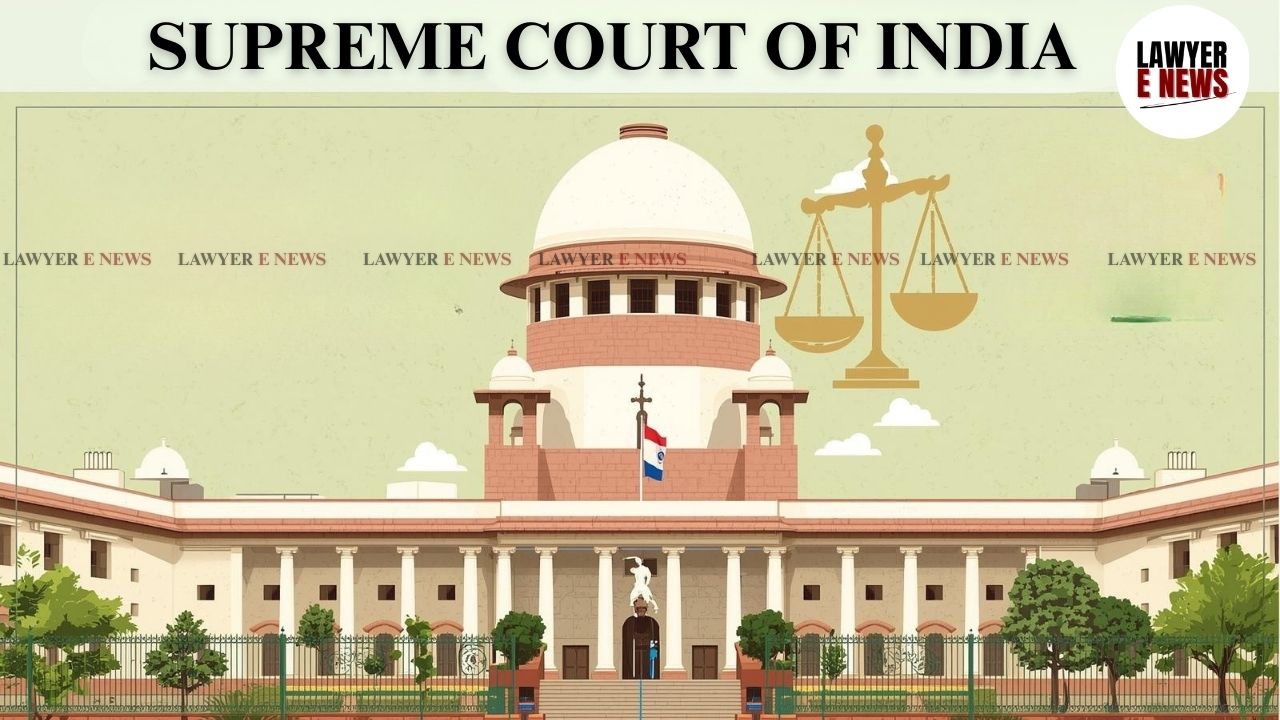
“So Long As The Initial Voluntary Composition Remains Unaffected, Article 19(1)(c) Is Not Violated”, In a constitutionally significant pronouncement delivered on 13 February 2026, the Supreme Court of India revisited and clarified the true scope of the fundamental right under Article 19(1)(c) in the context of sports administration.
A Bench of Justice Pamidighantam Sri Narasimha and Justice Alok Aradhe held that while the right to form an association includes the protection of its original voluntary composition, it does not extend to guaranteeing that such an association can conduct its affairs free from regulatory oversight. The Court used the occasion to reaffirm the constitutional distinction between protection of formation and protection of functioning.
The appeal was partly allowed, and the High Court’s reliance on structural mandates not rooted in binding precedent was set aside.
Autonomy vs. Oversight in District Cricket Administration
The case arose from proceedings before the Madurai Bench of the Madras High Court concerning the Tiruchirappalli District Cricket Association, a society registered under the Tamil Nadu Societies Registration Act, 1975.
While one dispute related to voting rights of a member club, the larger controversy stemmed from directions issued by the High Court requiring the district association to align its constitution with broader reform principles drawn from earlier judgments, particularly S. Nithya and the Supreme Court’s decision in BCCI v. Cricket Association of Bihar.
Before the Supreme Court, the core constitutional argument centered on whether compelling a district association to restructure its internal framework would infringe the fundamental right to form an association under Article 19(1)(c).
What Does Article 19(1)(c) Actually Protect?
The Bench carefully revisited the ratio in BCCI v. Cricket Association of Bihar (2016) 8 SCC 535, extracting key passages that clarified the limited but important scope of Article 19(1)(c).
The Court reiterated:
“The right guaranteed under Article 19(1)(c) does not extend to guaranteeing to the citizens the concomitant right to pursue their goals and objects uninhibited by any regulatory or other control.”
It further emphasized:
“So long as the initial voluntary composition of the State Cricket Associations… remains unaffected, there is no violation of what is guaranteed by Article 19(1)(c).”
The Court explained that Article 19(1)(c) protects the freedom of individuals to come together and form associations, and ensures that their original voluntary composition is not forcibly altered. However, once formed, the association’s activities, governance, and regulatory compliance may legitimately fall within the domain of statutory and constitutional controls.
Anything beyond the protection of initial composition, the Court noted, would fall under other clauses of Article 19, such as Article 19(1)(g) governing the right to carry on any occupation, trade, or business, subject to reasonable restrictions under Article 19(6).
No Absolute Shield Against Regulatory Framework
The appellant had relied upon BCCI itself to argue that district associations cannot be compelled to adopt constitutional structures not expressly mandated by law. The respondents, however, sought to read the reform spirit of BCCI expansively.
Resolving the tension, the Supreme Court struck a balance.
It clarified that while regulatory intervention does not violate Article 19(1)(c) so long as the voluntary composition is intact, courts cannot, in the absence of a specific mandate, compel district bodies to adopt structural reforms merely by analogy to higher-level bodies.
The Court observed that no material had been placed on record to demonstrate:
“any judgment which directs such a prescription” requiring district associations to model their bye-laws exactly on the BCCI Constitution.
Thus, judicial review cannot be used to engineer governance models unless backed by statutory compulsion or binding precedent.
Distinction Between Formation And Functioning
One of the most important legal clarifications emerging from this judgment is the constitutional separation between:
“Right to form an association” and
“Right to achieve its objects without regulation.”
The Court reaffirmed that the Constitution protects the former absolutely within the framework of Article 19(1)(c), but the latter is always subject to reasonable regulatory control.
This doctrinal clarity assumes significance beyond cricket administration. It has implications for cooperative societies, professional bodies, educational institutions, and other voluntary associations frequently invoking Article 19(1)(c) to resist reform.
By restating that regulatory oversight does not automatically infringe associational freedom, the Court has reaffirmed a principle that balances autonomy with accountability.
Judicial Restraint and Pending Statutory Proceedings
Another important aspect of the ruling was the Court’s conscious restraint in declining to comment on proposed amendments to the association’s membership structure, including freezing life membership and imposing a three-year voting embargo on new life members.
Since proceedings under Section 36 of the Tamil Nadu Societies Registration Act were pending before the Registrar and the High Court, the Supreme Court held that such issues must be resolved within the statutory framework.
The Bench directed expeditious disposal of pending writ appeals and statutory inquiries so that elections could be conducted at the earliest.
This approach underscores a broader principle: constitutional courts must avoid pre-empting statutory adjudication, especially in matters concerning internal governance disputes.
A Reaffirmation Of Constitutional Balance
Through this judgment, the Supreme Court has once again clarified that Article 19(1)(c) is not a charter for insulation from reform, nor is it a weapon to defeat regulatory discipline. At the same time, courts must avoid overstepping into structural engineering of associations without a clear legal mandate.
The ruling recalibrates the constitutional balance between autonomy and accountability, especially in the evolving landscape of sports governance.
By drawing a clear doctrinal line between formation and functioning, the Court has strengthened both associational freedom and regulatory legitimacy — ensuring that neither is sacrificed at the altar of the other.
Date of Decision: 13 February 2026