-
by sayum
26 August 2026 6:17 AM







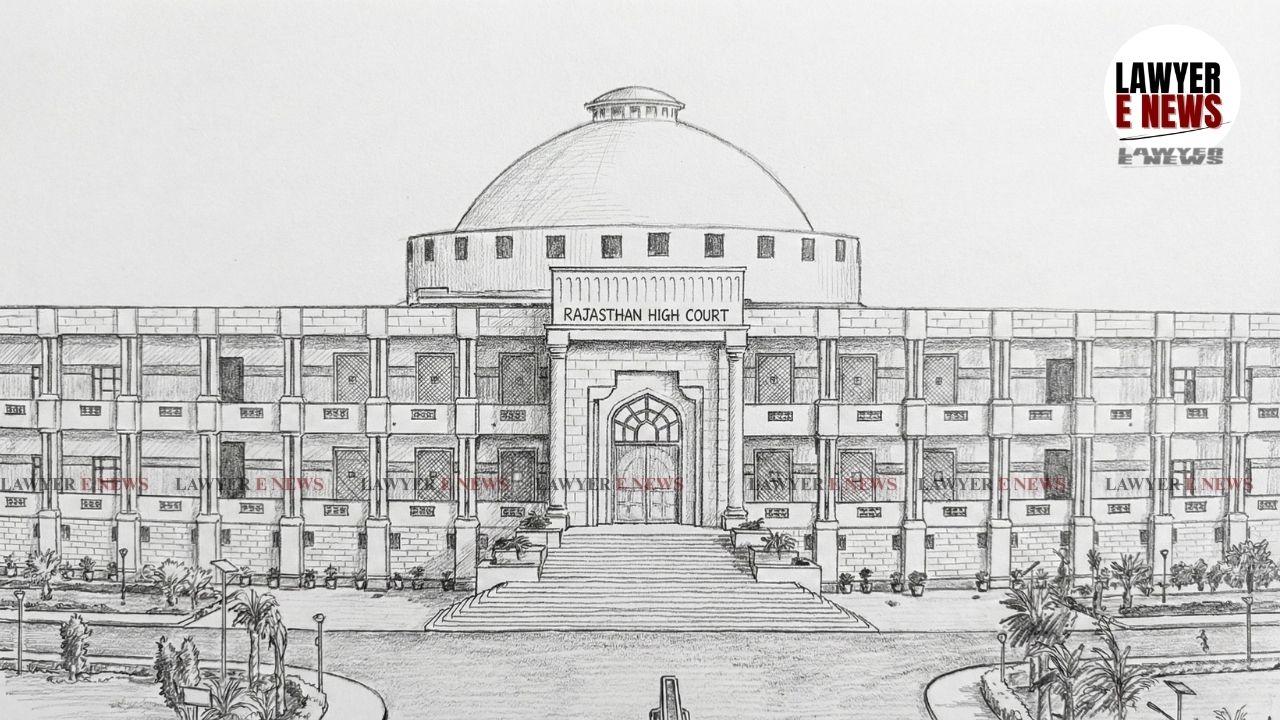
“Mental Cruelty Must Be Assessed on the Totality of Circumstances, Not in Isolation”, In a significant ruling reaffirming that sustained financial neglect and repeated disobedience of court orders amount to mental cruelty, the High Court of Judicature for Rajasthan at Jodhpur, on 03/02/2026, allowed a wife’s appeal and dissolved her marriage under Section 13(1)(i-a) of the Hindu Marriage Act, 1955.
The Division Bench of Justice Arun Monga and Justice Yogendra Kumar Purohit set aside the judgment dated 20.08.2024 passed by the Family Court, Pokaran, which had dismissed the wife’s divorce petition. The Court held that the “cumulative effect” of the husband’s conduct — including persistent non-payment of maintenance, repeated non-appearance before courts, and abandonment of matrimonial obligations — constituted grave and continuing mental cruelty making cohabitation impossible.
The appellant-wife was married to the respondent on 29.06.2018 as per Hindu rites, including the Aata-Sata ritual. According to the wife, she was subjected to mental and physical cruelty on account of unlawful dowry demands soon after marriage.
On 17.02.2021, she gave birth to a female child. The harassment allegedly intensified thereafter, solely because a daughter was born. The husband and his family members allegedly refused to accept the child and openly declared that the husband would remarry to have a son.
Unable to bear the cruelty and alleged concealment of material facts prior to marriage, the wife lodged a criminal complaint, leading to filing of a charge-sheet under Sections 498-A, 406, 323 and 34 IPC against the husband and his family members.
Parallelly, multiple proceedings were initiated under Section 125 Cr.P.C. and under the Protection of Women from Domestic Violence Act, 2005, including proceedings for interim maintenance and recovery of arrears.
Despite this, the Family Court dismissed both the husband’s petition under Section 9 HMA for restitution of conjugal rights and the wife’s divorce petition under Section 13 HMA, holding that cruelty was not proved. Aggrieved, the wife preferred the present appeal.
The core legal question before the Division Bench was whether sustained non-payment of maintenance, repeated non-appearance in judicial proceedings, and deliberate abandonment of matrimonial obligations would constitute “mental cruelty” under Section 13(1)(i-a) of the Hindu Marriage Act.
The Court also examined whether the Family Court had erred in appreciating evidence by evaluating incidents in isolation instead of assessing the cumulative conduct of the husband.
Mental Cruelty and Non-Payment of Maintenance
The High Court took serious note of the husband’s conduct across multiple proceedings.
In proceedings under Section 125(3) Cr.P.C., a recovery warrant was issued on 24.10.2024 due to non-payment of maintenance. The husband remained absent and unpaid maintenance for nearly three years.
In proceedings under the Domestic Violence Act, he repeatedly defaulted in appearance, leading to ex-parte proceedings. Even after getting ex-parte orders set aside on payment of nominal costs, he again chose not to participate.
Under Section 23 of the Domestic Violence Act, the husband was directed on 23.05.2023 to pay interim maintenance of Rs. 5,000 per month from 18.04.2022. However, he paid only Rs. 45,000, leaving arrears of Rs. 1,75,000. Recovery warrants were issued, yet he remained non-compliant.
The Court observed:
“The cumulative effect of the respondent’s conduct—namely, repeated non-appearance before courts, persistent non-payment of court-ordered maintenance, deliberate violation of judicial directions, and total abandonment of legal proceedings—has subjected the appellant to prolonged mental agony, financial distress, and social humiliation.”
The Bench categorically held that such behaviour “amounts to sustained mental cruelty, making it impossible for the appellant to reasonably be expected to live with the respondent.”
Totality of Circumstances: Family Court’s Manifest Error
A crucial aspect of the judgment was the appellate court’s criticism of the Family Court’s approach.
The Bench emphasised that mental cruelty must be assessed holistically:
“The learned Family Court… failed to appreciate the cumulative effect of this conduct and erroneously examined each incident in isolation, thereby overlooking the settled legal principle that mental cruelty must be assessed on the totality of circumstances.”
The High Court found that the wife’s sworn testimony was “clear, consistent, and cogent,” and significantly, “remained wholly unshaken in cross-examination.” Her evidence stood corroborated by judicial records from maintenance and domestic violence proceedings.
By rejecting unimpeached oral evidence supported by contemporaneous judicial orders, the Family Court committed a “manifest error of appreciation of evidence,” warranting appellate interference.
Abandonment of Proceedings and Forfeiture of Right to Contest
The Court also addressed the husband’s conduct during the appeal. Though initially represented, he disengaged his counsel and abstained from mediation as well as appellate hearings. Eventually, he was proceeded ex-parte on 13.01.2026.
The Bench observed:
“The deliberate and intentional abandonment by the respondent–husband, both of his matrimonial obligations and of the legal proceedings arising therefrom—amounts to a forfeiture of his right to contest the matter.”
Such conduct, the Court said, signified “implied consent to the allowing of the present appeal.”
Setting aside the judgment and decree dated 20.08.2024 of the Family Court, Pokaran, the High Court decreed the wife’s petition under Section 13 of the Hindu Marriage Act and dissolved the marriage.
Date of Decision: 03/02/2026