-
by sayum
25 August 2026 11:12 PM







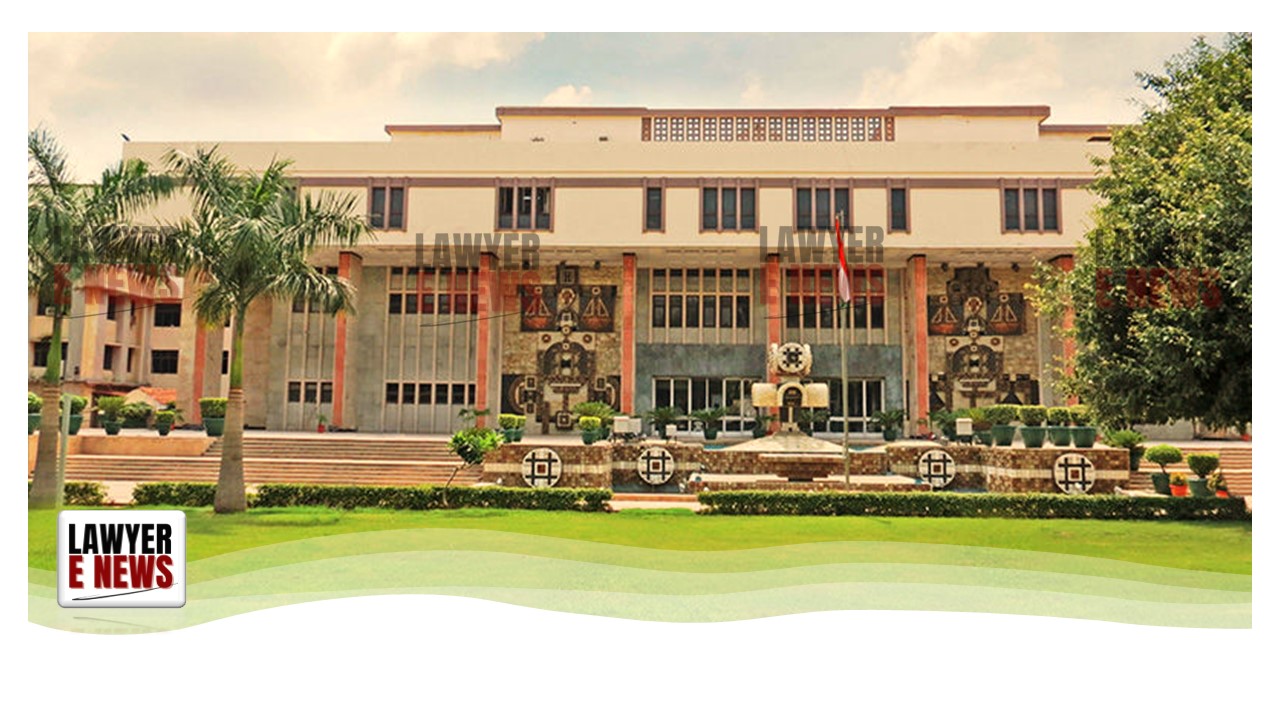
“Once evaluation is based on expert opinion, Courts cannot substitute their own assessment in multi-disciplinary exams” – Delhi High Court dismissing a batch of writ petitions challenging the decision of the Central Administrative Tribunal (CAT) that had upheld the Staff Selection Commission’s (SSC) evaluation process for the Combined Graduate Level Examination (CGLE), 2024.
The petitioners had assailed the SSC’s decision to award “bonus marks” for 22 questions and raised grievances regarding the timing and content of the final answer key. However, a Division Bench of Justice Anil Kshetrapal and Justice Amit Mahajan held that the Tribunal was correct in exercising judicial restraint and deferring to the opinion of subject matter experts (SMEs), as no patent illegality or arbitrariness was found in the process.
“Judicial review does not extend to becoming an appellate authority in matters of technical evaluation” – High Court reiterates limited scope in academic assessments
The core legal question before the Court was whether the Tribunal erred in refusing to intervene with SSC’s answer key revisions and uniform grace marking policy in the absence of a reevaluation mechanism. The petitioners relied on a series of judgments to argue that widespread ambiguity in questions and arbitrary bonus marks diluted merit, and that courts can intervene where academic errors are evident.
However, the Bench reiterated that “judicial review in academic matters is available only in cases of clear error of law, patent arbitrariness, or manifest procedural impropriety,” and clarified that courts do not possess the requisite expertise to adjudicate upon evaluation of disciplines like Mathematics, Science, or General Knowledge.
Relying on Ran Vijay Singh v. State of UP [(2018) 2 SCC 357], Mahesh Kumar v. SSC [2021:DHC:861-DB], and Freya Kothari v. Union of India, the Court noted that “correctness of evaluation must be presumed and benefit of doubt must go to the examining authority rather than the candidate.”
The Court further clarified the distinction with Shivraj Sharma and Siddhi Sandeep Ladda cases, which dealt with CLAT—an examination exclusively of legal subjects—where courts possess specialized competence to examine legal ambiguities. “CGLE 2024 is multi-disciplinary in nature; courts are not equipped to scrutinize every academic judgment across such varied domains,” the Bench added.
Systemic Errors Acknowledged: “22 bonus marks reflect serious lapses in question framing and evaluation” – High Court urges SSC to adopt transparent, rigorous policies
While ultimately refusing to grant relief, the High Court did not hesitate in recording strong disapproval of the manner in which the SSC handled the examination process. The judgment observed that the “uniform grant of grace marks to all candidates for 22 questions—including those who either did not attempt or answered incorrectly—seriously undermines competitive merit and procedural fairness.”
The Court went further to remark:
“Such magnitude of revisions is not incidental—it bespeaks a systemic lapse in the framing, vetting, and finalisation of the question papers and answer keys.”
Noting that many of the problematic questions arose from poor translations or avoidable typographical errors, the Bench stressed that SSC must be more circumspect in its future conduct. The Court also expressed concern over the sequence of events—particularly SSC’s decision to declare the final results before releasing the final answer key, which, according to the Court, “effectively insulated its decision-making from timely scrutiny and presented aspirants with a fait accompli.”
While the petitioners pointed to specific errors (such as Question ID 630680674736 in Mathematics and 630680522658 in English) that were arguably decipherable despite typographical flaws, the Bench held that “once the examining authority, acting on expert advice, chose to treat the questions as ambiguous and adopted uniform moderation, the Court cannot override the SME opinion.”
Nonetheless, the Court emphasised: “Recruitment examinations are not mere administrative exercises—they shape the careers of young aspirants. The SSC must institutionalise transparent policies and eliminate avoidable ambiguities to prevent further erosion of public confidence.”
No Interference Warranted in Absence of Patent Illegality or Arbitrariness
Summing up its findings, the Court upheld the Tribunal’s reasoning and dismissed the petitions, observing:
“The Tribunal rightly refrained from interfering in the absence of demonstrable illegality or arbitrariness. While this Court disapproves of the casualness reflected in the conduct of the examination, judicial interference is not warranted in these circumstances.”
All pending applications were disposed of, and the impugned orders of the Central Administrative Tribunal were upheld in full.
Date of Decision: 05 February 2026