-
by sayum
25 August 2026 11:12 PM







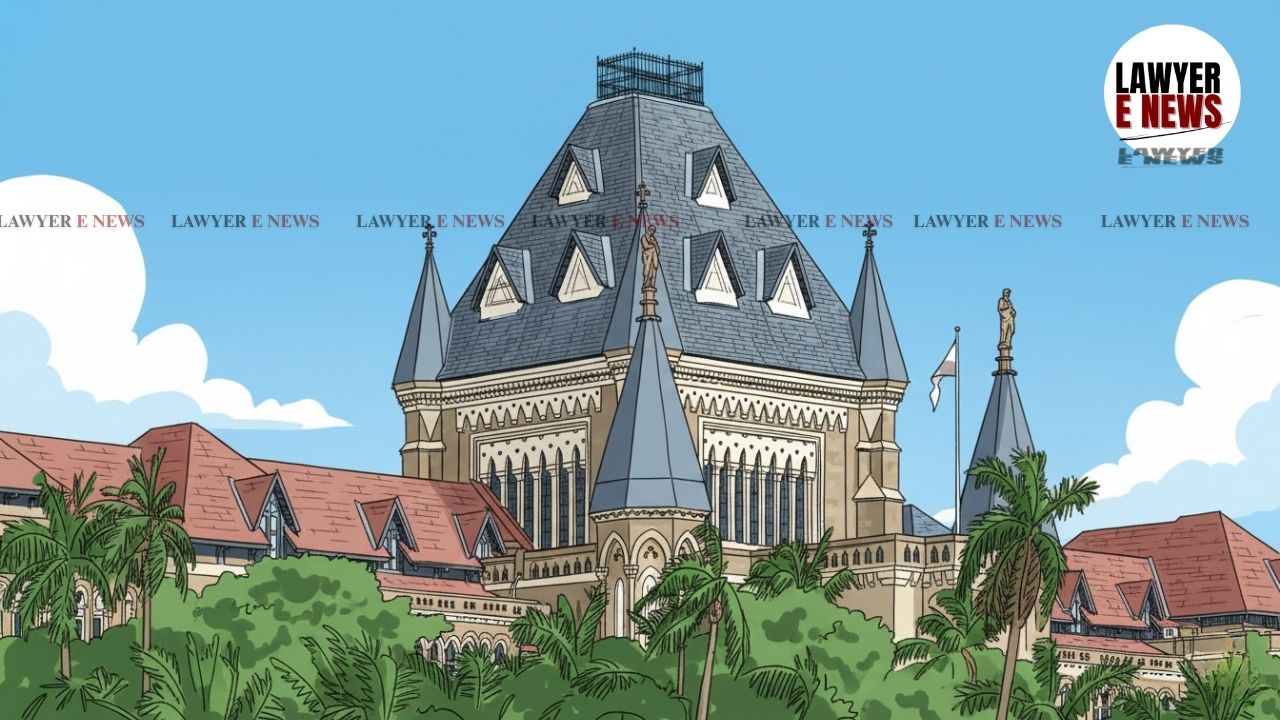
Advocate's Wife Diagnosed With Brain Hemorrhage " — Bombay HC Reminds Trial Courts That Human Tragedy Cannot Be Sacrificed At The Altar Of Case Disposal Targets. In a humane and sharply reasoned intervention, the Bombay High Court on February 20, 2026 came to the rescue of litigants whose advocate's wife had been diagnosed with brain hemorrhage, holding that a genuine medical emergency of this gravity warranted far greater judicial consideration than a mechanical invocation of case disposal directives.
Justice Milind N. Jadhav modified the Trial Court's order and directed that the final hearing of Special Civil Suit No. 4 of 2012 be conducted on its originally fixed date of April 4, 2026 instead of the preponed date of February 21, 2026 — giving the ailing advocate's family the breathing room they urgently needed.
Special Civil Suit No. 4 of 2012 — a litigation more than a decade old — was filed by the Bochasanwasi Shri Akshar Purushottam Swaminarayan Sanstha Public Charitable Trust and others against the Appellants, Kanchan Jashwantsinh Parmar and others. The matter had progressed to its final stage, with witness examination and evidence having been completed in entirety. Only final arguments remained to be heard.
The final hearing had been originally scheduled for April 4, 2026. However, the Trial Court, acting upon an Inspection Note issued by the District Court for 2024-2025 — which had granted a two-month extension for disposal of the suit — chose to prepone the final hearing date to February 21, 2026.
In response, the Defendants' advocate — who had conducted the matter throughout the trial — filed two applications at Exhibits-281 and 283 before the Trial Court, seeking postponement of the preponed final hearing. The ground was nothing short of a personal tragedy: his wife had been diagnosed with brain hemorrhage and required his personal care and support for at least one month from the date of the order.
The Trial Court, vide its order dated February 17, 2026, though acknowledging the medical reason in paragraph 3 of its order, rejected both applications. The imperative of disposing of old cases in conformity with the District Court's Inspection Note directions weighed heavily with the Trial Court, leaving the Defendants in the impossible position of either proceeding without their long-standing advocate or scrambling to engage a new one at the very last moment for final arguments in a twelve-year-old suit.
Aggrieved, the Appellants filed the present Appeal from Order along with an Interim Application before the Bombay High Court, which was urgently mentioned at the time of rising on February 20, 2026 by way of a praecipe.
Whether a Genuine Medical Emergency in an Advocate's Family Constitutes Sufficient Ground to Decline a Preponed Final Hearing Date
The primary question before the High Court was whether the Trial Court was justified in brushing aside a medical emergency of this severity solely on the ground that the case was old and disposal directives were in place. Justice Jadhav examined the documentary evidence appended to the Interim Application and Appeal from Order and held that the medical condition of the advocate's wife was genuine, duly substantiated, and serious — involving brain hemorrhage, not a routine or trivial ailment.
The Court was unambiguous in its criticism of the Trial Court's approach: "When a legitimate request of such a nature appears to be a genuine request on the face of record, there should be no reason as to why the learned Trial Court should not consider it." The Court observed that while the Trial Court had noted the medical reason in paragraph 3 of its order, it had not appreciated the same "in its appropriate and proper perspective."
The Role of Advocates as Officers of the Court and Its Implications for Adjournment Jurisprudence
Justice Jadhav elevated the discussion beyond a mere adjournment dispute by invoking the constitutional and statutory position of advocates. "Ultimately Advocates are Officers of the Court and equal stakeholders," the Court observed, adding that "they play a very important role in acting as a conduit between the litigant and the Court." The Court noted that the role of a lawyer or pleader, alongside their duties, is equally defined under the Advocates Act, 1961 and the Rules framed thereunder. This recognition carried significant weight: when an officer of the Court faces a genuine family crisis, mechanically denying relief in the name of disposal targets fails to honor the very institutional role that advocates are expected to discharge.
Consequences of Compelling Defendants to Engage a New Advocate at the Eleventh Hour
The Court trained its focus on the grave prejudice that would have been caused to the litigants — the Defendants — who had nothing to do with the medical exigency that befell their advocate. It was noted that the advocate had appeared on behalf of the Defendants all throughout the trial, conducting the matter from beginning to the completion of evidence. To now require the Defendants to engage a new advocate at this final argumentative stage — in a suit spanning over twelve years — would compound what the Court called the "ignominy" of the Defendants. The Court observed that the fact that "final arguments are only pending and witness action/evidence has been completed fully should have also been considered in the peculiar facts of the case."
Whether Case Disposal Directives of the District Court Could Override Genuine Personal Exigency
The Court did not discount the importance of the District Court's Inspection Note or the broader judicial mission of clearing old cases. It expressly acknowledged that "there is no doubt that the subject case is an old case" and that the Trial Court had "appropriately stated and acted" in furtherance of disposal directives. However, the Court drew a firm distinction between a chronic and unjustified delay caused by a litigant or counsel and an unforeseen, genuine personal tragedy. It held that the preponing of a hearing, without adequately weighing such an advocate's personal emergency, cannot survive judicial scrutiny.
Justice Jadhav was visibly moved by the candid and forthright approach adopted by Ms. Rekha Musale, the learned advocate appearing for the Appellants. Not only did she lay bare the medical reality, but she also proactively gave an undertaking on instructions that if the concerned advocate remained unable to appear on April 4, 2026 due to the medical exigency being further compounded, the Defendants would ensure adequate alternate arrangements. This mature and responsible stance did not go unnoticed. As the Court recorded, "the forthrightness with which Ms. Musale has made the Application impels me to pass the above order and allow the Interim Application and the Appeal from Order."
The Court accordingly modified the impugned order dated February 17, 2026 to the limited extent that the suit would now be heard for final arguments on April 4, 2026 in place of February 21, 2026. The rest of the Trial Court's order was kept intact. The Court was careful to clarify that no opinion was being expressed on the merits of the underlying suit and that no notice or interim relief needed to be separately issued, since the Trial Court remained fully seized of the matter.
"Ignominy of Defendants Would Stand Compounded If They Are Required to Look For a New Advocate at This Eleventh Hour" — Bombay HC
The Bombay High Court's order, though brief, carries a message of considerable importance for the administration of justice. The disposal of old cases is undeniably a pressing judicial priority, and courts are rightly expected to guard against the abuse of adjournment practice. Yet, as this judgment reminds all courts, the human element can never be entirely subordinated to institutional targets. When an advocate who has conducted a matter across its entire life-span is confronted with a family medical emergency of the gravest kind, courts must respond with the same humanity that law ultimately exists to serve. The High Court's recognition of advocates as officers of the court and equal stakeholders lends fresh moral weight to their position — and sends a clear signal that genuine emergencies will not be lost in the machinery of case management.
Date of Decision: February 20, 2026