-
by sayum
25 August 2026 11:12 PM







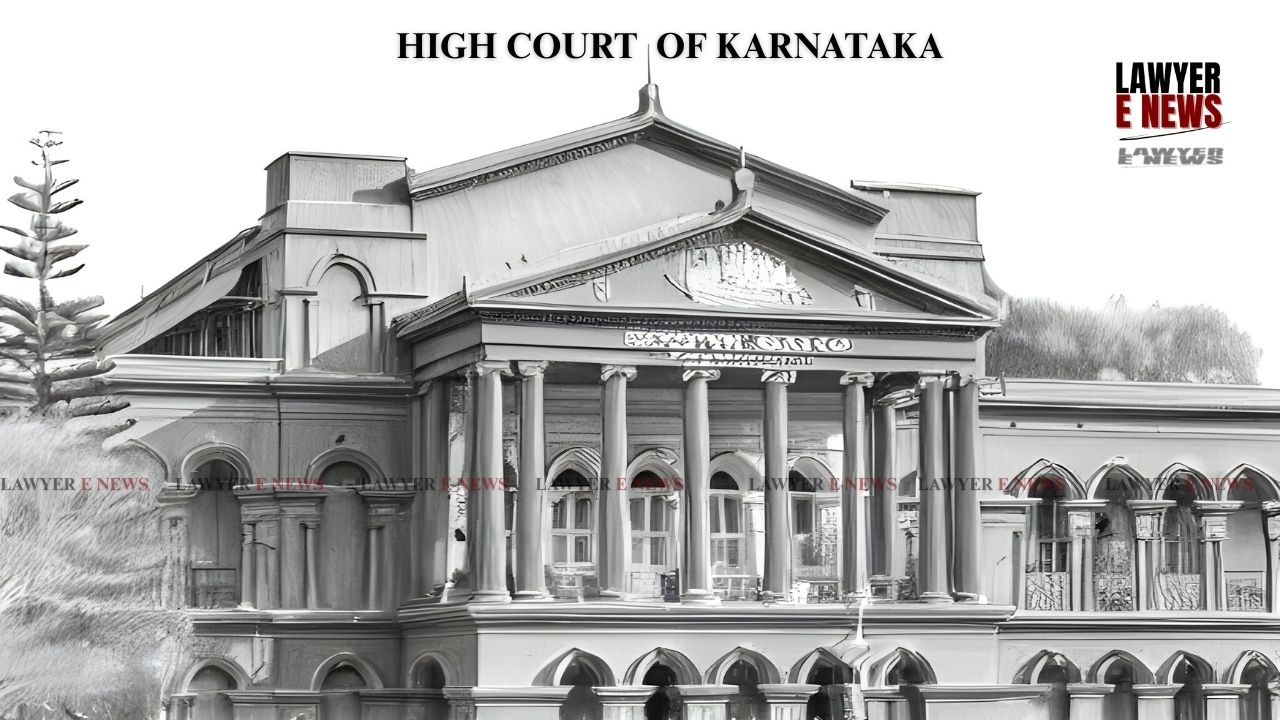
“Absence of Intention to Insult Is Fatal to Prosecution Under Section 2”, In a reportable judgment High Court of Karnataka, Kalaburagi Bench, held that an unintentional and negligent hoisting of the National Flag upside down does not attract criminal liability under Section 2 of the Prevention of Insults to National Honour Act, 1971.
Justice Rajesh Rai K quashed criminal proceedings against a Gram Panchayat official, observing that continuation of prosecution in the absence of mens rea would amount to abuse of process of Court.
The proceedings in C.C. No.1307/2022 arising out of Crime No.81/2021 were quashed insofar as the petitioner (Accused No.1) was concerned.
The petitioner, Bhimsingh, was working as a Second Division Assistant (SDA) in the Gram Panchayat of Alloli village, Chittapur Taluk, Kalaburagi District.
On 15.08.2021, during Independence Day celebrations, he was in charge of organizing and conducting the flag hoisting ceremony at the Gram Panchayat office. According to the complaint lodged on 16.08.2021 by the Panchayat Development Officer (PDO), the National Flag had been hoisted upside down during the ceremony.
The complaint alleged that due to negligence on the part of the petitioner, the Flag was unfurled in reverse position. Crime No.81/2021 was registered under Section 2 of the Prevention of Insults to National Honour Act, 1971. After investigation, charge sheet was filed and cognizance was taken by the Civil Judge & JMFC, Chittapur.
Aggrieved, the petitioner approached the High Court seeking quashing of proceedings.
The central issue was whether negligent or mistaken hoisting of the National Flag upside down, without any intention to insult, would constitute an offence under Section 2 of the Prevention of Insults to National Honour Act, 1971.
The Court was also called upon to exercise its inherent powers under Section 528 BNSS to determine whether continuation of proceedings would amount to abuse of process.
Requirement of Mens Rea
On examining the complaint and charge sheet materials, the Court found that the consistent version of witnesses was that the incident occurred due to negligence or oversight and not due to any deliberate or malicious intention.
The Court recorded:
“On careful scrutiny of the charge sheet materials, all the witnesses have stated that the said incident was caused only due to the negligent act of the petitioner and the same was not with an intention or with an ulterior motive to insult the National Flag.”
The Bench emphasised that Section 2 of the Act penalizes intentional insult or offering indignity to the National Flag. In the absence of intention, the essential ingredient of the offence is not made out.
The Court further observed:
“On perusal of the chargesheet averments it is forthcoming that the act of the petitioner-accused was unintentional and it is only by mistake. In such circumstances, the provision under Section 2 of the Act, 1971, does not attract against the petitioner.”
It was specifically noted that the petitioner neither “offered indignity to the National Flag nor intentionally displayed the National Flag with Saffron side down.”
The Court referred to the decision of the Madhya Pradesh High Court in Anand Tiwari vs. State of M.P., where it was held that no person of common prudence would believe that an officer would intentionally unfurl the National Flag in reverse position and expose himself to criminal liability.
The Karnataka High Court echoed the principle that courts have consistently declined to hold persons responsible for unintentional lapses concerning national honour when no deliberate intent is established.
Scope of Inherent Powers Under Section 528 BNSS
Reiterating the settled position on quashing at the pre-trial stage, the Court held that inherent powers can be exercised where the charge sheet materials do not disclose the essential ingredients of the alleged offence.
In the absence of mens rea, allowing prosecution to continue would amount to harassment and misuse of criminal law.
The Court concluded:
“In such circumstances, the continuation of proceedings against the petitioner-accused No.1 is nothing but abuse of the process of Court.”
Allowing the petition, the High Court quashed the proceedings in C.C. No.1307/2022 arising out of Crime No.81/2021 for the offence under Section 2 of the Prevention of Insults to National Honour Act, 1971, insofar as the petitioner was concerned.
This judgment reinforces the principle that while protection of national symbols is of paramount importance, criminal liability under the National Honour Act requires proof of intentional insult or indignity. Mere negligence, oversight, or mistake—without mens rea—cannot be criminalized.
Date of Decision: 12/02/2026