-
by sayum
25 August 2026 11:12 PM







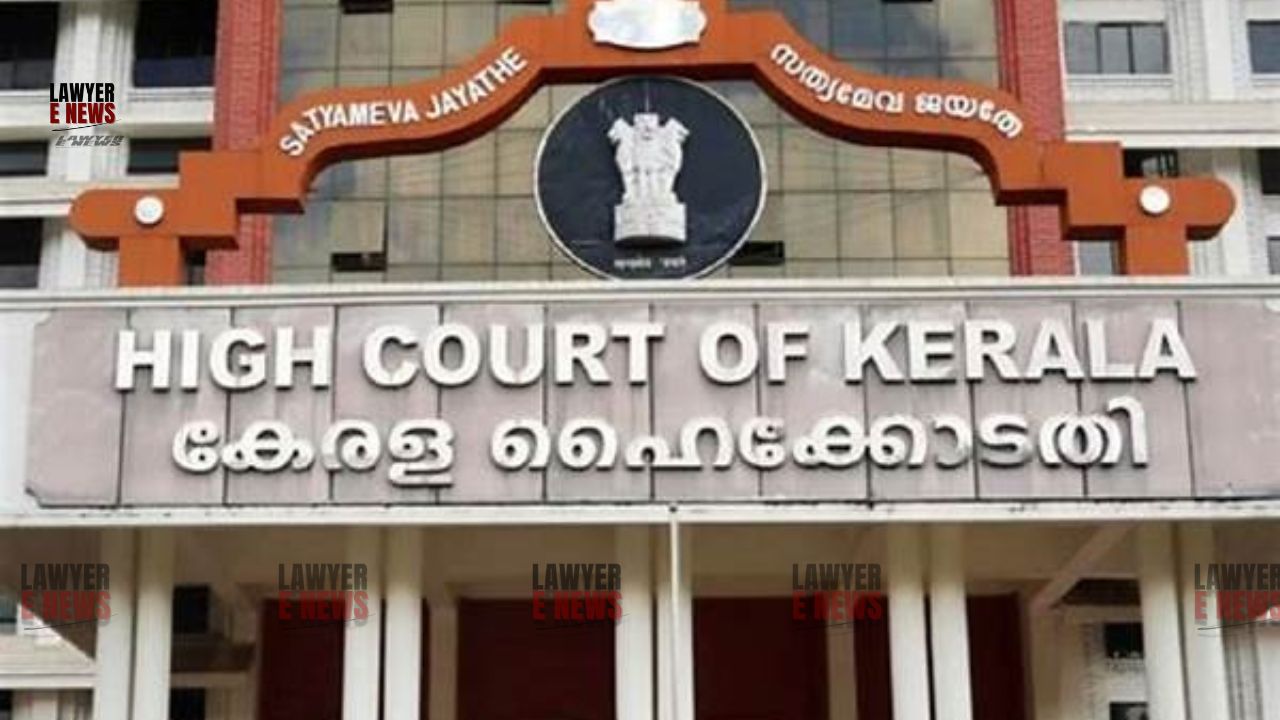
Wakes Up Only After Execution Notice — In a firm reiteration of the limits of judicial indulgence under Section 5 of the Limitation Act, the Kerala High Court at Ernakulam on 19 February 2026 dismissed a Civil Revision Petition challenging the refusal to condone a 710-day delay in filing an application to set aside an ex parte eviction decree.
Justice Murali Purushothaman held that a vague plea blaming counsel, unsupported by evidence, cannot constitute “sufficient cause” under Order IX Rule 13 CPC read with Section 5 of the Limitation Act.
The Court observed pointedly that the petitioner “wakes up only after receipt of notice in the execution petition,” demonstrating lack of diligence and vigilance.
Ex Parte Decree in Eviction Suit
The respondent had instituted O.S. No.80 of 2015 before the Munsiff Court, Mavelikara, seeking eviction, recovery of possession and arrears of rent. The suit was decreed ex parte on 19.01.2017.
Nearly two years later, on 19.12.2018, the defendant filed an application under Order IX Rule 13 CPC to set aside the ex parte decree, accompanied by an application under Section 5 of the Limitation Act seeking condonation of a delay of 710 days.
The explanation offered was that the petitioner had engaged a counsel who failed to inform him about the progress of the case and that he became aware of the decree only upon receiving notice in execution proceedings.
Both the Munsiff Court and the Additional District Court dismissed the applications, finding no sufficient cause. The matter reached the High Court in revision.
No Proof of Engagement of Counsel
Justice Murali Purushothaman noted that the petitioner did not even disclose the name of the counsel allegedly engaged.
“There is nothing on record to show that the petitioner had entrusted the case to the counsel or that it was the counsel’s omission… that led to the passing of the ex parte decree.”
The Court emphasized that mere assertion is not proof. The petitioner did not step into the witness box nor adduce any evidence to substantiate the plea of counsel’s negligence.
Receipt of Summons Admitted
Significantly, the petitioner did not contend that he had not received summons in the suit. The High Court noted that he was aware of the proceedings but remained inactive.
The Court held that a party seeking condonation must demonstrate bona fides and absence of negligence.
“‘Sufficient cause’ refers to a cause for which the defendant cannot be blamed for his absence and implies that the defendant did not act in a negligent manner or there was want of bona fide on his part.”
In the present case, the petitioner failed on both counts.
Inordinate Delay of 710 Days Not Explained
The Court found that the delay was substantial and remained unexplained except for a vague allegation against counsel.
The High Court agreed with the concurrent findings that no satisfactory reason had been shown to justify condonation of such an inordinate delay.
The petitioner, the Court remarked, was neither diligent nor vigilant in defending the suit.
Revisional Jurisdiction: No Scope for Interference
The High Court reiterated that revisional jurisdiction is limited and cannot be invoked to reappreciate findings of fact unless perversity or illegality is demonstrated.
Both the Munsiff Court and the District Court had concurrently held that sufficient cause was not established. No jurisdictional error or manifest illegality was shown.
Accordingly, the Court held:
“I find no reason to interfere with the impugned order of the learned Munsiff and the impugned judgment of the learned District Judge.”
Parallel Proceedings Not Decisive but Noted
The Appellate Court had also observed that a subsequent suit, O.S. No.93 of 2019, was pending between the parties concerning title and recovery of possession, and that even if the ex parte decree were set aside, it would be subject to the outcome of that suit.
While not decisive, this observation further indicated that no grave injustice warranted revisional interference.
Revision Dismissed
Holding that the petitioner failed to establish sufficient cause either for condonation of delay or for setting aside the ex parte decree, the High Court dismissed the Civil Revision Petition.
The ruling underscores a consistent judicial position: negligence cannot be masked as “sufficient cause,” and a litigant cannot shift blame to counsel without substantiating the allegation with credible evidence.
Date of Decision: 19.02.2026