-
by sayum
25 August 2026 11:12 PM







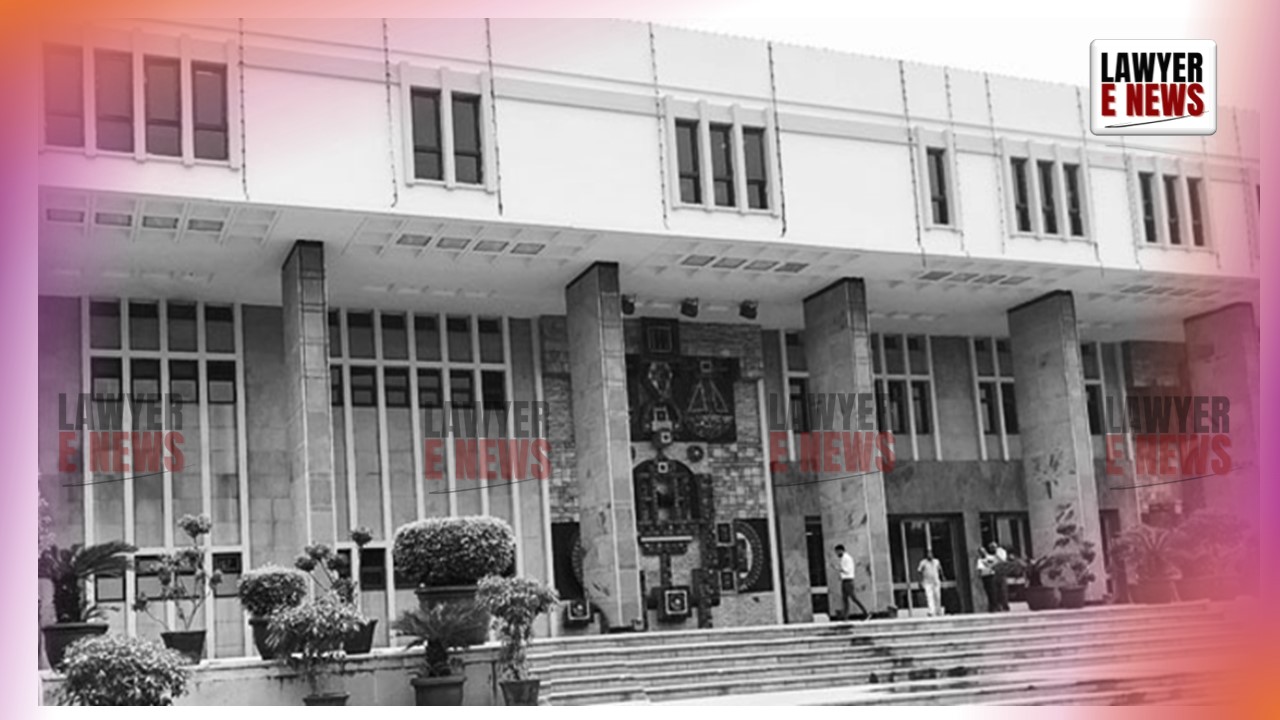
“Non-Adherence to SOP Timelines Caused Inordinate Delay” – Delhi High Court delivered a significant ruling on the doctrine of proportionality in administrative action concerning educational institutions. Justice Vikas Mahajan held that de-affiliation of an Industrial Training Institute, described as “civil death”, must strictly adhere to procedural safeguards and timelines.
While refraining from adjudicating the legality of the penal action on merits, the Court moulded relief in exercise of its writ jurisdiction under Article 226, directing restoration of affiliation from Academic Session 2026-27 after treating the period of effective debarment as already undergone.
Complaint, Inspection and De-Affiliation
The petitioner-ITI was granted affiliation in 2012 and was running six units of Electrician Trade and two units of Welder Trade. In 2022, a complaint was lodged by the father of a student alleging excess fee collection and misleading admission into the ‘Diesel Mechanic’ trade, which the institute was not affiliated to run.
A show cause notice was issued on 01.10.2022. The State Skill Development and Entrepreneurship Committee (SSDEC) decided to conduct a joint inspection. During the pendency of proceedings, the complainant passed away and his wife submitted an affidavit on 20.07.2023 stating she did not wish to pursue the complaint.
A joint inspection report dated 05.07.2023 found the infrastructure satisfactory. The Regional Directorate recommended that the ITI “may be allowed to start its units.”
Despite this positive report, SSDEC recommended de-affiliation in October 2023, culminating in the impugned order dated 20.09.2024. The petitioner’s appeal was dismissed on 01.04.2025.
“Entire Process To Be Concluded Within Approximately 95 Days” – SOP Timelines Ignored
A central issue before the Court was the respondent’s failure to adhere to its own Standard Operating Procedure dated 14.11.2022, which prescribed timelines for completing de-affiliation proceedings.
The Court noted that as per SOP:
“The entire process pursuant to the receipt of complaint… needs to be concluded approximately within a period of 95 days.”
However, in the present case, the show cause notice dated 01.10.2022 culminated in a de-affiliation order only on 20.09.2024 — almost two years later.
The Court observed:
“Non-adherence by respondent to the timelines stipulated in SOP… has clearly caused inordinate delay… thereby causing prejudice to petitioner-ITI.”
Had the timelines been followed, the order could have been passed by January 2023 and the three-year period would have expired by January 2026.
Portal Blocking as De Facto De-Affiliation
Significantly, the respondent had blocked the admission portal for the petitioner from Academic Session 2023-24 onwards, preventing fresh admissions for three consecutive sessions — 2023-24, 2024-25 and 2025-26.
The Court held that although the formal de-affiliation order was passed on 20.09.2024, the practical debarment commenced earlier.
“In the facts of the present case… the period which preceded the formal de-affiliation order… during which the portal was blocked… is ought to be counted towards the penalty of de-affiliation.”
Counting this period, the Court found that the petitioner had effectively undergone three years of debarment.
“De-Affiliation Is Civil Death” – Proportionality in Educational Regulation
Invoking the doctrine of proportionality, the Court relied on Mount Columbus School v. CBSE, observing:
“The decision to disaffiliate an educational institution is an extreme decision. It amounts to civil death.”
Justice Mahajan emphasized that such action affects not merely the management but also students and staff, and must therefore comply strictly with procedural safeguards and natural justice.
Although the Affiliation Norms-2018 prescribed a minimum three-year debarment, the impugned order was silent on duration. The Court held that a three-year period was commensurate with the alleged malpractice, but continuation beyond that would be disproportionate.
Withdrawal of Complaint and Positive Inspection: Equitable Considerations
The Court noted that the original complaint had been withdrawn and that the joint inspection report recorded satisfaction with infrastructure and recommended continuation.
While the Court did not invalidate the de-affiliation on this ground, it held that these factors weighed in balancing equities while moulding relief.
Relief Moulded: Affiliation Restored from 2026-27
Without entering into the legality of the penal action, the Court concluded:
“Period of de-affiliation till the passing of this order will meet the ends of justice.”
Accordingly, the writ petition was partly allowed. The Directorate General of Training was directed to restore affiliation to the petitioner-ITI with effect from Academic Session 2026-27 and reopen the portal for fresh admissions.
The judgment stands as a strong reaffirmation that administrative penalties affecting educational institutions must conform to procedural fairness and proportionality. Delays in concluding disciplinary proceedings cannot be allowed to compound punitive consequences. Where de facto debarment precedes formal orders, such period must be counted toward the penalty.
The ruling underscores that de-affiliation, being “civil death”, must be exercised with restraint and scrupulous adherence to timelines and natural justice.
Date of Decision: 11 February 2026