
-
by sayum
25 August 2026 12:32 PM







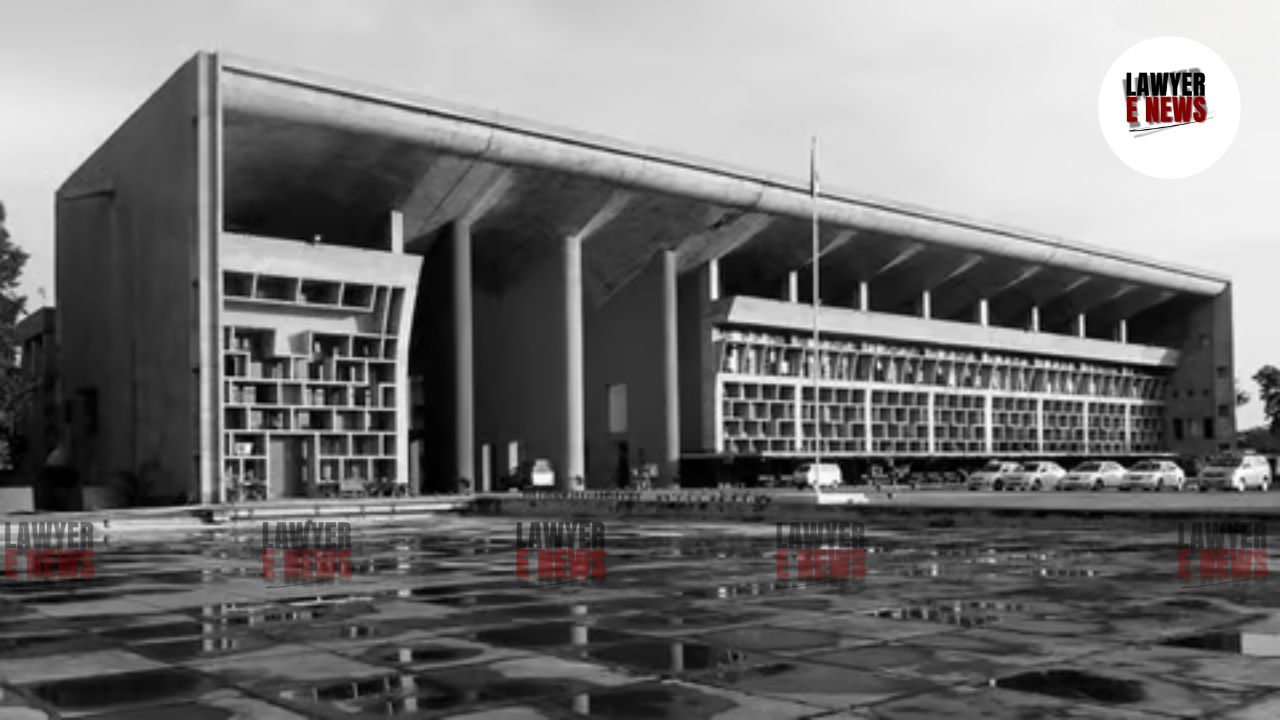
“Framing An Issue On Trade Mark Validity Does Not Vest Jurisdiction In Civil Court – It Must Stay The Infringement Suit And Wait For The Registrar Or High Court To Decide”, In a significant ruling reiterating the limits of civil court jurisdiction under the Trade Marks Act, 1999, the Punjab and Haryana High Court held that once the plea of invalidity of a registered trade mark is found to be prima facie tenable, the Trial Court is mandatorily required to stay the suit for infringement and grant time to the defendant to approach the Registrar or the High Court for rectification of the mark. The Court observed, “the Trial Court clearly stands denuded of the authority or jurisdiction to independently proceed to examine the aspect of validity of the trade mark.”
Justice Pankaj Jain, modifying the impugned order of the Trial Court dated 14.09.2023, noted that while the Court had rightly framed an additional issue regarding the validity of the plaintiff’s trade mark 'MANTRA', it erroneously refused to stay the suit for infringement, which was in clear breach of the statutory mandate of Section 124 of the Trade Marks Act.
“Section 124 Embodies A Legislative Sequencing Of Decision-Making That Civil Courts Cannot Ignore”
The plaintiff, Terrace Pharmaceuticals Pvt. Ltd., had instituted a suit for infringement and passing off against the defendants, alleging violation of its registered trade mark 'MANTRA' by their use of various “MANTRA”-formative marks including "ROOPMANTRA", "MEMORY MANTRA", "KESH MANTRA", among others. The defendants sought stay of the suit under Section 124 of the Trade Marks Act on the ground that they were challenging the validity of the plaintiff’s trade mark and intended to file rectification proceedings.
Though the Trial Court framed Issue 7A — “Whether the Trade Mark of the plaintiff’s ‘MANTRA’ is invalid?” — it refused to stay the proceedings under Section 124. This refusal was challenged in the High Court.
The High Court categorically held that once the Trial Court finds the plea of invalidity to be prima facie tenable, it is obligated under Section 124(1)(ii) to adjourn the suit for three months and permit the concerned party to initiate rectification proceedings.
Quoting from the Supreme Court's authoritative decision in Patel Field Marshal Agencies v. P.M. Diesels Ltd., (2018) 2 SCC 112, the Court observed:
“The suit court clearly stands denuded of the authority or jurisdiction to independently proceed to examine the aspect of validity. The clear intent of the statute appears to be of ensuring that rectification challenges are placed exclusively before the Registrar or the High Court and consequently requiring the Trial Judge to stay its hands in any pending action.”
Passing Off Claim Not Affected By Section 124 – Trial Court Must Proceed Separately
The Court also addressed a key procedural question: whether Section 124 applies to the passing off action joined in the composite suit. Justice Jain answered emphatically:
“Bare perusal of Section 124 makes it abundantly clear that the same deals only with suit for infringement of registered trade mark and is not applicable to suit for passing off.”
Recognizing the settled distinction between statutory infringement and the common law remedy of passing off, the Court relied on Carlsberg Breweries A/S v. Som Distilleries & Breweries Ltd., AIR 2019 Delhi 23 (FB), which upheld the maintainability of composite suits combining both actions, provided they arise from the same factual matrix.
The Court further clarified:
“The cause of action for passing off is severable from cause of action for infringement. Section 124 cannot be invoked qua suit for passing off.”
Accordingly, the High Court directed the Trial Court to register the passing off claim as a separate suit and proceed expeditiously with its trial. This was particularly necessitated by the fact that the composite suit had languished for nearly six years at the pre-trial stage due to multiple interlocutory applications.
Framing An Issue On Validity Does Not Cure Jurisdictional Defect – Court Must Still Adjourn
A notable aspect of the judgment is the High Court’s rejection of the Trial Court’s reasoning that framing an issue on validity allowed the suit to proceed. Justice Jain held that the framing of an issue does not empower the Trial Court to adjudicate validity of a registered mark:
“Once the Trial Court comes to a conclusion that the plea of invalidity of registered trade mark is prima facie tenable, the Act mandates providing time to approach the Registrar or High Court. The Trial Court not being the High Court does not have the jurisdiction to try the Issue w.r.t. rectification.”
In essence, Section 124 requires more than procedural acknowledgment — it mandates substantive deference to the authority of the Registrar or High Court in matters of validity.
Delhi High Court Precedents Upheld – Obiter Argument Rejected
Addressing an argument raised by the plaintiff relying on Balar Marketing Pvt. Ltd. v. Lakha Ram Sharma, that references to passing off in Amrish Aggarwal v. Venus Home Appliances Pvt. Ltd. were obiter dicta, the High Court refused to accept that position. The Court, aligning with the reasoning in Amrish Aggarwal, held that both infringement and passing off can co-exist in a composite suit, but only the former is affected by rectification proceedings.
Suit For Infringement Stayed, Passing Off Suit To Proceed Independently
In conclusion, the High Court partly allowed the revision petition, modifying the Trial Court’s order to the following effect:
Defendants are granted three months to file rectification proceedings before the appropriate forum.
The suit for infringement shall remain stayed for that period under Section 124 of the Trade Marks Act.
The cause of action for passing off shall proceed independently and be treated as a separate suit.
The Trial Court is directed to expeditiously conduct the trial of the passing off suit without being impeded by the pendency of the infringement claim.
This judgment serves as a clear reaffirmation of legislative intent under Section 124 and reinforces the jurisdictional boundaries between civil courts and authorities empowered to adjudicate trade mark validity.
Date of Decision: 22 January 2026





