
-
by sayum
25 August 2026 12:32 PM







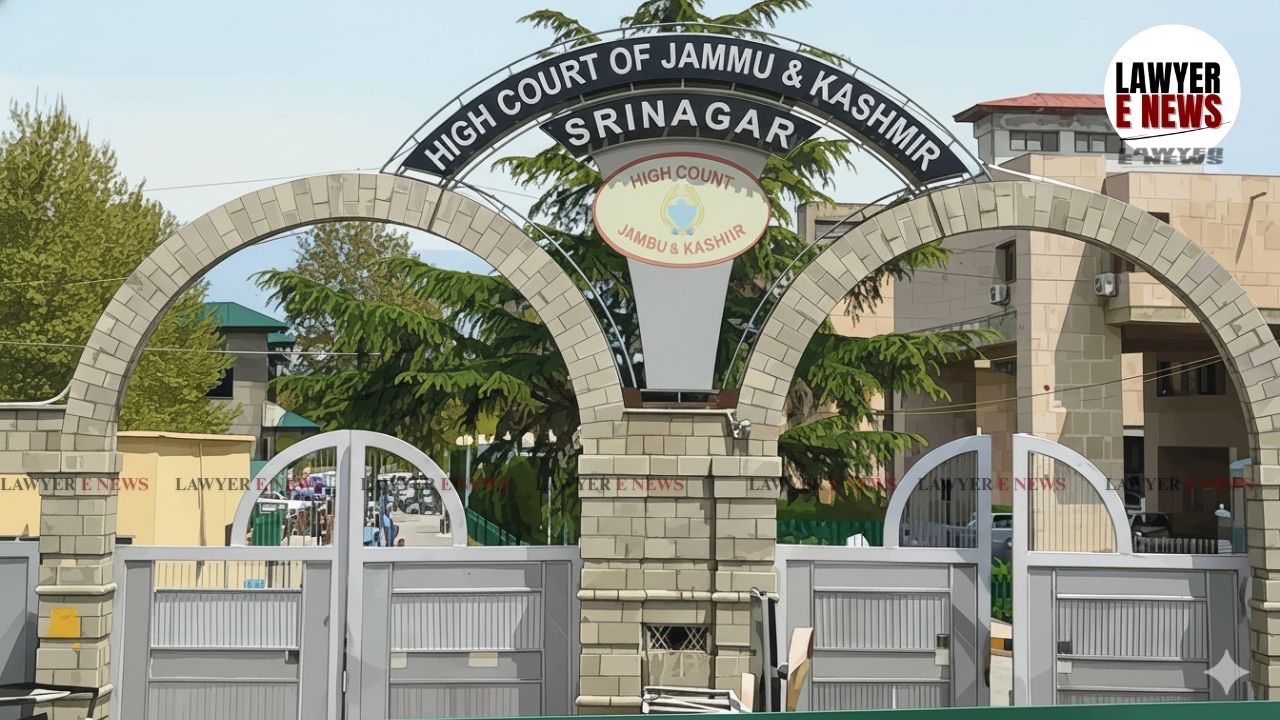
“Opportunity of Hearing Under Section 223 BNSS Cannot Be an Empty Form” — In a significant order High Court of Jammu & Kashmir and Ladakh at Srinagar stayed criminal complaint proceedings against filmmakers Aditya Dhar and others, observing that the Forest Magistrate, Srinagar, had issued pre-cognizance notices without complying with the mandatory statutory procedure under Section 223 of the Bharatiya Nagarik Suraksha Sanhita, 2023 (BNSS).
Justice Moksha Khajuria Kazmi held that the issuance of notice without recording sworn statements of the complainant and witnesses rendered the Magistrate’s action prima facie unsustainable in law, and noted that such mechanical exercise of judicial power amounted to non-application of mind.
The interim relief was granted in CRM(M) No. 36/2026, filed under Section 528 BNSS, challenging the order dated 30.12.2025 passed by the Forest Magistrate in a defamation complaint related to the filmmakers' recent movie, ‘Article 370’.
“Recording of Complainant’s Statement on Oath is Mandatory Before Issuing Notice” – High Court Upholds Procedural Sanctity Under BNSS
The petitioners, including film director Aditya Dhar, his associates, and their production company, moved the High Court to quash the complaint filed by Ghulam Mohammad Shah, who alleged that he had been depicted as a terrorist in the film Article 370, thereby causing reputational harm.
The complaint had been filed under Section 210 BNSS, read with Section 356 of the Bharatiya Nyaya Sanhita, 2023 (BNS), invoking the offence of defamation. However, the petitioners challenged the procedural correctness of the notice dated 30.12.2025, arguing that the Magistrate had not recorded any sworn statement of the complainant or witnesses, a step mandatorily required under Section 223 BNSS before issuing notice.
The petitioners are involved in film production and had released a movie titled ‘Article 370’. The respondent, a local resident, alleged that his photograph was used in the movie to portray a terrorist character, thereby tarnishing his image and injuring his reputation.
A criminal complaint was filed before the Forest Magistrate, Srinagar. However, instead of following the sequential steps prescribed under BNSS, the Magistrate issued a pre-cognizance notice without any preliminary examination of the complainant or his witnesses on oath.
This procedural lapse became the fulcrum of the challenge before the High Court.
The core legal question before the Court was whether a Magistrate can issue a pre-cognizance notice under Section 223 BNSS without recording the sworn statements of the complainant and witnesses.
Justice Kazmi unambiguously held in the negative, reiterating the procedural requirements under Section 223(1) BNSS, which states:
“A Magistrate… shall examine upon oath the complainant and the witnesses present… and the substance of such examination shall be reduced to writing… and signed by the complainant, the witnesses and also by the Magistrate.”
The Court clarified that the opportunity of hearing granted to an accused under the proviso to Section 223(1) cannot be rendered an empty formality and must be preceded by the examination of the complainant and witnesses, with all material including the complaint, sworn statements, and supporting documents provided to the accused.
“Opportunity of being heard would not mean an empty formality… The notice that is sent to the accused shall append to it the complaint, the sworn statement, and statements of witnesses if any, for the accused to appear and submit his case before taking of cognizance,” the Court observed, quoting the Karnataka High Court judgment dated 07.03.2025.
Magistrate’s Conduct Criticised for “Non-Application of Mind”
The High Court took strong exception to the manner in which the Forest Magistrate had acted:
“Notices have been issued to the applicant without recording the statements of the complainant and witnesses, which is against the prescribed procedure under the BNSS. The notice is a blank notice without filling the blanks and only mentions the name of the applicant. Such notice is legally untenable,” the Court held.
The Court found that the record from the Forest Magistrate's court did not contain any sworn statements of the complainant or witnesses, nor did it reflect any application of judicial mind. This omission, in the Court's view, vitiated the entire process and compromised the right of the accused to a fair hearing.
The Court aligned its reasoning with judgments of the Allahabad High Court (2025 SCC OnLine All 4884) and the Kerala High Court, as well as a coordinate bench of the J&K High Court in Prateek Agarwal, all of which had similarly held that non-compliance with Section 223 BNSS amounts to procedural illegality, justifying judicial intervention.
Court Orders Interim Stay on Complaint Proceedings
Taking into account the prima facie illegality of the Magistrate’s action, the High Court directed:
“In the meantime, subject to objections of the other side and till the next date of hearing before the Bench, the proceedings in the complaint filed by respondent shall stay.”
The case has been listed for further hearing on 23.03.2026, with the Court granting liberty to either side to seek alteration or modification of the interim order, if necessary.
The Court also dispensed with the requirement of filing certified copies of the impugned order and complaint for the time being, subject to their submission within two weeks.
This order underscores the vital importance of procedural discipline in criminal complaints under the new BNSS framework, particularly when complaints are initiated by private individuals alleging reputational harm. The High Court’s interim stay not only protects the accused’s right to a fair process but also sends a clear message to the Magistracy to adhere strictly to statutory mandates.
In the evolving landscape of BNSS and BNS, this ruling will likely serve as an early precedent, especially for media-related litigation, where allegations of defamation, portrayal, and reputation are expected to rise.
Date of Decision: 06.02.2026





