-
by sayum
25 August 2026 12:32 PM







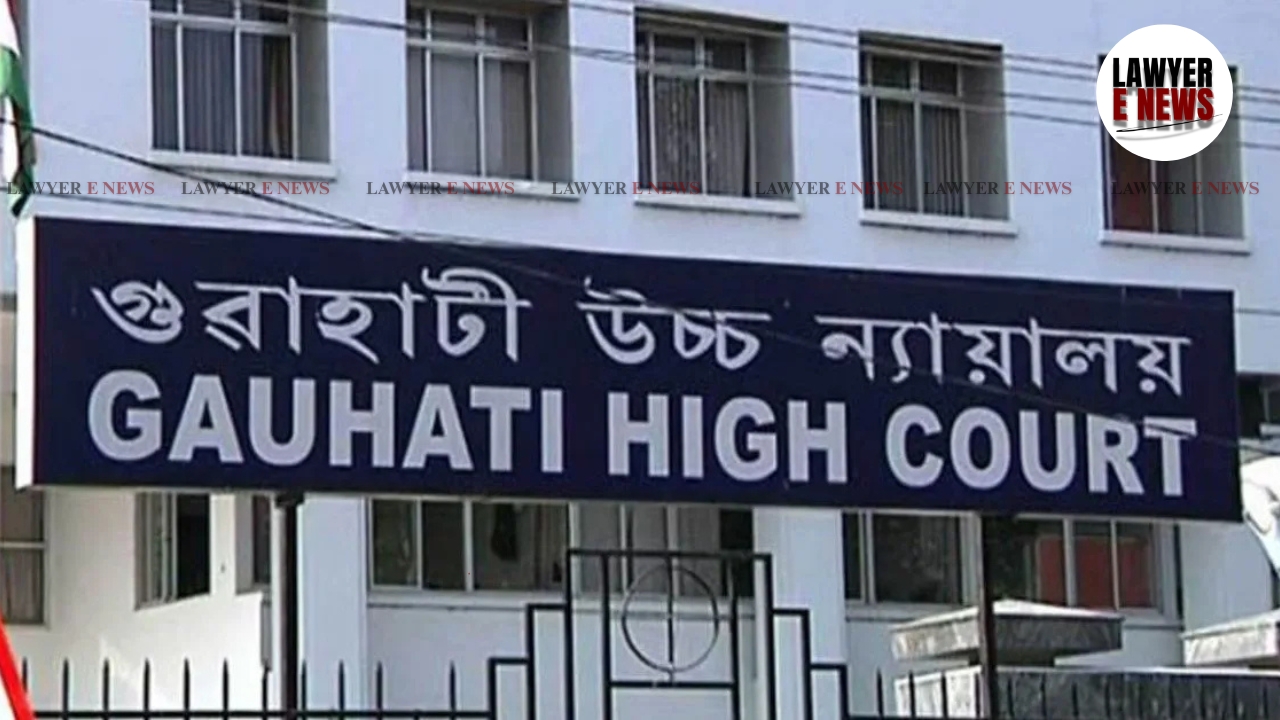
“Future prospects represent probable income yet to be earned and interest on such a component is legally impermissible” – In a significant ruling on the principles governing motor accident compensation under the Motor Vehicles Act, the Gauhati High Court partly allowed an insurer’s appeal against the award passed by the Motor Accident Claims Tribunal, Barpeta, holding that interest cannot be awarded on the component of future prospects added to the income of the deceased.
The Court, however, upheld the use of multiplier 11 for calculating the loss of dependency and affirmed the pay-and-recover order, issued against the insurer due to the driver’s fake licence.
“Deceased Aged 55 Years 3 Months Falls Within the 51–55 Age Bracket — Multiplier of 11 Correctly Applied”
Delivering the judgment, Justice Susmita Phukan Khaund addressed the principal contention of the insurer regarding the multiplier used for loss of dependency. The deceased, Saiful Islam, was a Government Assistant Teacher aged 55 years, 3 months, and 27 days at the time of death in a motor accident that occurred on 28.07.2013. The insurer contended that the Tribunal erroneously applied a multiplier of 11 instead of 9, arguing that the deceased was over 55 years of age.
Rejecting the argument, the Court relied on the Sarla Verma v. DTC (2009) 6 SCC 121, as affirmed by Reshma Kumari v. Madan Mohan (2013) 9 SCC 65 and the Constitution Bench in Pranay Sethi (2017) 16 SCC 680, observing:
“The multiplier is to be taken when the deceased falls within the range of 56–60 years and not in the age group of 51–55 years. There was no error while taking up the multiplier as 11.”
Hence, the Tribunal’s adoption of multiplier 11 was found legally sound.
“Interest Cannot Be Granted on 15% Future Prospects — Only on Actual Loss of Dependency”
A more critical legal correction was made on the issue of interest awarded on future prospects. The Tribunal had added 15% of the income towards future prospects (even though the deceased was above 50 and a government servant) and then applied 7% interest per annum on the entire compensation, including the future prospects component.
While the Court did not interfere with the addition of 15% for future prospects, it held that grant of interest on such prospective income was erroneous. Referring to Champabati Ray (2019), Nasima Begum (2019), and Khusboo Chirania (2018) — all decisions of the Gauhati High Court — Justice Khaund held:
“Future prospects is with regard to the probable income to be received in the future… there cannot be any interest on future prospects, as the same relates to an income to be given in the future.”
Accordingly, the award was modified, and interest at 7% per annum was directed to be calculated only on the compensation amount excluding the 15% added for future prospects.
Pay-and-Recover Order Upheld — Driver Held to Have Fake Licence
The insurer had also contested its liability based on the invalidity of the driver’s licence. The evidence of DTO Nalbari’s office, examined through DW-2, a Junior Assistant, established that DL No. 363/NB/04 was not issued by the DTO and could not be traced in the official register. This was sufficient to demonstrate that the licence was not genuine.
Applying the Supreme Court’s binding decision in National Insurance Co. Ltd. v. Swaran Singh (2004) 3 SCC 297, the High Court reiterated:
“While directing the Insurance Company to pay the awarded amount, the Court granted liberty to recover the same from the owner of the vehicle in an appropriate proceeding in accordance with law.”
Thus, the Court upheld the Tribunal’s direction to pay and recover — requiring the insurer to compensate the claimants and recover the amount from the owner.
Tribunal’s Findings on Rash and Negligent Driving Affirmed
The deceased had been hit from behind by the offending vehicle TATA 207 DI (AS-13/C-1658) while riding a bicycle. An eyewitness (PW-2) corroborated the account of rash and negligent driving. A police charge sheet was also filed under Sections 279/338/304A IPC.
The High Court concluded that the finding of negligence was properly established and required no interference.
In conclusion, the Gauhati High Court partly allowed the appeal filed by Bajaj Allianz General Insurance Co. Ltd., modifying the award only to the extent of excluding interest on the future prospects added to the deceased’s income. All other findings, including the multiplier applied, pay-and-recover order, and proof of negligence, were upheld.
“Appeal is partly allowed with a direction not to add interests on future prospects.”
Date of Decision: 04 February 2026