-
by sayum
25 August 2026 12:32 PM







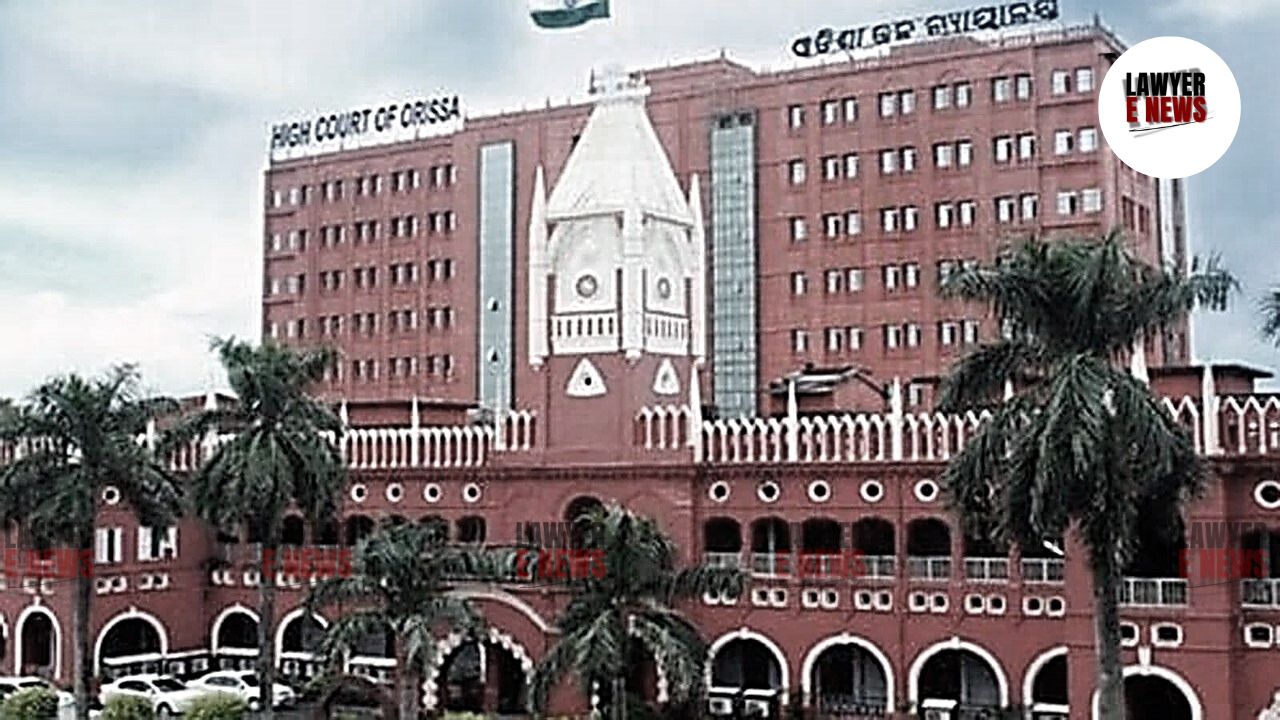
“Policy Issued in Name of Dead Owner Still Binds Insurer Who Accepted Premium” – On 9th February 2026, the Orissa High Court, in a significant ruling under the Motor Vehicles Act, held that an insurance company cannot escape liability merely because the policy was issued in the name of a deceased registered owner, especially when it had accepted the premium and did not contest the issue with evidence before the tribunal.
The judgment upholds the principle that technical objections cannot defeat the substantive rights of accident victims, even while slightly reducing the quantum of compensation.
“Once Premium is Accepted, Insurer Estopped from Denying Liability” – High Court Relies on Santro Devi Ruling
The primary contention raised by National Insurance Co. Ltd. was that the insurance policy had been renewed in the name of a deceased owner, namely Mr. Bijayananda Mohanty, and hence the insurer should not be held liable for the fatal accident that occurred on 09.01.2010, which was after the death of the original owner on 24.10.2009, but before the vehicle's transfer to his son (the current owner).
Rejecting this contention, the High Court found that:
“The Insurance Company having accepted premium amount in respect of the vehicle cannot shy away from its responsibility...” [Para 9]
Referring to the Supreme Court’s ruling in United India Insurance Co. Ltd. v. Santro Devi, (2009) 1 SCC 558, the Court reiterated that:
“Once the policy is renewed and the premium accepted, it is not open for the Insurance Company to contend that the policy was in the name of a dead person.” [Para 8]
The Court underlined that the policy (Exhibit A) clearly showed the vehicle was insured at the time of the accident, and in the absence of any evidence to the contrary, the insurer’s liability was beyond doubt.
Insurer’s Plea Rejected for Lack of Evidence – Legal Burden Not Discharged
A crucial factor in the Court’s reasoning was the Insurance Company's failure to lead any evidence before the Tribunal to substantiate its objection. The plea regarding invalidity of the policy was raised only at the argument stage, which the Court held to be procedurally impermissible.
“In absence of evidence, insurer cannot be absolved of liability.” [Para 7]
Thus, the Tribunal’s finding that the insurance coverage was valid and subsisting was upheld.
Compensation Principle is to Protect Victims, Not Favour Technicalities
Justice Narasingh observed that the primary aim of the Motor Vehicles Act compensation framework is to protect the interest of accident victims and their dependents, and courts must not allow insurers to evade liability on technical or procedural objections.
“This Court finds substance in the submission... that the underlying principle of awarding compensation is that the interest of the victim has to be protected.” [Para 10]
Quantum Reduced Slightly: Compensation Brought Down to ₹14.5 Lakhs with 6% Interest
While affirming the insurer’s liability, the High Court found merit in the appellant’s plea that the compensation of ₹15,37,600 with 7% interest awarded by the 4th MACT, Puri, was on the higher side. It accordingly reduced the award to:
Apportionment and Refund Directions Issued
The Court issued the following further directions:
The entire modified award is to be deposited within six weeks from the date of judgment, subject to deduction of any amount already paid.
The judgment is a clear reaffirmation of the pro-victim approach taken by Indian courts under the Motor Vehicles Act. It sends a strong message that insurers who accept premiums cannot later disown their obligations on procedural pretexts, especially when they have failed to lead evidence in the Tribunal.
The Orissa High Court has balanced the principle of justice to victims with reasonable judicial oversight on compensation quantum, making the judgment both legally sound and socially responsive.
Date of Decision: 09 February 2026