-
by sayum
28 August 2026 12:24 PM







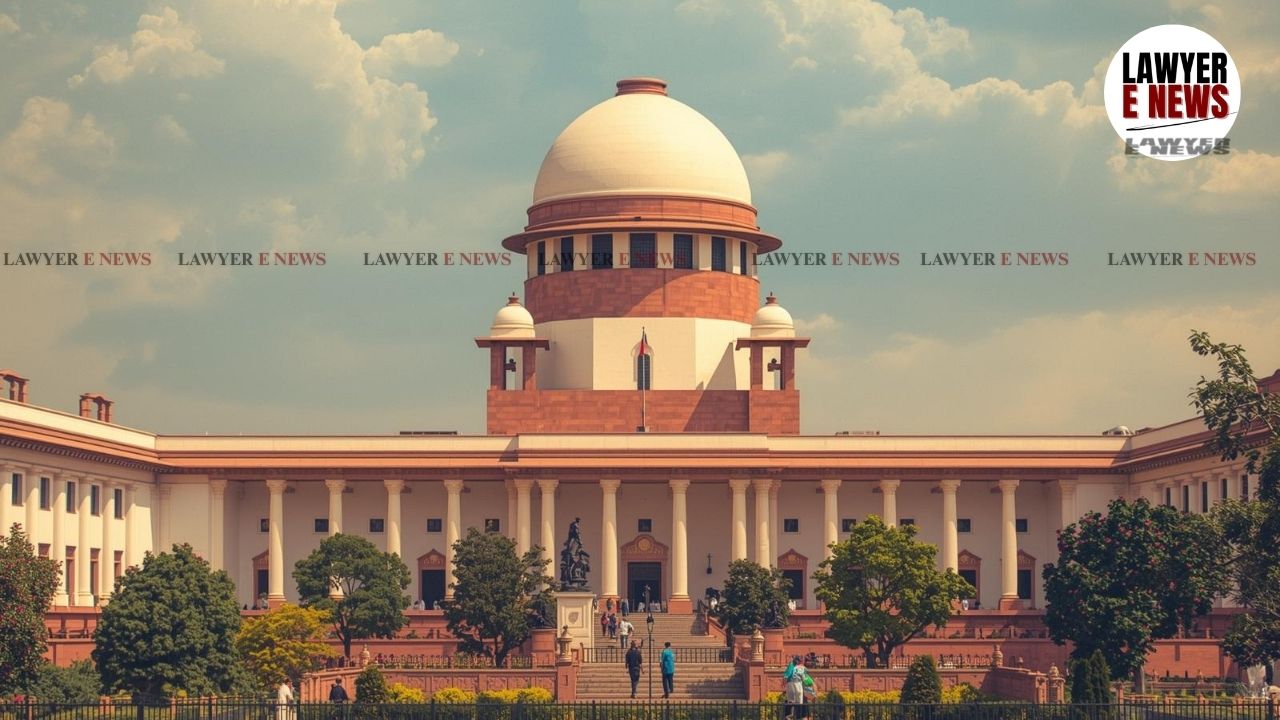
“Continuation Was to Protect Public, Not to Benefit Licensees” — In a powerful reaffirmation of the binding nature of its earlier 2G verdict, the Supreme Court on 20 February 2026 ruled that telecom operators whose licences were quashed in 2012 are liable to pay the reserve price for spectrum from 02.02.2012 itself if they continued operations thereafter. The Court held that the Telecom Disputes Settlement and Appellate Tribunal (TDSAT) erred in shifting the commencement of liability to 15.02.2013.
Deciding the appeal in Union of India v. Sistema Shyam Teleservices Limited, a Bench of Justice Sanjay Kumar and Justice K. Vinod Chandran clarified that the language of the Court’s order dated 15.02.2013 was explicit and not open to reinterpretation. The appeal was allowed in part, restoring the commencement date to 02.02.2012 while affirming the end date and restricting interest liability.
The ruling reinforces that subordinate forums cannot dilute or modify the effect of a Supreme Court direction under the guise of interpretation.
The 2G Cancellation and Subsequent Extensions
The case stems from the historic judgment dated 02.02.2012 in Centre for Public Interest Litigation v. Union of India, wherein the Supreme Court quashed 122 Unified Access Service licences granted in the 2G spectrum allocation, including those held by Sistema Shyam Teleservices Limited.
Although the licences were declared illegal, the Court deferred the operation of cancellation for four months to avoid disruption of telecom services. The Department of Telecommunications (DoT), unable to complete fresh auctions within the stipulated timeframe, sought repeated extensions. Existing licensees were thus permitted to continue operations temporarily.
On 15.02.2013, while dealing with pending applications, the Supreme Court issued a crucial direction:
“Such of the licensees, who continued operation after 2.2.2012… shall pay the reserve price fixed by the Government for the purpose of conducting auction in November 2012.”
The interpretation of this clause became the centre of dispute.
The Dispute — What Is the “Starting Date” of Liability?
TDSAT held that since licensees were allowed to operate until 15.02.2013 under extension orders, and since the reserve price direction was issued on that date, liability should commence only from 15.02.2013.
The Union of India challenged this interpretation before the Supreme Court, arguing that the direction clearly imposed liability from 02.02.2012 — the date of quashing of licences.
The Supreme Court agreed with the Union.
Rejecting TDSAT’s reasoning, the Bench observed that the Tribunal’s understanding that the order did not indicate a starting date was “factually incorrect.”
The Court categorically stated:
“This Court specifically directed that those licensees who had continued their operations ‘after 02.02.2012’ should pay the reserve price… and it is manifestly clear from the context that such liability commenced from 02.02.2012 itself.”
It further added:
“Had that been the intention, this Court would have simply said that such liability would commence from the date of that order.”
The Bench emphasised that where the language of a judicial order is clear, it cannot be diluted by interpretation. The direction had attained finality and had to be “given effect to fully.”
Public Interest, Not Private Gain
The Court made a significant observation about the nature of continuation granted to the licensees after cancellation.
“The existing operators… were given a lease of life, despite their licences being quashed, only to ensure that the general public was not inconvenienced by disruption of the telecom services.”
The continuation was thus a public interest measure, not a benefit conferred upon the operators. The requirement to pay the reserve price was described as a “premium” imposed upon those who continued to enjoy the benefit of licences already declared illegal.
End Date — LoI Dated 30.04.2013 Marks the Cut-Off
On the issue of the concluding date of liability, the Court concurred with TDSAT.
Sistema had emerged as a successful bidder in the March 2013 auction for 800 MHz spectrum in 8 circles. A Letter of Intent (LoI) was issued on 30.04.2013 specifying that the 20-year licence term would commence from that date.
The Court held that once the LoI stipulated commencement from 30.04.2013, liability to pay the reserve price could not extend beyond that date in those 8 circles.
For the remaining 13 circles, where operations ceased earlier, liability continued only until 23.03.2013.
The Court clarified that this was not a case of a new entrant awaiting licence issuance. The respondent’s operations after March 2013 were protected by the Court’s order dated 11.03.2013 and the express terms of the LoI.
Interest — “DoT Cannot Take Advantage of Its Own Lassitude”
On the issue of interest, the Supreme Court upheld TDSAT’s view.
The DoT issued a show-cause notice only on 17.11.2014, granting 21 days to respond. The Tribunal had held that interest could be levied only from 08.12.2014, after expiry of the notice period.
Affirming this approach, the Court observed:
“Inaction and delay were on the part of the DoT itself… Having slept over the matter for that length of time, the DoT cannot take advantage of its own lassitude.”
Interest was therefore restricted to the period commencing 08.12.2014.
The Supreme Court held that Sistema Shyam Teleservices Limited is liable to pay the reserve price fixed for the November 2012 auction from 02.02.2012 till 30.04.2013 in respect of 8 circles and from 02.02.2012 till 23.03.2013 for the remaining 13 circles.
Interest at SBI’s Prime Lending Rate shall be payable only from 08.12.2014. The amount already paid shall be adjusted against the total dues, and the balance must be paid within three months of the fresh demand raised by the DoT.
The appeal was allowed in part, and parties were directed to bear their own costs.
The ruling sends a clear institutional message: when the Supreme Court speaks in unambiguous terms, subordinate tribunals cannot recalibrate its directions. In the long shadow of the 2G spectrum case, the Court has once again reinforced both fiscal accountability and judicial discipline.
Date of Decision: 20 February 2026