-
by sayum
25 August 2026 11:12 PM







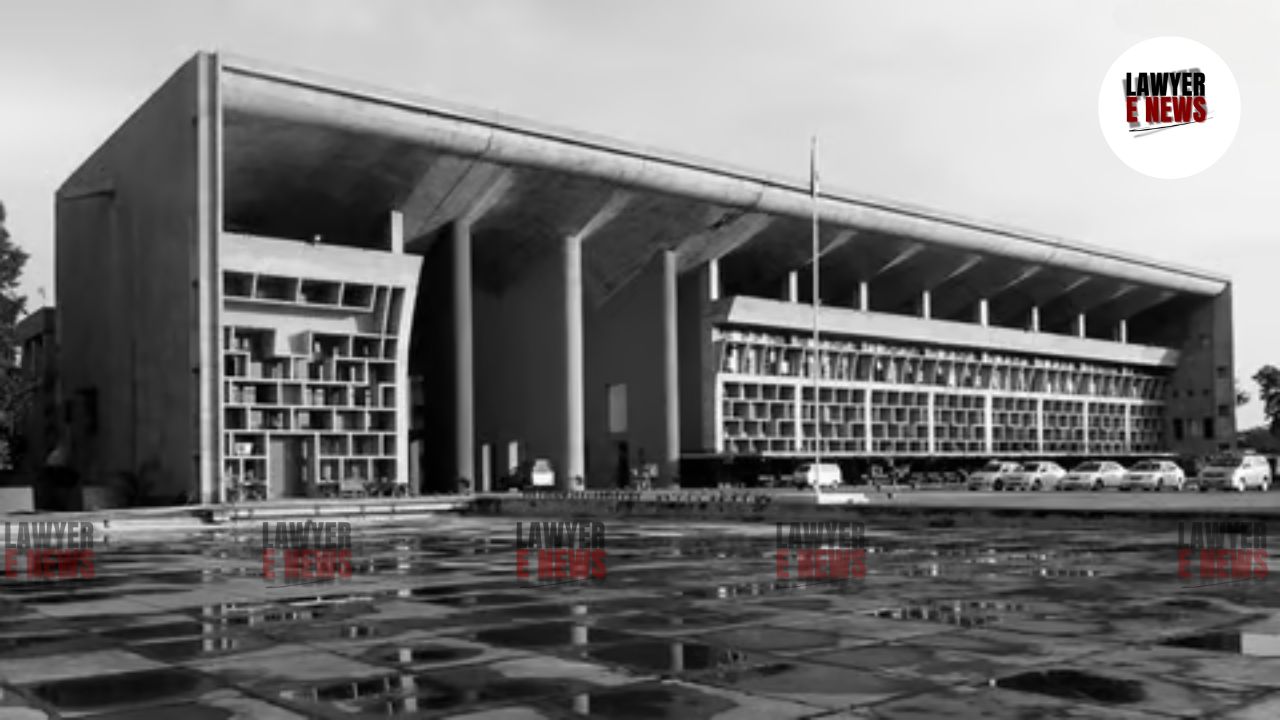
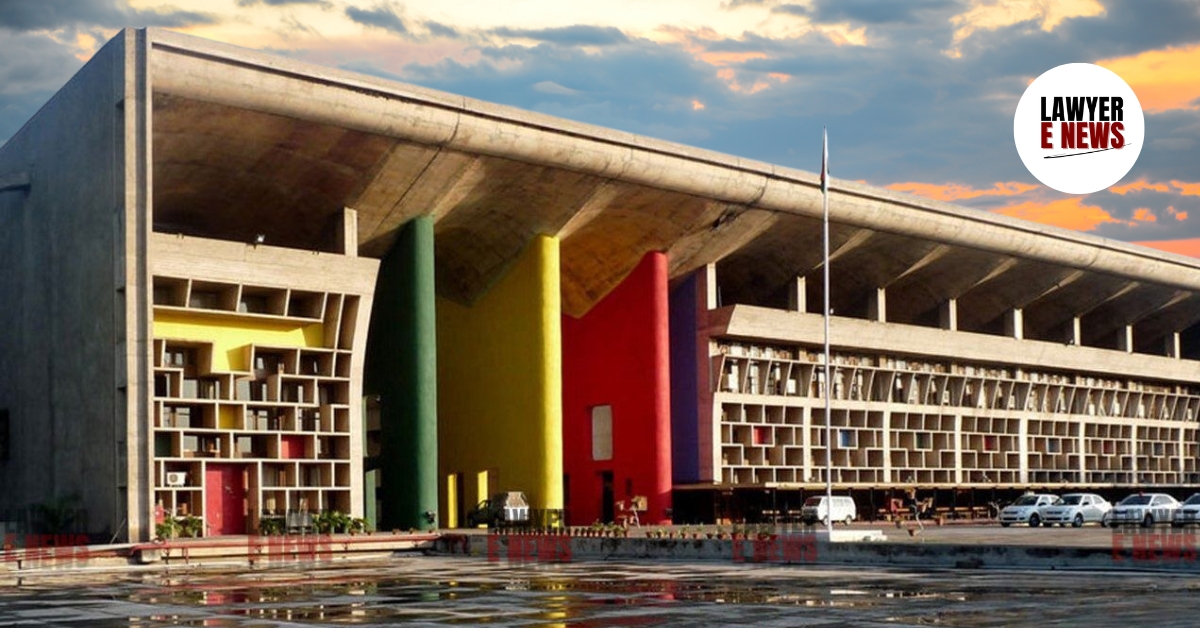
“There Is a Distinction Between a Legal Plea and a Legal Objection” — In a striking reaffirmation of procedural discipline in civil litigation, the Punjab and Haryana High Court has held that objections under Sections 61 and 62 of the Indian Evidence Act read with Order 13 Rule 4 CPC cannot be raised for the first time in a Regular Second Appeal.
Justice Nidhi Gupta dismissed the defendant’s attempt to challenge the mode of proof of the Agreement to Sell and its endorsements at the stage of second appeal, observing that such an objection, not having been raised before the Trial Court or First Appellate Court, was legally untenable. The ruling not only upheld a decree for specific performance but also clarified a nuanced procedural principle — the distinction between a “legal plea” and a “legal objection.”
Agreement Admitted, Execution Disputed
The case arose out of an Agreement to Sell dated 11.02.2009, under which the defendant agreed to sell his house to the plaintiff for Rs. 3,80,000/-. An earnest amount of Rs. 2,25,000/- was admittedly received in cash.
The plaintiff asserted that the date for execution of the sale deed, initially fixed as 25.03.2009, was extended twice through written endorsements and that on 10.08.2009 he remained present before the Sub-Registrar with the balance consideration. The defendant, however, denied the extensions and alleged that his signatures on the endorsements were obtained under police coercion.
Both the Trial Court and the First Appellate Court decreed the suit for specific performance. In second appeal, apart from challenging readiness and willingness, the defendant introduced a new technical argument: that the plaintiff had failed to comply with Sections 61 and 62 of the Evidence Act and Order 13 Rule 4 CPC while proving the agreement and extensions.
The New Argument in Second Appeal: A Procedural Afterthought?
The appellant contended that the plaintiff and his witnesses had not formally produced and exhibited the original agreement in the manner mandated by law. It was argued that the court had not recorded that the original document was seen and returned, and therefore, the decree was vitiated.
However, the High Court noted a crucial fact — this objection was never raised before the Trial Court nor before the First Appellate Court.
Justice Gupta recorded:
“It is submitted that there is a distinction between a legal objection and legal plea. It is submitted that it is only a legal plea that can be taken at any stage based on the material already on record; whereas a legal objection cannot be taken at any stage.”
The Court accepted this distinction and held that the objection regarding mode of proof was a procedural objection, not a pure question of law.
Why the Objection Failed: Waiver by Silence
The High Court emphasized that objections as to mode of proof must be taken at the time the document is tendered in evidence. If not raised at that stage, the opposing party is deprived of an opportunity to cure the alleged defect.
By remaining silent during trial and first appeal, the defendant effectively waived his right to challenge the mode of proof. Raising such an objection for the first time in second appeal would amount to permitting ambush litigation.
The Court therefore declared the objection “untenable at this stage.”
A Broader Procedural Principle: Finality and Fairness
This ruling reinforces a critical civil law principle — that procedural objections are not weapons to be unsheathed at the last stage of litigation.
Second appeal under Section 100 CPC is confined to substantial questions of law. Justice Gupta reiterated that the High Court cannot re-appreciate evidence or revisit factual findings merely because another view is possible.
Quoting Supreme Court precedent, the Court observed:
“Second appeal is not a forum where the court is to re-examine or re-appreciate the question of fact settled by the trial court or the Appellate Court.”
The findings regarding execution of the agreement, extensions of time, readiness and willingness, and breach by the defendant were all concurrent findings of fact. No perversity or legal error was demonstrated.
Conduct of the Defendant: A Litigation Strategy Backfires
The Court also examined the defendant’s conduct. He had taken mutually destructive pleas — at one stage denying all signatures, at another admitting some endorsements, and even denying his own signatures on the written statement.
The Trial Court had observed:
“It appears that he is beating about bush to wriggle out himself from the agreement in question, even after getting the amount of Rs.2.25 lacs.”
The High Court found no reason to interfere with this assessment.
In addition, the defendant’s allegations of police coercion were found unsubstantiated, especially since he withdrew his civil suit against the police and took no action after an adverse report on his Human Rights complaint.
Procedure Is Not a Game of Strategy
Beyond the facts of the case, the judgment sends a strong message to litigants and practitioners — civil procedure is not a tactical playground.
A “legal plea” based purely on law may be raised at any stage if it does not require fresh evidence. But a “legal objection” relating to the mode of proof, admissibility, or procedural compliance must be raised at the appropriate stage, failing which it is deemed waived.
Allowing such objections in second appeal would undermine finality of litigation and defeat the object of Section 100 CPC.
The Regular Second Appeal was dismissed, and the concurrent decrees directing specific performance of the Agreement to Sell were affirmed.
The decision stands as a sharp reminder that:
“Technical objections cannot be converted into substantial questions of law at the stage of second appeal.”
By drawing a clear doctrinal line between legal pleas and legal objections, the Punjab and Haryana High Court has strengthened the jurisprudence on procedural finality and the disciplined scope of second appellate jurisdiction.
Date of Decision: 18.02.2026