-
by sayum
25 August 2026 11:12 PM







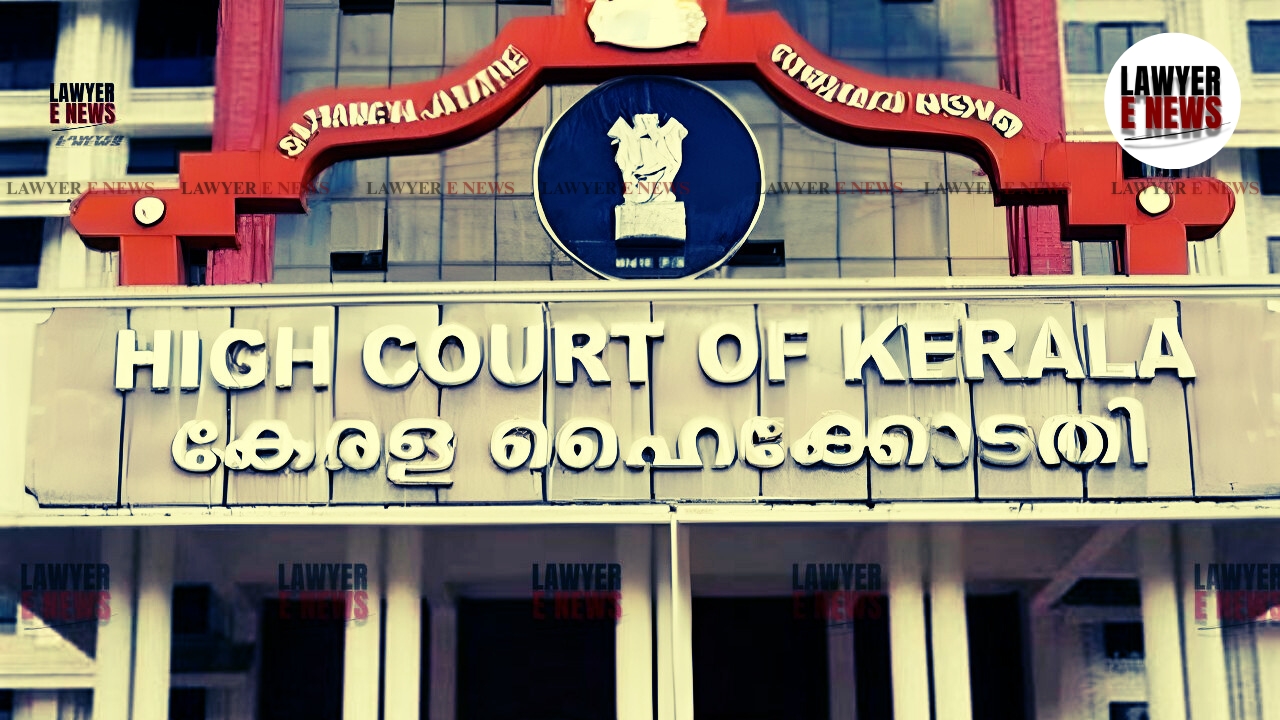
In a significant ruling clarifying the scope of contempt jurisdiction, the Kerala High Court on 17/02/2026 held that contempt proceedings cannot be sustained unless there is clear and wilful disobedience of a specific judicial direction. The Division Bench of Justice Anil K. Narendran and Justice Muralee Krishna S., in Ajithkumar M.S. & Others v. Dr. Rajan Khobragade IAS & Others, closed Contempt Case (C) Nos. 1992 and 2011 of 2025, finding no prima facie case of violation of its earlier judgment protecting the preferential right of former daily wage employees.
The Court ruled that appointments made under a distinct notification issued pursuant to the special scheme “Karunya Arogya Surakhsha Padhathi (KASP)” could not be treated as recruitment “in the place of the petitioners,” and therefore did not amount to contempt.
“Protection Was Limited to Preferential Right – Not Continuity of Engagement”
On 17 February 2026, the Kerala High Court arising from alleged non-compliance with its earlier decision in O.P.(KAT) Nos. 564 and 565 of 2024. The core legal issue was whether the respondents had wilfully disobeyed the High Court’s earlier direction requiring that former daily wage employees be given a preferential right if fresh temporary hands were recruited in their place.
The Court ultimately held that no wilful disobedience was made out and closed the contempt proceedings.
The petitioners were former daily wage workers engaged at the Government Medical College Hospital, Ernakulam. Their services were discontinued. They had earlier approached the Court in O.P.(KAT) Nos. 564 and 565 of 2024, challenging the termination of their engagement.
By judgment dated 18.02.2025 (Annexure A1), the High Court dismissed their petitions but extended limited protection. The Court observed that since the petitioners were engaged on daily wage basis and there were no sanctioned posts, they could not claim continuity of engagement. However, the Court directed that:
“if any fresh temporary hands are being recruited in the place of petitioners, no such fresh appointments shall be made without giving the petitioners a preferential right for engagement on a daily wage basis.”
Subsequently, by order dated 12.06.2025 (Annexure A2), the Superintendent of Government Medical College Hospital, Ernakulam, made fresh temporary engagements. Alleging that these appointments were made without affording them preferential consideration, the petitioners initiated contempt proceedings.
The principal legal question before the Division Bench was whether the appointments made under Annexure A2 constituted recruitment “in the place of the petitioners” and whether such recruitment amounted to wilful disobedience of the earlier judgment.
The petitioners contended that fresh temporary hands had been appointed in violation of the specific direction in Annexure A1 judgment.
The respondents, represented by the Senior Government Pleader, argued that the impugned appointments were made pursuant to a separate notification dated 18.02.2025 (Annexure R3(a)) under a special scheme titled “Karunya Arogya Surakhsha Padhathi (KASP)” for engagement of Attender-cum-Cleaner for 179 days. The age criterion prescribed was 21 to 42 years, and admittedly none of the petitioners fell within that age bracket.
It was further submitted that these appointments were not replacements in the posts earlier held by the petitioners.
“Appointments Not in the Posts Wherein Petitioners Were Engaged”
The Court examined the scope of its earlier judgment and clarified that the protection granted was narrow and conditional.
The Bench observed:
“From Annexure A1 judgment of this Court, it is clear that this Court found that the petitioners were engaged on a daily wage basis, and if their service is no longer required, as there are no sanctioned posts, they cannot seek continuity of the engagement.”
The earlier protection was confined only to a preferential right in the event of recruitment of fresh temporary hands “in the place of the petitioners.”
Upon examining the materials, the Court noted that the Annexure A2 appointments were made based on Annexure R3(a) notification and Annexure R3(b) ranked list, under a special scheme for a limited period of 179 days.
Significantly, the Court recorded:
“it is not the appointment of fresh hands in the post wherein the petitioners were engaged. Therefore, Annexure A2 cannot said to be violative of Annexure A1 judgment.”
The Court also noted that the prescribed age limit (21–42 years) excluded the petitioners, reinforcing that the appointments were under a distinct recruitment framework.
Contempt Jurisdiction – Standard of Proof
Reiterating settled principles governing contempt jurisdiction, the Court emphasised that contempt lies only where there is clear, wilful and deliberate disobedience of a specific direction of the Court.
The Bench concluded:
“Having considered the pleadings and materials on record and the submissions made at the Bar as discussed above, we find no ground to hold that the petitioners have made out a prima facie case of contempt by the respondents.”
Thus, the Court held that the essential ingredient of wilful disobedience was absent.
The Kerala High Court clarified that a direction granting “preferential right” to former daily wage employees does not create an enforceable claim to all future temporary appointments, particularly where such appointments arise under a distinct notification, special scheme, and separate eligibility criteria.
Since the KASP-based appointments were neither replacements of the petitioners nor made in the same posts earlier held by them, the Court found no violation of its earlier order and closed the contempt proceedings.
The ruling reinforces the principle that contempt jurisdiction is not a forum for re-agitating employment disputes, and can be invoked only upon strict proof of deliberate non-compliance with a court’s explicit directions.
Date of Decision: 17/02/2026