-
by sayum
28 August 2026 12:24 PM







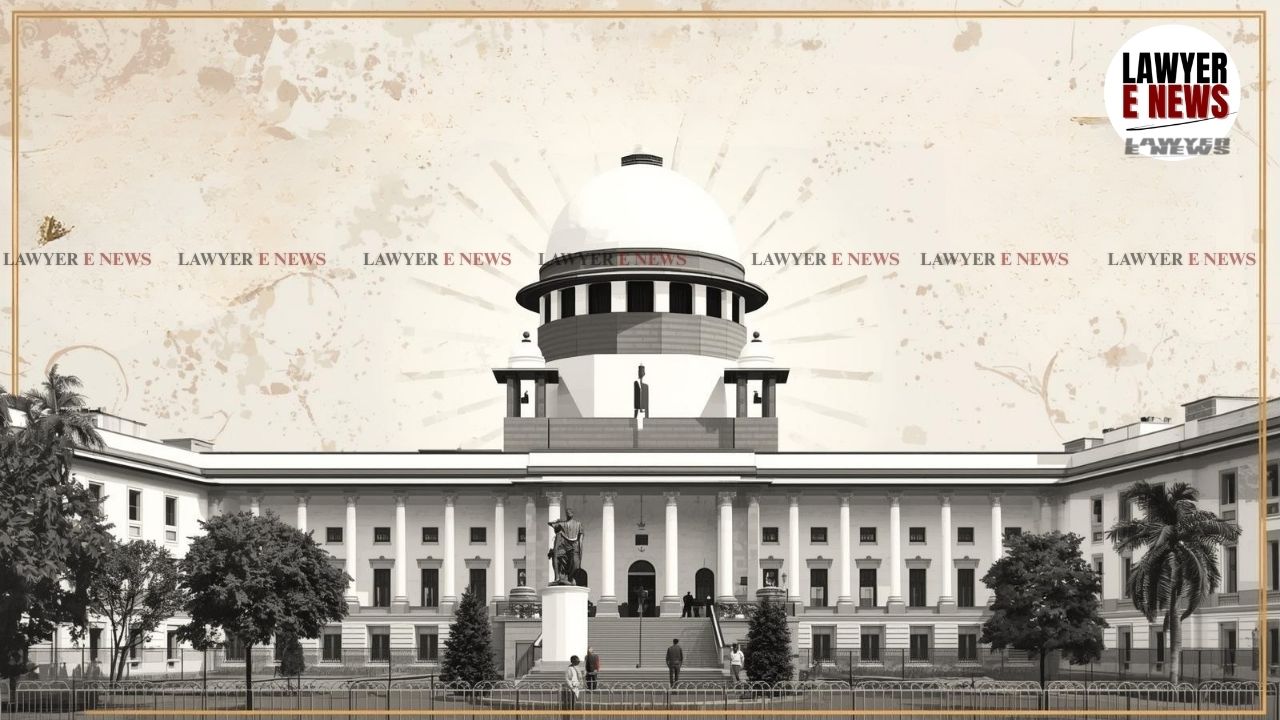
“When a claim of a right is legal and justified, relief must follow… Balancing of equities is not to be confused with avoiding or postponing the relief”, In a significant pronouncement on judicial discipline and the scope of contempt jurisdiction, the Supreme Court of India deprecated the growing trend of courts issuing repetitive directions to “consider” or “reconsider” claims without determining enforceable rights. The Bench of Justice Pamidighantam Sri Narasimha and Justice Alok Aradhe held that in the absence of “clear and categorical direction about existence of a right, its violation and what exactly the government is to comply,” initiation of contempt proceedings is misplaced.
The appeal arose from an interim order of the High Court directing listing of a contempt petition for framing of charges against the Principal Secretary (Higher Education), Government of Uttar Pradesh. Disposing of the Civil Appeal, the Supreme Court remitted the matter with directions, permitting the respondents to challenge the latest Government order dated 09.05.2025 by way of a fresh writ petition and directing the High Court to adjudicate it on merits instead of remanding the matter yet again.
Background Of The Case
The respondents were appointed as lecturers in a private college in 1993. The college was initially receiving financial assistance from the State Government. However, pursuant to a Government policy dated 21.08.2000, financial assistance to non-aided Government colleges was discontinued.
Invoking Article 226 of the Constitution, the respondents sought directions for sanction of posts and payment of salaries from the Government exchequer. By order dated 07.10.2010, the High Court disposed of the writ petition directing the Director of Education “to look into the matter and pass a speaking and reasoned order in accordance with law.”
In compliance, the Director rejected the claim on 25.03.2011, citing a complete ban on creation of posts in non-government aided colleges. This order was challenged and quashed on 06.03.2013, with a direction to reconsider the claim for regular salary.
Upon reconsideration, the authorities reiterated their stand on 01.07.2013, asserting that the petitioners were appointed under a self-financed scheme and were aware of the policy ban. This led to a third writ petition, which was allowed on 14.07.2023, remitting the matter again for fresh consideration.
Meanwhile, contempt proceedings were initiated alleging non-compliance of the 14.07.2023 order. Even during the pendency of contempt proceedings, the Government passed further orders rejecting the claim, including a detailed order dated 09.05.2025.
Despite the existence of this latest order, the High Court proceeded to list the contempt petition for framing of charges — prompting the present appeal before the Supreme Court.
Legal Issues At Hand And Court’s Observations
The core issues before the Supreme Court were:
“Whether contempt jurisdiction can be invoked when the substantive order of the Government pursuant to remand remains unchallenged?”
“Whether repeated directions to ‘consider’ or ‘reconsider’ claims without adjudicating rights create enforceable obligations capable of contempt?”
The Court made a candid and introspective observation on what it termed as “consider jurisprudence.”
“There is no doubt about the fact that the ‘consider jurisprudence’, so routinely adopted these days and if we may use the expression - to throw the ball out of the Court, is counterproductive and harms the system.”
The Bench emphasized that constitutional remedies are not intended for academic exercises or procedural cycles of remand. Relief must follow when a right is established.
“When a claim of a right is legal and justified, relief must follow. The Constitutional or statutory remedies are not intended for academic discourse. If a case deserves relief, it must be granted then and there, unflinchingly if need be.”
The Court clarified that balancing equities should not become a method of postponing justice. Avoidance or deferment of relief under the guise of reconsideration undermines judicial efficacy.
Scope And Limits Of Contempt Jurisdiction
The Supreme Court strongly deprecated the practice of invoking contempt proceedings as a shortcut to relief when substantive orders exist and are appealable.
“We have also noticed the recent tendency, a bad practice so to say, to invoke contempt jurisdiction for quick relief, even when appealable orders have already been passed.”
In the present case, a detailed Government order dated 09.05.2025 had rejected the respondents’ claim. However, this order remained unchallenged when the High Court listed the contempt case for framing of charges.
The Court held that in such circumstances, the proper course for the respondents was to challenge the Government order rather than pursue contempt proceedings.
The Bench underscored that contempt jurisdiction is not a substitute for appellate or substantive adjudication. Where the Court’s earlier directions lack clarity regarding enforceable rights and the mode of compliance, contempt cannot be sustained.
“It is necessary for the courts to articulate its direction in clear terms and also specify the method and manner of compliance if necessary.”
Directions To The High Court
Recognizing that the litigation had spanned over 16 years, the Supreme Court issued structured directions to ensure finality:
The respondents were permitted to file a fresh writ petition challenging the Government order dated 09.05.2025. The High Court was directed to hear the writ petition along with the pending contempt proceedings.
Importantly, the High Court was instructed not to remand the matter again for reconsideration, observing that “the perspective of the government is clearly evident.”
If satisfied on merits, the High Court must issue “clear and categorical directions for compliance.” If not, it may dismiss the writ petition with clear and simple reasons.
The Chief Justice of the High Court was requested to assign the matter to an appropriate bench for final disposal by 30 April 2026.
Conclusion
The Supreme Court’s ruling is a sharp reminder that judicial remedies must be effective, decisive, and enforceable. Repeated remands without determination of rights, followed by invocation of contempt for alleged non-compliance, undermine both governance and the credibility of judicial process.
By cautioning against “consider jurisprudence” and misuse of contempt powers, the Court has reaffirmed that constitutional courts must issue clear, categorical, and enforceable directions when rights are established — and litigants must pursue substantive remedies rather than shortcut routes through contempt.
The Civil Appeal was disposed of with the above directions.
Date of Decision: 10 February 2026