-
by sayum
25 August 2026 11:12 PM







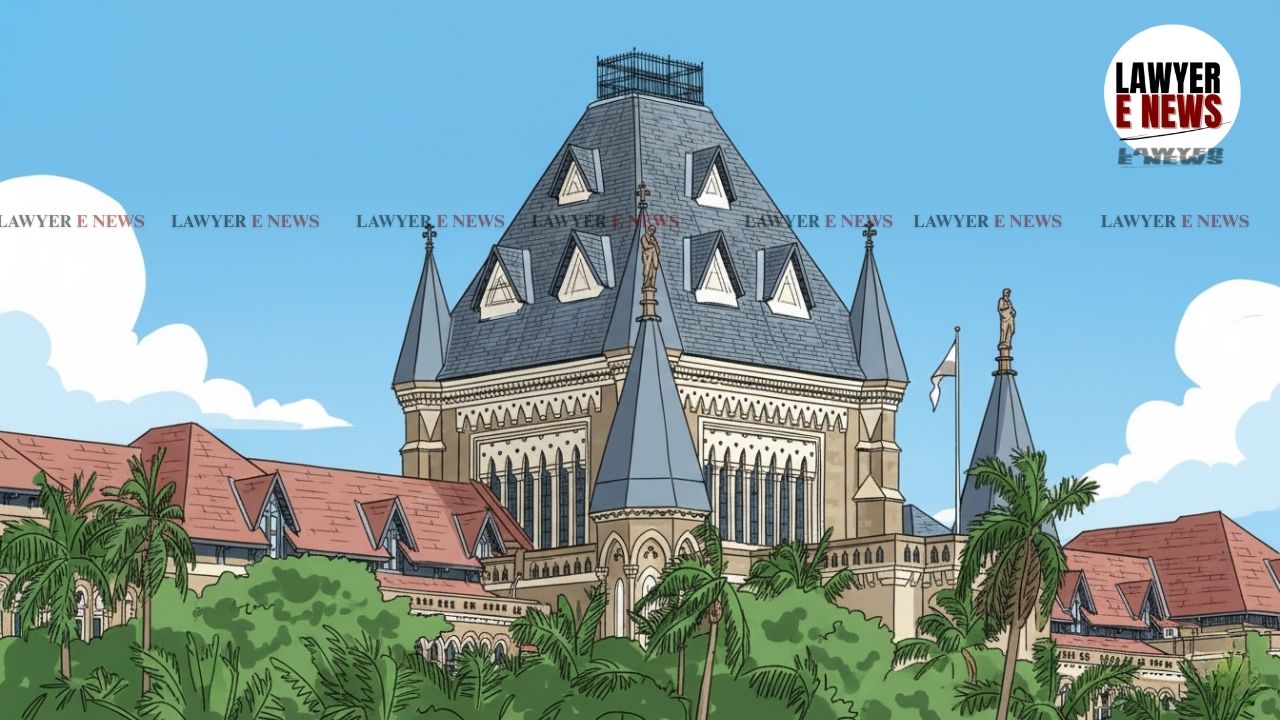
“Non-making of prima facie case… must be seen in the first blush of the FIR itself—No mini trial permissible”, In a significant ruling on the scope of anticipatory bail under the Scheduled Castes and Scheduled Tribes (Prevention of Atrocities) Act, 1989, the Bombay High Court has reiterated that the statutory bar under Section 18 operates in “absolute terms” where the FIR discloses a prima facie offence under Section 3 of the Act, but protection can still be granted where no specific caste-based allegations are made against particular accused.
Justice Y. G. Khobragade partly allowed an appeal under Section 14-A of the SC/ST Act read with Section 482 of the Bharatiya Nagarik Suraksha Sanhita, 2023. The Court upheld rejection of anticipatory bail to accused Nos. 1 and 2, holding that the FIR prima facie disclosed caste-based abuse in public view. However, it granted anticipatory bail to accused Nos. 3 and 4, observing absence of specific allegations attracting Sections 3(1)(r), 3(1)(s), or 3(2)(va) against them.
The judgment clarifies the distinction between “specific caste abuse” and “vicarious or omnibus allegations” at the stage of pre-arrest bail.
Neighbourhood Dispute at Public Tap Leads to SC/ST Act Charges
The case arose out of Crime No. 494 of 2025 registered at Amalner Police Station, District Jalgaon, for offences under the Bharatiya Nyaya Sanhita, 2023 and Sections 3(1)(r), 3(1)(s), and 3(2)(va) of the SC/ST Act.
The informant, a woman belonging to the Scheduled Caste community, alleged that on 12 November 2025 at about 5:00 p.m., while she was near a public tap in her village lane, accused No.2 allegedly abused her by uttering casteist words: “pkaHkkjhu jkaM rqyk tkLr >kys vkgs”. It was further alleged that all accused asked her and her family members to vacate the house by calling them “Cobbler” and threatened them.
The incident allegedly occurred at a public tap in the presence of intervening witnesses. The FIR was lodged on 25 November 2025—after a delay of 13 days.
The appellants contended that the FIR was a counterblast to an earlier N.C. report lodged by accused No.1 on the date of the incident and argued that the delay rendered the allegations doubtful.
The Special Judge, Amalner, rejected anticipatory bail on 10 December 2025, prompting the present appeal.
Section 18 Bar and Scope of Scrutiny at Anticipatory Bail Stage
The central issue before the High Court was whether the allegations in the FIR prima facie attracted offences under Section 3 of the SC/ST Act so as to trigger the bar under Section 18, which excludes application of Section 438 Cr.P.C. (now Section 482 BNSS).
The appellants relied on Shajan Skaria v. State of Kerala (2024 SCC OnLine SC 2249), where the Supreme Court held that:
“Section 3(1)(r) of the Act, 1989 is attracted where the reason for the intentional insult or intimidation is that the person who is subjected to it belongs to a Scheduled Caste or Scheduled Tribe.”
They argued that mere knowledge of caste is insufficient; the insult must be on account of caste.
The informant, relying on Kiran v. Rajkumar Jivraj Jain (AIR 2025 SC 4083), contended that:
“As the provision of Section 18… excludes the applicability of Section 438, Cr.PC, it creates a bar against grant of anticipatory bail in absolute terms in relation to the arrest of a person who faces specific accusations of having committed the offence under the Scheduled Caste and Scheduled Tribe Act.”
The High Court noted the Supreme Court’s caveat:
“Non-making of prima facie case… is perceived to be such a situation where the Court can arrive at such a conclusion in the first blush itself… The contents and the allegations in the FIR would be decisive… nor the Court could advert to conduct a mini trial.”
Thus, the Court confined itself to the FIR and material to assess whether a prima facie offence was disclosed.
Public View and Specific Caste Abuse Established Against Accused 1 and 2
Justice Khobragade observed that the alleged abuse occurred at a public tap in the village lane and in the presence of witnesses. The Court distinguished cases where caste abuse occurred “within the four-corner of the house,” referring to Karuppudayar v. State, where such incidents were held not to satisfy the “public view” requirement.
In the present case, the Court held:
“The incident of abusement in caste occurred at a public place and within public view, with an intention to humiliate respondent No.3. Therefore… the offence under Sections 3(1)(r), 3(1)(s), and 3(2)(va) of the SC/ST Act, prima facie attracts.”
Specifically with respect to accused No.2, the Court noted the utterance of casteist words in public view and concluded:
“Therefore, intention of the accused No.2 appears about insulting the respondent No.3 in the public view, attracts the provisions of Section 3(1)(r), 3(1)(s), 3(2)(va).”
Accordingly, the statutory bar under Section 18 operated against accused Nos. 1 and 2, and anticipatory bail was rightly refused to them.
Distinction Drawn: No Specific Caste Allegations Against Accused 3 and 4
However, upon examining the statements recorded during investigation, the Court found that no specific casteist abuse was attributed to accused Nos. 3 and 4.
The Court categorically observed:
“There is no allegations about abusement on castiest language to the respondent No.3 / informant at the hands of appellant Nos. 3 and 4.”
Thus, while the incident may have involved all accused in a scuffle, the essential ingredients of Sections 3(1)(r), 3(1)(s), and 3(2)(va) were not prima facie established against accused Nos. 3 and 4.
As a result, the Court held:
“No prima facie offence under Sections 3(1)(r), 3(1)(s), 3(2)(va)… established as against appellant Nos. 3 and 4.”
Since the bar under Section 18 is triggered only where a prima facie offence is disclosed, the Court granted anticipatory bail to accused Nos. 3 and 4 and confirmed their interim protection during trial.
Delay and Counter-Complaint: Not Sufficient to Dislodge Statutory Bar
The defence argued that the 13-day delay and prior N.C. report by accused No.1 suggested false implication. However, the Court emphasized that at the stage of Section 14-A appeal:
“The contents and the allegations in the FIR would be decisive… it would not be permissible for the Court to travel into the evidentiary realm or to conduct a mini trial.”
Thus, delay and counter-complaint were not sufficient to override the statutory bar where the FIR disclosed prima facie caste-based humiliation in public view.
The High Court partly allowed the appeal. It dismissed the appeal in respect of accused Nos. 1 and 2 and directed them to surrender within two weeks. The impugned order rejecting anticipatory bail was quashed to the extent of accused Nos. 3 and 4, and their interim anticipatory bail was confirmed during pendency of trial.
The ruling reinforces that Section 18 of the SC/ST Act is a “statutory embargo of strict application,” but only when the FIR, on its face, discloses specific and prima facie caste-based humiliation in public view. Where allegations are omnibus and devoid of such specificity, constitutional protection under anticipatory bail remains available.
Date of Decision: 12/02/2026