-
by sayum
28 August 2026 2:11 PM







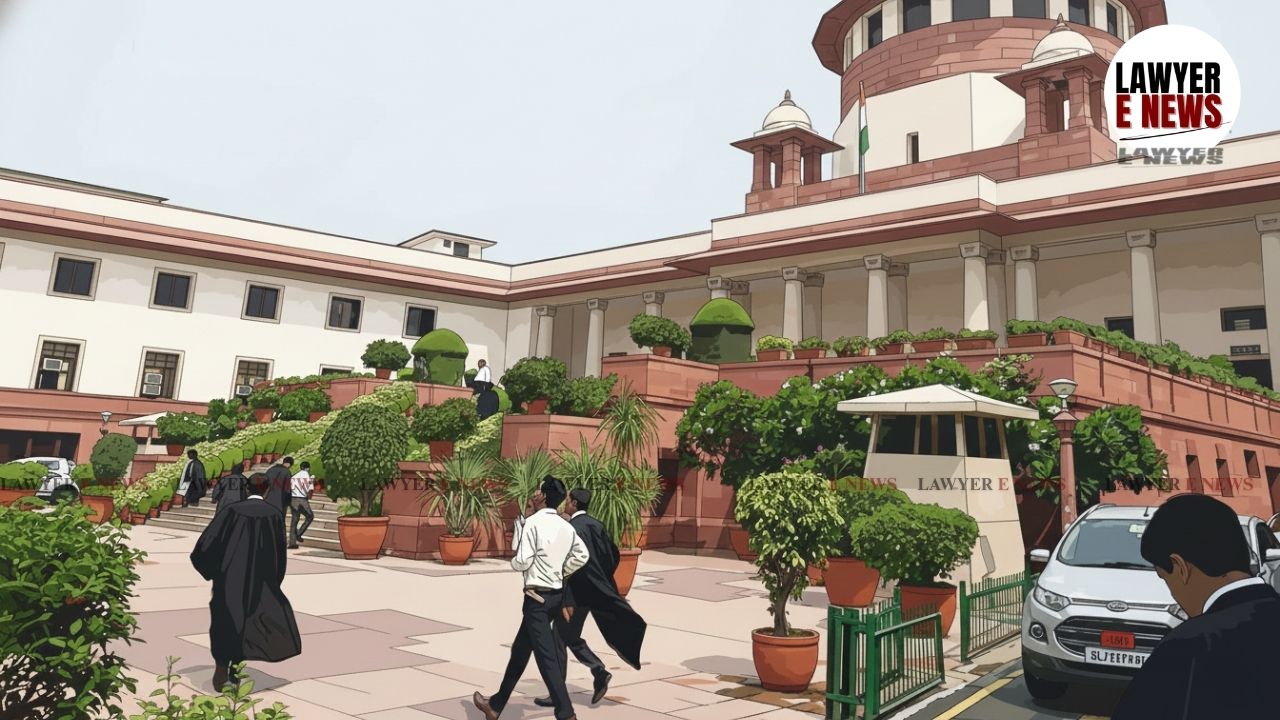
“Mental Distance Between ‘May Be’ And ‘Must Be’ Is Long – Conviction Cannot Rest On Conjectures But On An Unbroken Chain”, The Supreme Court, in a significant ruling on circumstantial evidence and the scope of Section 27 of the Evidence Act, has upheld the conviction of Neelu @ Nilesh Koshti for the brutal murder of Archana @ Pinki, holding that the “complete and unbroken chain of circumstances” left no room for any hypothesis except the guilt of the accused.
Bench of Justice Prashant Kumar Mishra and Justice Vipul M. Pancholi affirming the concurrent findings of the Trial Court and the Madhya Pradesh High Court convicting the appellant under Sections 302 and 201 of the Indian Penal Code. While dismissing the appeal, the Court granted liberty to the appellant to apply for remission in accordance with the applicable policy, noting that he had undergone more than 15 years of imprisonment.
The case, resting entirely on circumstantial evidence, involved ransom calls made from the deceased’s mobile phone, recovery of her body from a well at the instance of the accused under Section 27 of the Evidence Act, sale of her mobile phone by the accused, recovery of her scooty, and medical evidence establishing homicidal death by ligature strangulation.
Missing Woman, Ransom Calls And A Body In A Sack
The prosecution case began with a missing report lodged on 28 July 2009 by Bhagwati Bai (P.W.4), stating that her daughter Archana @ Pinki had been missing since 25 July 2009. During investigation, it emerged that ransom calls demanding Rs. 5 lakh were made to the deceased’s husband Rajesh (P.W.12) from her own mobile phone.
The investigation revealed that the deceased’s mobile phone had been sold by the appellant to Shekhar Chouhan (P.W.6), who in turn sold it to Krushna Sharma (P.W.5). Subsequently, upon the appellant’s memorandum statement under Section 27 of the Evidence Act, the police recovered the deceased’s body from a well near Tasaali Dhaba, Indore Bypass Road. The body was stuffed in a sack.
The Trial Court convicted the appellant under Sections 302 and 201 IPC and sentenced him to life imprisonment. The High Court affirmed the conviction, observing that the appellant murdered the deceased “for non-fulfillment of his demand of ransom by strangulating her and kept her body in an empty sack and destroyed the evidence of murder by throwing her dead body into the well.”
Circumstantial Evidence: Reaffirming The “Five Golden Principles”
At the outset, the Supreme Court reiterated that the entire prosecution case rested on circumstantial evidence, with no eyewitness or judicial confession.
Quoting extensively from Sharad Birdhichand Sarda v. State of Maharashtra, the Court emphasized that:
“the circumstances from which the conclusion of guilt is to be drawn should be fully established” and that there is a clear legal distinction between “may be proved” and “must be or should be proved.”
Reproducing the classic dictum from Shivaji Sahabrao Bobade, the Bench underscored:
“Certainly, it is a primary principle that the accused must be and not merely may be guilty before a court can convict and the mental distance between ‘may be’ and ‘must be’ is long and divides vague conjectures from sure conclusions.”
Applying these principles, the Court examined each incriminating circumstance independently and cumulatively.
Delay In Missing Report Not Fatal
The defence sought to cast doubt on the prosecution by highlighting a three-day delay in lodging the missing report.
Rejecting this contention, the Court held that such delay is natural conduct:
“When a family member goes missing, the family naturally hopes for the person’s return and often conduct their own search before approaching the Police.”
The Court found that a delay of three days was neither excessive nor unusual and did not vitiate the prosecution case.
Ransom Calls From Deceased’s Mobile: Documentary Trail Upheld
The husband of the deceased testified that ransom calls demanding Rs. 5 lakh were received from the deceased’s own mobile number. The Court noted that call detail records were proved through officials of the telecom company and the Investigating Officer.
The evidence established that after the deceased went missing, her phone was actively used to make ransom calls. This circumstance, read with the subsequent recovery of the phone from purchasers to whom it was sold by the appellant, became a crucial link in the chain.
The Court observed that though mere possession of the deceased’s article may not by itself establish guilt, “the said circumstance of possession of the mobile phone has to be read in conjunction with the other circumstances to conclude the appellant’s culpability.”
Section 27 Evidence Act: “Discovery Of Fact” Includes Place, Object And Knowledge
The most formidable circumstance, in the Court’s analysis, was the recovery of the dead body from the well pursuant to the appellant’s memorandum statement recorded under Section 27 of the Evidence Act.
Reiterating that Sections 25 and 26 bar confessions made to police officers, the Court explained that Section 27 operates as a proviso and exception. Quoting from Udai Bhan v. State of Uttar Pradesh, the Bench observed:
“A discovery of a fact includes the object found, the place from which it is produced and the knowledge of the accused as to its existence.”
Further relying on Bodhraj Alias Bodha v. State of Jammu and Kashmir and Pulukuri Kottayya, the Court emphasized that the doctrine underlying Section 27 is the “doctrine of confirmation by subsequent events.”
In a powerful articulation, the Court held:
“The recovery embodies the ‘doctrine of confirmation by subsequent events’… the actual discovery of the body from the exact location disclosed by the appellant is a guarantee that the information supplied by him is true.”
The Bench concluded that the recovery of the body from a specific well, not in public knowledge and discovered solely due to the accused’s disclosure, constituted a “distinct fact” within the meaning of Section 27 and formed a formidable link in the chain of circumstances.
Medical Evidence: Ligature Strangulation And Scientific Corroboration
The post-mortem revealed ligature marks, fracture of thyroid cartilage, ecchymosis, and an ante-mortem injury, conclusively establishing homicidal death by throttling with ligature.
The body, recovered from water, was in partial decomposition. Addressing the argument regarding absence of DNA testing, the Court relied on ocular identification by close relatives and a regular auto driver who recognized the deceased’s face and clothing.
Referring to Modi’s Medical Jurisprudence, the Court explained that putrefaction in water is slower, particularly when protected by clothing. It held that absence of DNA testing is not fatal when reliable identification evidence exists.
Recovery Of Scooty: Exclusive Knowledge Reinforced
The scooty on which the deceased was travelling was recovered from a railway station parking stand at the appellant’s disclosure. The parking register corroborated that it had been parked on the date of disappearance and remained there until recovery.
This recovery, like that of the body, demonstrated the appellant’s exclusive knowledge of the whereabouts of the deceased’s belongings.
Motive: Strengthens But Not Indispensable
The prosecution alleged that the appellant conspired to extort ransom and, to avoid sharing proceeds, murdered the deceased.
Citing Mulakh Raj v. Satish Kumar, the Court reiterated:
“Proof of motive is never an indispensable for conviction. When facts are clear it is immaterial that no motive has been proved.”
Thus, while the ransom motive strengthened the case, the conviction did not hinge solely upon it.
Supreme Court’s Conclusion: Complete Chain, No Hypothesis Of Innocence
Summarizing the cumulative effect of all circumstances, the Court held:
“These circumstances, when viewed cumulatively, form a complete chain. No other reasonable conclusion is possible except for the inference that the appellant committed the murder of Archana @ Pinki.”
Finding no infirmity in the concurrent findings of the Trial Court and High Court, the Supreme Court dismissed the appeal.
However, taking note of the appellant’s incarceration exceeding 15 years, the Bench granted liberty to apply for remission, directing the State to consider the same in accordance with policy.
The judgment stands as a robust reaffirmation of the principles governing conviction based on circumstantial evidence and a clear exposition of the scope of Section 27 of the Evidence Act, reinforcing that discovery of a concealed dead body at the instance of the accused can form the linchpin of a legally sustainable conviction.
Date of Decision: 20 February 2026