-
by sayum
12 August 2026 10:17 AM







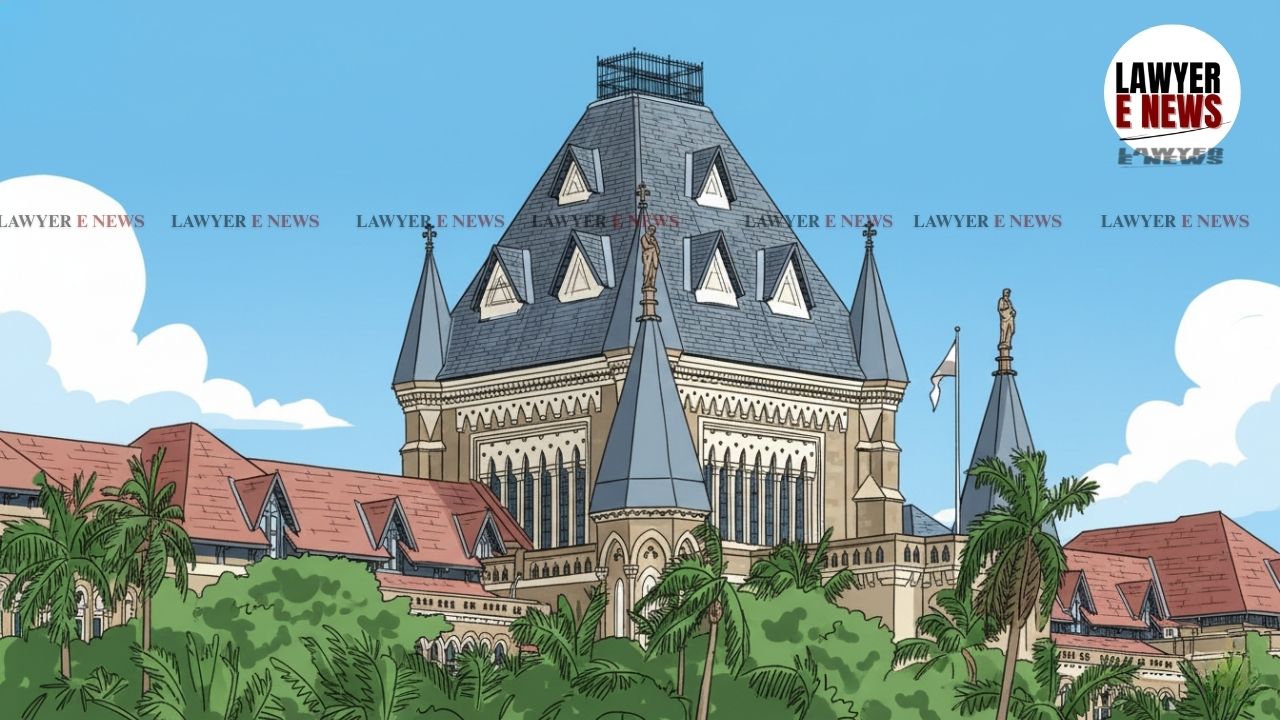
"The operative paragraph does not identify the year of study or semester of the law course as the criterion for determining eligibility." Bombay High Court held that the Supreme Court's one-time protection order shielding law students from detention over attendance shortages applies across all years and semesters, and is not restricted to final-year students.
A division bench of Justices R.I. Chagla and Farhan P. Dubash observed that the July 21, 2026 order of the Apex Court focuses broadly on students whose academic sessions were ongoing when the Delhi High Court delivered its Sushant Rohilla judgment. The bench noted that "the expression ‘final examination’ describes the examination concluding the concerned academic session; it does not describe the terminal year or terminal semester of the student’s entire law course."
The litigation stems from a raft of writ petitions filed by around 41 law students of the ILS Law College, affiliated with the Savitribai Phule Pune University, who were barred from semester-end exams for the academic year 2025-26 due to attendance falling between 46% and 54.37%. These students relied on the Delhi High Court’s November 2025 ruling in Sushant Rohilla which had directed that no law student should be detained solely for low attendance pending Bar Council of India norm reviews. Although the Supreme Court later stayed the Delhi High Court's directive prospectively on May 26, 2026, it subsequently passed a one-time protective order on July 21, 2026, shielding students from detention for that ongoing session.
The primary question before the court was whether the Supreme Court's one-time protection order dated July 21, 2026, is restricted exclusively to final-year and final-semester law students or extends to students across all years of three-year and five-year law courses. The court was also called upon to determine whether individual student awareness of the Delhi High Court judgment is a pre-condition for claiming protection.
Scope Of Supreme Court's Protection
The bench underscored that the Supreme Court’s order of July 21, 2026, must be read as a whole in the context of nationwide legal education norms. The court rejected the college's contention that the relief was confined solely to terminal-year students facing imminent course completion loss.
"The Hon’ble Supreme Court was concerned with students facing the imminent consequence of loss of an academic session, and not merely with students facing the consequence of being unable to complete the entire law course."
No Requirement To Prove Personal Reliance
Addressing arguments that students in Maharashtra could not claim a bona fide belief due to prior local judgments refusing to follow Sushant Rohilla, the court held that the Supreme Court was fully aware of contrary views taken by six High Courts when issuing its blanket directions.
"To construe the order as requiring each student to establish personal reliance upon the judgment would render the second and independent consideration expressly recorded by the Hon’ble Supreme Court substantially otiose."
No Territorial Or Year-Wise Exceptions
The bench clarified that the Supreme Court did not carve out exceptions for states where local High Courts had taken a contrary view, nor did it introduce a semester-wise threshold. The court emphasized that "the objective criteria identified by the Hon’ble Supreme Court are that the student’s academic session was ongoing on 3rd November 2025 and that the student was facing detention or loss of that academic session on account of shortage of attendance."
Distinguishing Prior Coordinate Bench Rulings
The high court distinguished its earlier rulings in Unnati Rawat and Kushagra Vijay Agrawal, explaining that those matters were decided prior to the supervening and binding directions issued by the Supreme Court on July 21, 2026. The bench noted that giving effect to a subsequent binding order of the Apex Court does not amount to departing from a coordinate bench decision on law.
Final Directions And Relief Granted
Disposing of the petitions, the court confirmed interim protections for students who had appeared for exams under court orders, directing the university to declare their results and protect their academic progression. For students blocked entirely from exams, the court mandated that the university and college conduct supplementary examinations within four weeks. The court explicitly left open the academic controversy surrounding the interpretation of Rule 12 of the BCI Rules of Legal Education and University Ordinances 68 and 70 for future adjudication.
Date of Decision: 10 August 2026