-
by sayum
12 August 2026 10:17 AM







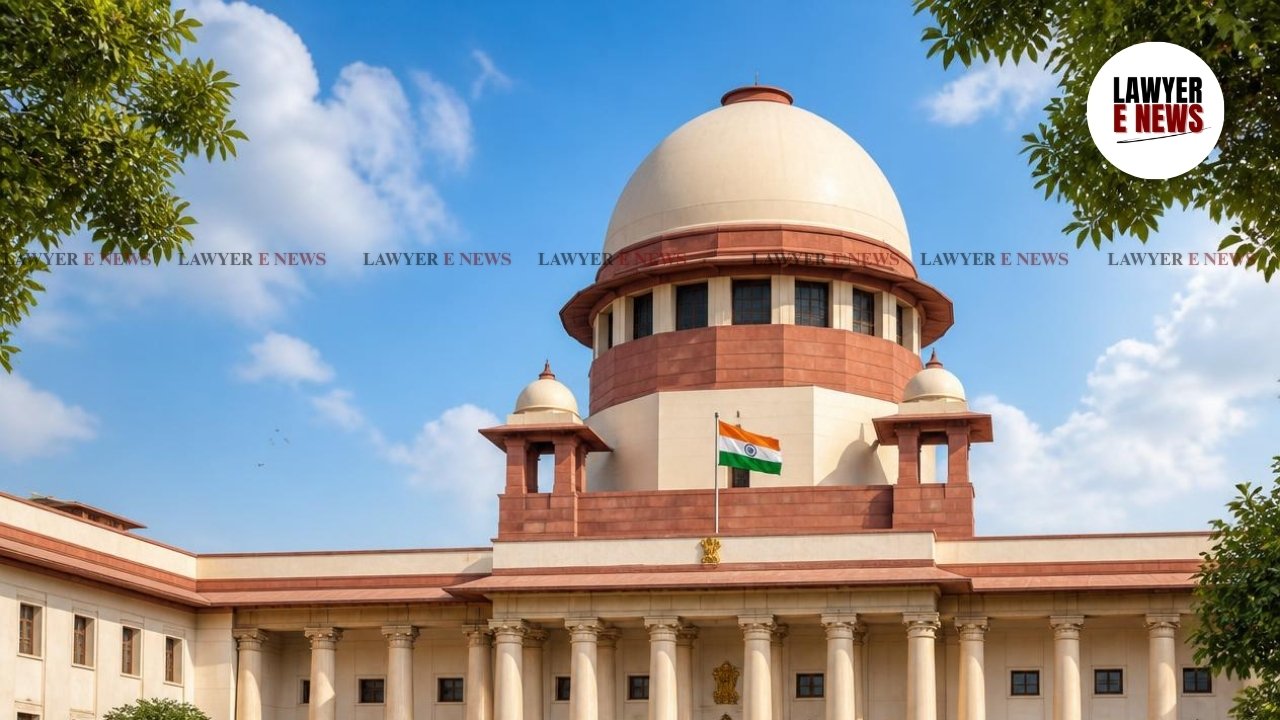
"It is a settled position of law that damages, whether liquidated or unliquidated, cannot be treated as operational debt unless and until they are assessed and crystallized by way of adjudication by a court of competent jurisdiction." Supreme Court, in a significant ruling dated August 12, 2026, held that claims arising from breach of contract such as suspension, idling, and demobilization charges cannot be treated as 'operational debt' under the Insolvency and Bankruptcy Code, 2016, unless previously adjudicated and crystallized by a competent court or arbitral tribunal.
A bench of Justices J.B. Pardiwala and Manoj Misra observed that the Adjudicating Authority cannot function as a forum for resolving contractual disputes or assessing damages.
Contractual Background And Suspension Of Works
The dispute arose from an international competitive bid invited by the appellant for setting up a 225 MW gas-based power station in Andhra Pradesh. The respondent was awarded the contract vide a Letter of Award dated December 24, 2010, followed by an Engineering, Procurement, and Construction agreement dated February 9, 2011, valued at Rs. 827 crore. Following non-payment of dues upon completion of initial milestones, the respondent issued a notice of suspension of works under Clause 14.2 of the EPC contract in July 2011.
Scope Of Issues Before The Apex Court
The primary question before the court was whether the EPC contract was frustrated by efflux of time and whether the monies claimed constituted operational debt under Section 5(21) of the IBC. The court was also called upon to determine the existence of a prior dispute and whether the insolvency application filed under Section 9 was barred by limitation.
Court Rejects Theory Of Contractual Frustration Contract Did Not Frustrate By Efflux of Time
The bench firmly rejected the appellant's contention that the EPC contract stood automatically frustrated by the efflux of time. The court explained that efflux of time denotes a natural and foreseen mode of discharge upon expiry of stipulated periods, whereas the doctrine of frustration under Section 56 of the Indian Contract Act, 1872, requires a supervening impossibility.
Suspension Is Not A Supervening Impossibility Self-Induced Frustration Not Permitted
The judges emphasized that the suspension of works was a direct consequence of non-payment and the election of parties, which cannot be categorized as an unforeseen extraneous event beyond control. Relying on settled precedents, the court reiterated that the doctrine of frustration cannot apply to a case of self-induced frustration arising from the conduct of contracting parties.
Milestone Payments Constitute Operational Debt Operational Debt Limited To Contractual Consideration
Analyzing Section 5(21) of the IBC, the court drew a clear distinction between regular milestone payments and damages claimed for breach. The bench held that amounts payable under the agreed payment schedule for goods and services rendered qualify as operational debt as they represent direct consideration under a works contract.
Damages Require Prior Judicial Crystallization
"Disputes that arise from breach of the contract cannot give rise to an operational debt till the time the debt becomes crystallized and legally enforceable."
NCLT Is Not A Forum For Adjudicating Damages
The court categorically ruled that claims for suspension, idling, and demobilization charges are in the nature of damages arising from alleged contractual breaches. Such unliquidated or liquidated damages cannot form the basis of an operational debt until assessed and crystallized through a civil suit or arbitration proceedings.
Total Silence Over Years Negates Pre-Existing Dispute Absence Of Response To Statutory Notice
Addressing the question of a pre-existing dispute, the bench noted that although the respondent issued multiple legal notices between 2014 and 2015, the appellant maintained total and consistent silence across all communications and failed to reply to the demand notice issued under Section 8 of the IBC.
Defence Raised In IBC Proceedings Is An Afterthought Silence As Evidence Of Non-Contestation
The court observed that while silence is not a universal indicator of no dispute, a consistent and total silence spanning seven years constitutes strong evidence of an absence of genuine dispute at the relevant time. The defense raised for the first time in the reply to the Section 9 application was held to be a mere afterthought designed to evade insolvency.
Time-Barred Claims Cannot Be Revived Under IBC Insolvency Code Is Not A Recovery Tool
On the crucial issue of limitation, the court applied Section 238A of the IBC read with Article 137 of the Limitation Act, 1963, reiterating that the right to sue accrues on the date of default. Citing foundational precedents like Babulal Vardharji Gurjar, the bench emphasized that the IBC cannot be utilized to give a new lease of life to time-barred debts.
Invoices Must Be Considered Separately For Limitation Next Education Principle Applied
The court held that a default occurs at a singular point in time under Section 3(12) of the IBC and does not constitute a continuing wrong merely because an EPC contract subsists. Applying the principle in Next Education India (P) Ltd. v. K12 Techno Services, the bench underscored that limitation is tied to individual due dates and cannot be reset unilaterally by issuing fresh legal notices without written acknowledgment of liability under Section 18 of the Limitation Act.
Appeal Allowed And Impugned Orders Set Aside Liberty Granted To Pursue Appropriate Forum
Concluding that the application under Section 9 was barred by limitation having arisen from defaults dating back to 2011 and 2012, the Supreme Court allowed the appeal, setting aside the concurrent orders of the NCLAT and NCLT. However, the court granted liberty to the respondent to approach the appropriate dispute resolution forum provided under the EPC contract to contest its substantive claims.