-
by sayum
12 August 2026 9:27 AM







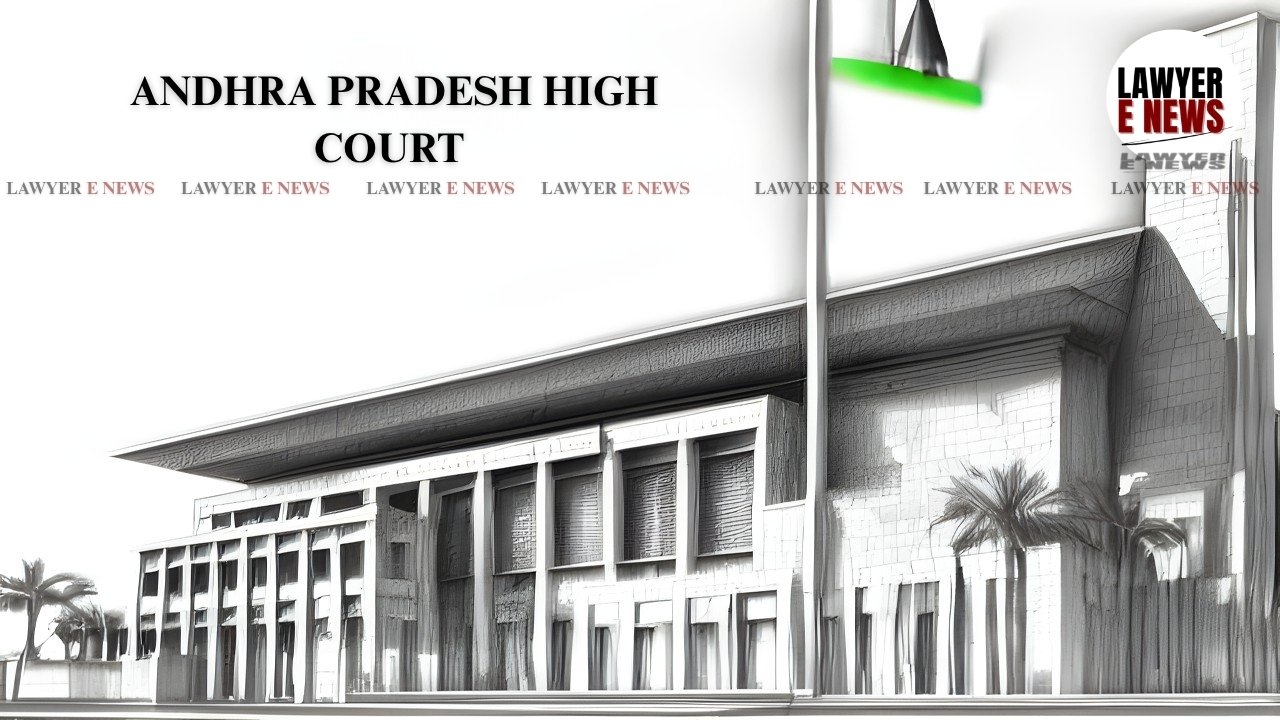
"The evidence of RW.1 cannot be relied on so as to fix the negligence in the matter. On the other hand, the petitioners got examined eye witness as PW.2, who in her evidence categorically deposed that the accident was occurred due to the negligence of the 2nd respondent/driver of the APSRTC bus." Andhra Pradesh High Court, in a judgment dated August 11, 2026, held that the self-serving and uncorroborated testimony of an offending vehicle's driver cannot override credible eyewitness accounts and official police records establishing rash and negligent driving.
A single-judge bench of Justice T.C.D. Shekhar dismissed an appeal filed by the Andhra Pradesh State Road Transport Corporation (APSRTC), ruling that the tribunal was entirely justified in fixing liability on the bus driver and awarding compensation for the tragic death of a seven-year-old boy.
The dispute arose from a fatal motor accident on September 9, 2012, involving a minor boy, D. Yaswanth, who was struck and killed by an APSRTC bus bearing registration number AP 03 Z 5629. The parents of the deceased approached the Motor Accidents Claims Tribunal seeking compensation of Rs. 6,00,000, contending that the bus driver operated the vehicle in a rash and negligent manner. The tribunal partly allowed the claim, awarding Rs. 5,75,000 with 9 percent interest, which prompted the transport corporation to file the current appeal questioning both liability and quantum.
The primary question before the court was whether the tribunal erred in fixing contributory or sole negligence on the driver of the APSRTC bus rather than the auto driver. The court was also called upon to determine whether the quantum of compensation awarded for the death of a minor child was excessive and warranting judicial interference.
Driver's Testimony Lacks Credibility
The court noted that the transport corporation heavily relied upon the deposition of the bus driver, examined as RW.1, who claimed the accident was caused by the auto driver's negligence. However, the bench observed that RW.1 merely deposed in tune with the written statement filed by the corporation without any supporting evidence.
"The evidence of RW.1 cannot be relied on so as to fix the negligence in the matter," the court firmly noted, pointing out that an interested party's bare denial cannot displace positive evidence brought on record by claimants.
Eyewitness and Police Records Corroborated
In contrast to the unsupported testimony of the driver, the claimants produced concrete ocular and documentary evidence to establish liability. The mother of the victim testified as PW.1, and an independent eyewitness was examined as PW.2.
"Though PW.2 was cross examined at length, nothing was elicited to disprove the case of the petitioners," the court observed, highlighting the unshakeable nature of the eyewitness account.
Police Investigation Supports Claimants
The bench placed significant reliance on official police records, specifically the First Information Report and the charge sheet marked as Exs.A1 and A2. The court emphasized that the contents of these documents consistently pointed towards the rash and negligent driving of the APSRTC bus driver.
"A perusal of the contents of these documents would reveal that there was negligence on the part of the driver of the offending bus," the bench stated, reiterating that statutory investigative records hold substantial presumptive value in civil motor accident claims unless cogently rebutted.
Quantum of Compensation Upheld
Addressing the challenge to the quantum of compensation, the court noted that the deceased child was seven years old at the time of the incident, supported by a birth certificate marked as Ex.A6. The tribunal had correctly adopted a notional income of Rs. 30,000 per annum by following the apex court precedent in Lata Wadhwa & Ors. v. State of Bihar.
"The Tribunal, after taking into consideration of various aspects of the matter and by following the judgment rendered by the Hon’ble Apex Court, rightly awarded an amount of Rs. 5,75,000 as compensation," the bench ruled.
Appeal Dismissed with No Merits
Concluding that the transport corporation miserably failed to discharge its evidentiary burden or rebut the claimants' case, the High Court found no illegality or perversity in the tribunal's order. The appeal was accordingly dismissed, leaving the parties to bear their own costs and closing all pending miscellaneous applications.
The High Court conclusively upheld the motor accident tribunal's award, reinforcing the evidentiary weight of police charge sheets and independent eyewitness testimonies over the uncorroborated defense of accused drivers. The ruling ensures timely and just compensation for the bereaved family without unwarranted judicial reduction.
Date of Decision: 11 August 2026