-
by sayum
12 August 2026 9:27 AM







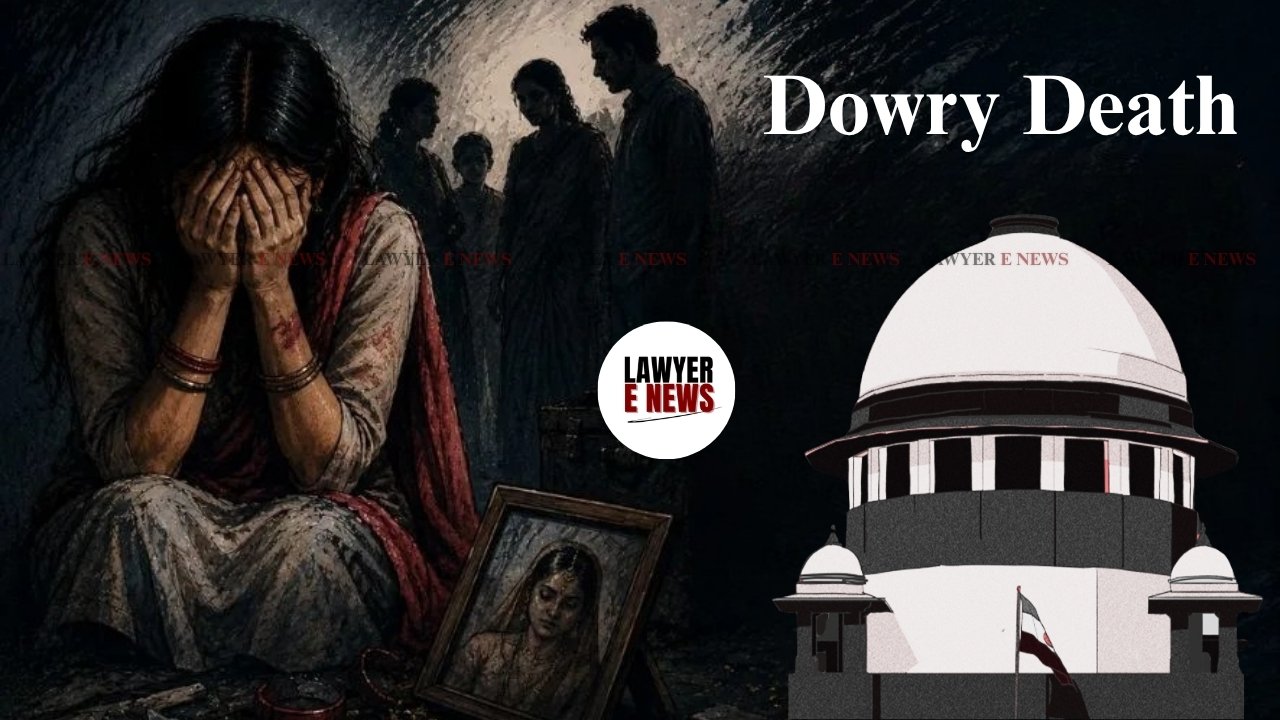
"To hold otherwise would be to elevate procedural formalism over substantial justice and to compel an undeniably absent accused to undergo the ordeal of a full sessions trial notwithstanding admitted and unimpeachable proof to the contrary." Supreme Court, in a significant ruling dated August 11, 2026, quashed the criminal proceedings, including the First Information Report and chargesheet, against a Border Security Force (BSF) jawan accused in a dowry death case, emphasizing that to proceed with trial in such circumstances would be "to elevate procedural formalism over substantial justice."
A bench of Justices Sanjay Karol and Augustine George Masih held that continuation of proceedings amounted to an abuse of the process of court, especially given the unimpeachable alibi evidence and the acquittal of his co-accused parents on identical facts.
The appellant, Rahul, was accused in a dowry death case following the demise of his wife, Anshul @ Payal, on June 13, 2016. An FIR was lodged under Sections 498-A, 304-B of the Indian Penal Code and Sections 3/4 of the Dowry Prohibition Act, alleging cruelty and dowry demand, specifically for a Tata Safari car. The High Court had declined to quash the chargesheet and proceedings against him, leading to the present appeal.
The primary questions before the court were whether the High Court was justified in declining to examine the effect of an official service certificate establishing the appellant's alibi, and whether the acquittal of co-accused parents had a material bearing on the continuation of proceedings against the appellant. The court also considered if continuing the criminal proceedings amounted to an abuse of the process of the court.
Court Recalls Bhajan Lal Guidelines for Quashing
The Supreme Court reiterated the well-settled contours of its power to quash an FIR or criminal proceedings, referencing the illustrative categories laid down in State of Haryana and Others v. Bhajan Lal and Others. This power, though to be exercised sparingly, is crucial to prevent abuse of the process of any court or otherwise secure the ends of justice.
Application of Rajiv Thapar Four-Step Test
The Court applied the four-step test from Rajiv Thapar and Others v. Madan Lal Kapoor to determine if criminal proceedings could be quashed based on defence material prior to trial. It examined whether the material relied upon by the accused was sound, reasonable, unimpeachable, ruled out the charges, remained unrefuted, and whether trial continuation would abuse court process.
Medical Evidence Undermines Homicidal Theory
The post-mortem report unequivocally recorded the cause of death as "asphyxia as a result of ante-mortem hanging," with only a single ligature mark around the neck. Critically, no other ante-mortem injuries such as abrasions, contusions, nail marks, or defensive wounds were found, which would typically be expected in a case of homicidal violence involving multiple accused acting in concert, suggesting death by suicide.
Inquest Report Contradicts Murder Narrative
Equally significant was the contemporaneous inquest report (Panchayatnama) prepared immediately after the occurrence. It recorded that both the main entrance of the house and the room where the deceased was found hanging were locked from inside and had to be broken open by the police. The prosecution failed to offer a satisfactory explanation for this, making it prima facie inconsistent with a murder committed by the accused persons.
Unimpeachable Official Alibi Established
The appellant, a member of the Border Security Force, presented an official certificate dated October 3, 2016, from the Commandant, 141 Battalion, BSF. This document certified that he was on "Dak-runner duty" from May 27, 2016, to June 22, 2016, and crucially, was not in Meerut on June 13, 2016, the date of the incident. He proceeded from Shillong to New Delhi on June 14, 2016, and remained stationed there until June 19, 2016, thereby demonstrating his absence from the scene of the crime.
Distinguishing Rajendra Singh Precedent
The Supreme Court distinguished the High Court's reliance on Rajendra Singh v. State of U.P. and Another, where an alibi plea based on affidavits filed for the first time before the High Court was not entertained. In the present case, the alibi rested on an official, contemporaneous BSF service record whose authenticity had never been questioned by the respondents at any stage, making it "unimpeachable official material."
Acquittal of Co-Accused Parents Erodes Prosecution's Substratum
The Court noted that the appellant's parents, who were co-accused in the same FIR, had been acquitted by the trial court on October 17, 2025, after a full-fledged trial. The trial court found that the prosecution utterly failed to prove allegations of cruelty, dowry demand, or homicidal involvement beyond reasonable doubt. This acquittal, rendered on an identical body of evidence, significantly erodes the very substratum of the prosecution case against the appellant.
No Independent Corroboration for Sole Allegation
While acknowledging that physical presence at the precise moment of death is not an essential ingredient for Section 304-B IPC, the Court observed that the solitary additional element distinguishing the appellant's role—a telephonic demand for dowry—stood "substantially neutralised." This was due to the complete absence of any call-detail records to verify this solitary allegation, despite the appellant's proven absence from the State.
Continuation of Trial Deemed Abuse of Process
The Court concluded that continuing a full sessions trial against the appellant alone, when his co-accused stood acquitted on the self-same evidence and his alibi was established by unimpeachable official records, would not further the cause of justice. Instead, it would subject the appellant to "the ordeal and stigma of a criminal trial whose substratum has already collapsed," amounting to a "legal exercise in futility."
The Court clarified that its order does not, in any manner, disturb the judgment dated October 17, 2025, passed by the Additional Sessions Judge/Fast Track Court No. 1, Meerut, in Sessions Trial No. 653 of 2017, nor does it affect the status or rights of any other person.
The Supreme Court found that the continuation of criminal proceedings against the appellant amounted to an abuse of the process of the court, falling squarely within the rationale of Bhajan Lal categories concerning inherent improbability of allegations and abuse of process. By allowing the appeal and setting aside the High Court's judgment, the Court reaffirmed the principle that courts should not permit criminal processes to continue when unimpeachable evidence demonstrably proves the futility of such a trial.
Date of Decision: August 11, 2026