-
by sayum
05 August 2026 9:31 AM







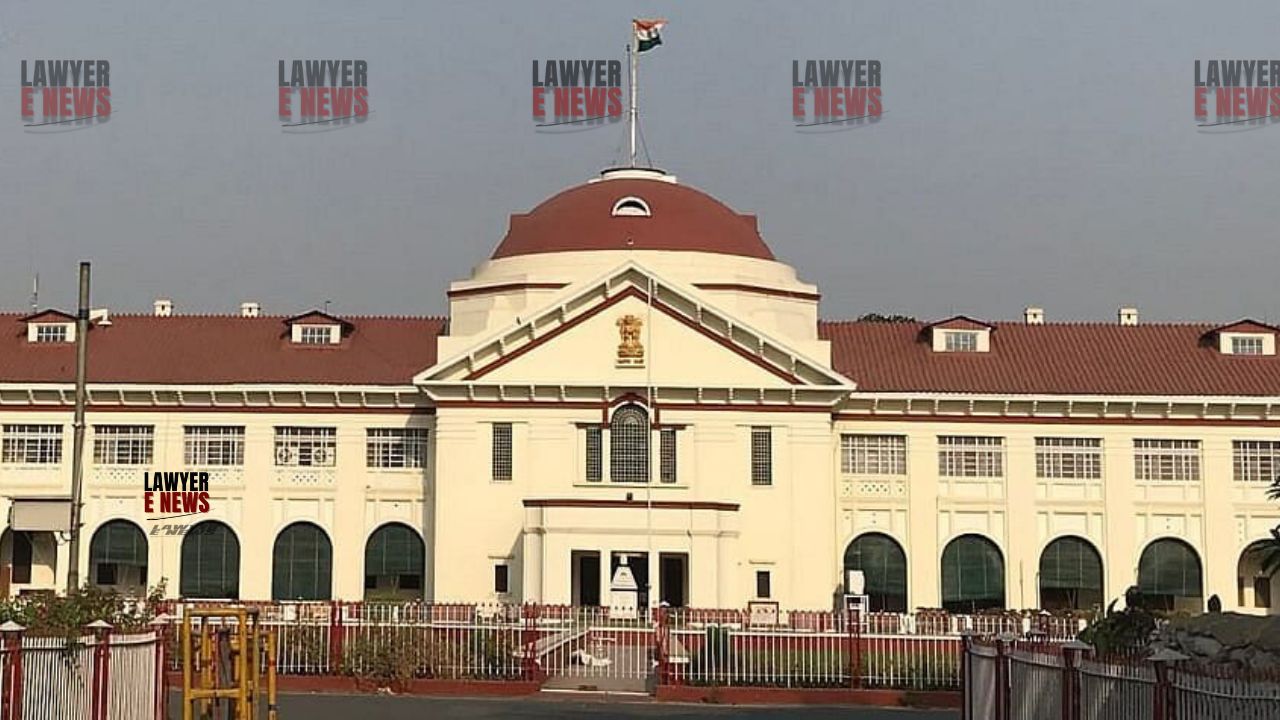
“Baseless Allegations Cannot Form Legal Grounds for Divorce” – Patna High Court reaffirmed a foundational principle of matrimonial law: allegations of adultery and desertion must be supported by credible, cogent, and independent evidence. The Division Bench of Justice P. B. Bajanthri and Justice S. B. Pd. Singh dismissed the husband’s appeal under Section 19(1) of the Family Courts Act, 1984, affirming the Family Court's order that denied divorce on grounds of adultery and desertion. The Court observed that "only in order to make a legal ground in the divorce case, these baseless allegations have been levelled by the appellant".
The marriage between the appellant, Sudhir Rai, and the respondent, Sulekha Devi, was solemnized on 18 June 2018 in accordance with Hindu rites. A male child was born from the marriage. According to the appellant, after moving to Madhya Pradesh for employment, his wife established an illicit relationship with a neighbor, Sudhir Kumar (Respondent No. 2), and eventually left the matrimonial home with their child on 4 December 2020. The appellant claimed that his wife and Respondent No. 2 were "living together in adultery" and sought a decree of divorce under Sections 9 and 13 of the Hindu Marriage Act, 1955.
Despite being served notices, neither of the respondents appeared before the Family Court, and the matter proceeded ex parte. The Family Court dismissed the divorce petition citing lack of proof, prompting the present appeal before the High Court.
The High Court framed two key questions: whether the appellant was entitled to the relief of divorce, and whether the Family Court’s judgment was sustainable in law.
On the allegation of adultery, the Court defined the legal threshold clearly: "The adultery may be defined as the act of a married person having sexual intercourse with a person of opposite gender other than the wife or husband of the person." It stressed that "the essential ingredients in an offence of adultery are that: (i) There should be an act of sexual intercourse outside the marriage, and (ii) that such intercourse should be voluntary."
However, in the present case, the Court found that "the appellant has not brought on record any proof to show that respondent No. 1 was having illicit relationship with the respondent No. 2 nor he has proved that they were living in adultery". The appellant relied entirely on the oral depositions of four family members—himself, his brother, his brother-in-law, and his mother. The High Court deemed this insufficient: "All the prosecution witnesses are family members of the appellant, hence, they are interested witnesses."
Critically, the mother of the appellant (P.W. 4) deposed that she witnessed the respondents in a compromising position, yet "she did not disclose this fact to anyone nor any panchayati was called for". Moreover, no FIR was lodged. Instead, a complaint under Sections 323, 448, and 148 IPC was filed, and in those proceedings too, the charge of abduction was not substantiated. The Court quoted the Judicial Magistrate’s order from Complaint Case No. 2269 of 2020:
"So far the other allegation is concerned, it seems that witnesses have not established the basic ingredients of other alleged offence and appears to be super addition in order to make [the case] graver."
Standard of Proof for Adultery and Appellate Interference
The High Court reiterated that under personal law, the charge of adultery demands "strict proof" and must be backed by "independent and cogent material evidence". The appellant, the Court observed, "failed to meet the legal standard required to establish adultery and desertion."
The Court also noted that the appellant had not filed a petition under Section 9 of the Hindu Marriage Act for restitution of conjugal rights. "This would reflect whether he was interested to resume conjugal life with the respondent No. 1," the Bench remarked.
On the question of reappreciating the evidence, the High Court cited the Supreme Court’s judgment in Jagdish Singh v. Madhuri Devi, (2008) 10 SCC 497, observing:
"When a finding of fact has been recorded by the trial court mainly on appreciation of oral evidence, it should not be lightly disturbed unless the approach of the trial court is erroneous or unreasonable."
The High Court found no such infirmity in the Family Court's reasoning, stating that "the appellant has also not brought on record any cogent and reliable evidence which could show that respondent No. 1 and respondent No. 2 are living in adultery."
Dismissing the appeal, the Court made it clear that family testimony without corroboration is not sufficient to destroy a matrimonial bond:
"We find no merit in the present appeal warranting any interference in the impugned judgment. The Family Court has rightly dismissed the matrimonial case of the appellant seeking divorce."
The judgment serves as a stern reminder that the sanctity of marriage cannot be dissolved on speculative or unsupported accusations. Without independent and credible proof, courts will not permit the use of legal processes to tarnish reputations or settle personal scores.
Date of Decision: 2 July 2025