-
by sayum
05 August 2026 6:43 AM







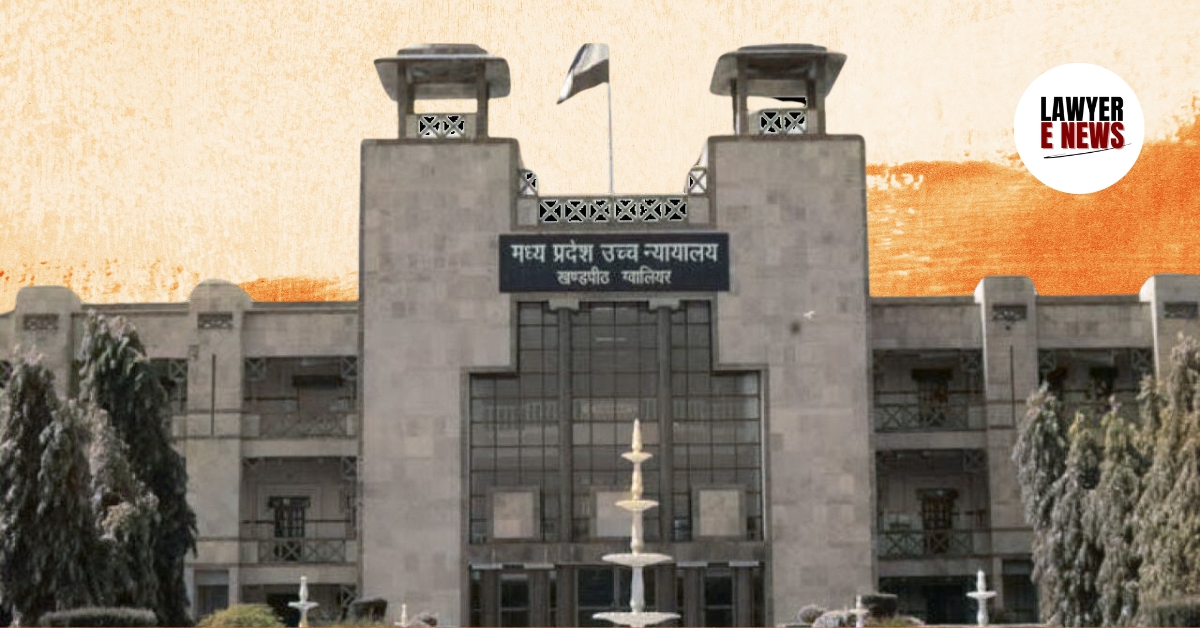
“Evidence Is Admissible If Relevant, Irrespective of How It Is Collected”, Madhya Pradesh High Court in a significant judgment held that WhatsApp chats between spouses are admissible as evidence before Family Courts, even if collected without the other party’s consent. The Court declared: “The right to privacy is not absolute and must yield to the right to a fair trial, particularly in matrimonial disputes where the Family Court exercises jurisdiction under Section 14 of the Family Courts Act.”
Justice Ashish Shroti, delivering the verdict, categorically upheld the Family Court’s decision allowing the husband to exhibit WhatsApp chats to substantiate his allegations of adultery against the wife.
“Section 14 of Family Courts Act Gives Wide Powers to Admit Evidence; Test of Relevance Overrides Technical Admissibility”
The Court firmly declared: “Section 14 of the Family Courts Act, 1984, confers wide discretion on Family Courts to receive any report, statement, document, information, or material that may assist the Court to deal effectually with a dispute, whether or not the same is otherwise admissible under the Indian Evidence Act.”
“The only guiding test for admission is whether the material is relevant to resolve the dispute; the question of how the material was collected is immaterial to its admissibility.”
“Right to Privacy Must Yield to the Right to Fair Trial in Family Disputes” — Constitutional Balance Affirmed
Justice Ashish Shroti observed: “While the right to privacy is a fundamental right under Article 21, it is not absolute. In a conflict between the right to privacy and the right to a fair trial, the right to a fair trial prevails.”
Relying on the Supreme Court’s decisions in K.S. Puttaswamy v. Union of India (2017), Sharda v. Dharmpal (2003), and Sahara India v. SEBI (2012), the Court stressed: “Public justice and the right to a fair trial cannot be compromised at the altar of an individual’s privacy in the context of matrimonial disputes.”
“Illegally Collected Evidence Is Still Admissible If Relevant” — Court Relies on R.M. Malkani Doctrine
The Court heavily referred to the Supreme Court’s classic ruling in R.M. Malkani v. State of Maharashtra (1973) 1 SCC 471, holding: “There is a warrant for the proposition that even if evidence is illegally obtained, it is admissible provided its relevance and genuineness are proved.”
“The Family Court, under Section 14, stands further liberated from the rigours of technical rules of admissibility altogether.”
“Earlier Madhya Pradesh High Court Judgments Ignoring Section 14 Stand Overruled” — Declared Per Incuriam
In a bold move, Justice Shroti declared that previous judgments of the Madhya Pradesh High Court, including Anurima @ Abha Mehta v. Sunil Mehta, Ram Talreja v. Smt. Sapna Talreja, and Abhishek Ranjan v. Hemlata Choubey, were rendered per incuriam as they failed to consider:
“The overriding effect of Section 14 of the Family Courts Act and Section 122 of the Indian Evidence Act.”
“These judgments are passed sub silentio, without consideration of the relevant statutory provisions, and hence are not binding precedents.”
“Admission Does Not Mean Proof — Court Distinguishes Admissibility from Weight”
The Court drew a clear line between the concepts of admission and proof:
“Admitting evidence under Section 14 merely means taking it on record. It does not mean the Court has accepted the truth of its contents.”
“Such evidence is subject to rigorous scrutiny during the adjudication process. The Court may accept it, discard it, or give it partial weight based on its reliability and relevance.”
“Wide Powers Must Be Exercised with Responsibility” — Court Prescribes Mandatory Safeguards
The judgment also laid down a framework of safeguards:
“Family Courts must rigorously examine the authenticity of such evidence and adopt higher standards of scrutiny to rule out tampering or fabrication.”
“In-camera proceedings must be held when sensitive private content is produced to preserve the dignity of the parties.”
“Admission of such evidence does not exonerate the party who procured it illegally. Separate civil or criminal liability may still arise under the IT Act or Indian Penal Code.”
“The Objective of Family Courts Would Be Defeated If Relevance-Based Evidence Is Excluded” — Judgment Emphasizes Legislative Intent
Citing the Statement of Objects and Reasons of the Family Courts Act, the Court asserted:
“The very purpose of the Family Courts Act is to free family disputes from the rigidity of procedural and evidentiary technicalities. If material evidence is rejected merely on the grounds of breach of privacy, it would defeat the legislative intent behind Section 14.”
“WhatsApp Chats Admissible Subject to Scrutiny; Petition Dismissed”
Upholding the Family Court’s order dated 13 April 2023, Justice Shroti ruled:
“The impugned order permitting WhatsApp chats to be exhibited is upheld. The petition is dismissed.”
“The right to privacy cannot be permitted to defeat the right to a fair trial. Evidence that is relevant must be admitted, irrespective of the method of its collection.”
The judgment sends a powerful message — Family disputes demand a different evidentiary threshold, where the quest for truth overrides procedural rigidity, albeit subject to fairness and judicial discretion.
Date of Decision: 16 June 2025