-
by sayum
26 August 2026 5:53 AM







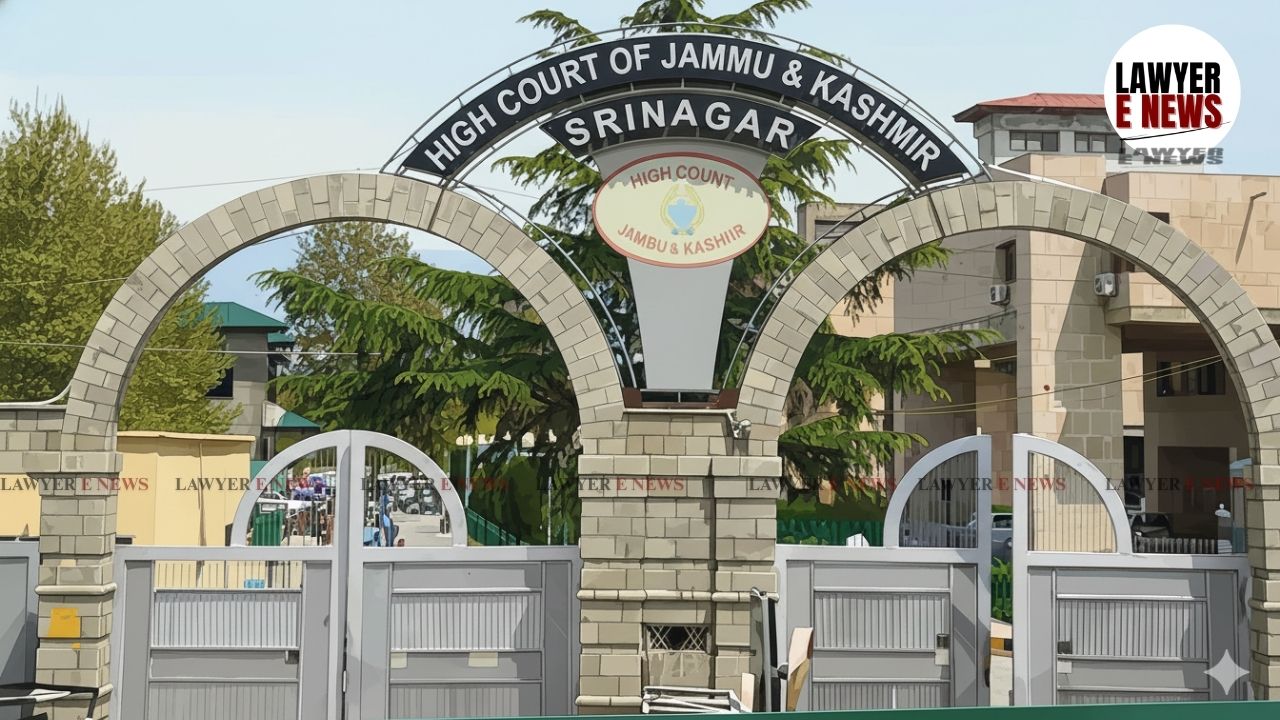
“In the Absence of Compelling Circumstances, Any Form of Retesting/Re-sampling is Strictly Prohibited Under the NDPS Act”, In a significant ruling reinforcing procedural safeguards under the Narcotic Drugs and Psychotropic Substances Act, 1985, the High Court of Jammu & Kashmir and Ladakh at Jammu has held that re-testing of seized samples cannot be permitted merely because the first laboratory report is unfavourable to the prosecution.
Justice Rajesh Sekhri quashed the charge-sheet filed by the Narcotics Control Bureau (NCB) and set aside the order recalling interim bail of the petitioners. The Court ruled that the trial court had acted mechanically in allowing re-testing of the second sample without recording any cogent reasons as mandated by the Supreme Court in Thana Singh v. Central Bureau of Narcotics, (2013) 2 SCC 590.
The High Court concluded that continuation of prosecution, after the primary laboratory report negated the presence of any narcotic drug and re-testing was illegally permitted, amounted to abuse of process of law.
The prosecution case originated from Crime No. 10/2024 registered by NCB Jammu. Acting on source information on 16.04.2024, the NCB allegedly intercepted two vehicles in village Solki, Rajouri, and recovered 870 grams of a substance suspected to be heroin. Field testing through an NDD kit allegedly indicated the presence of heroin, and the accused were arrested for offences under Sections 8, 21, 25, 29 and 60 of the NDPS Act.
Two samples were drawn in compliance with Section 52A NDPS Act. One sample was sent to CRCL, New Delhi. The CRCL report dated 20.05.2024 categorically stated that the sample did not test positive for heroin, amphetamine, methamphetamine, ketamine, methaqualone, cocaine or THC, though it showed the presence of Viagra.
Based on this report, the trial court granted interim bail to the petitioners on 18.09.2024.
However, the prosecution moved an application on 30.05.2024 seeking re-testing of the second sample. The trial court allowed the application the very same day without recording detailed reasons. The second sample was sent to CFSL Chandigarh, which later reported presence of Tramadol, Caffeine and Dextromethorphan.
On receipt of this second report, the trial court recalled the interim bail on 05.02.2025 and remanded the petitioners to judicial custody. The investigation culminated in filing of the impugned charge-sheet, which was challenged before the High Court.
The central legal issue before the High Court was whether re-testing of a second sample under the NDPS Act is permissible merely because the first laboratory report is adverse to the prosecution.
Justice Rajesh Sekhri examined the Supreme Court’s decision in Thana Singh, where it was emphatically held that NDPS Act does not contemplate re-testing as a matter of course. The Supreme Court had observed:
“Any requests as to re-testing/resampling shall not be entertained under the NDPS Act as a matter of course. These may, however, be permitted, in extremely exceptional circumstances, for cogent reasons to be recorded by the Presiding Judge… in the absence of any compelling circumstances, any form of retesting/re-sampling is strictly prohibited under the NDPS Act.”
The High Court underscored that re-testing can be permitted only in “extremely exceptional circumstances” such as loss, damage, deterioration or accidental consumption of the sample. Mere dissatisfaction with the first report is not a legally sustainable ground.
Examining the prosecution’s application, the Court found that the only reason cited for re-testing was that the CRCL report had ruled out heroin and the NCB “intended” to send the second sample for confirmation. No exceptional or compelling circumstance was pleaded.
The trial court’s order allowing re-testing was equally cryptic. It merely noted that the first report did not test positive for heroin and that the “main intention is to get the remaining sample retested through another laboratory,” and accordingly permitted re-testing.
Justice Sekhri held that such mechanical approval was impermissible in law.
Re-Testing Cannot Be Ordered to Cure Prosecution Inconvenience
The High Court made a scathing observation that the re-testing was sought only because the first report was inconvenient to the prosecution.
The Court observed that once CRCL Delhi had ruled out the presence of heroin in clear and categorical terms, the trial court could not have “overlooked” the report in a “haphazard manner” and ordered re-testing as a matter of routine.
Since the order permitting re-testing was legally unsustainable, the subsequent CFSL Chandigarh report could not form the basis of prosecution.
Recall of Interim Bail Also Held Unsustainable
The interim bail had been recalled solely on the strength of the second CFSL report. Once the High Court held that re-testing itself was impermissible, the foundation for recalling interim bail collapsed.
Accordingly, the order dated 05.02.2025 recalling interim bail was set aside.
Absence of Prima Facie Offence – Charge-Sheet Quashed
The Court ultimately held that when the primary laboratory report negates the presence of any narcotic drug and re-testing is illegally permitted, the allegations in the charge-sheet fail to disclose commission of a cognizable offence under the NDPS Act.
Justice Sekhri concluded that continuation of proceedings would amount to abuse of process of law and quashed the charge-sheet along with all consequential proceedings. The petitioners were discharged from prosecution.
The judgment serves as a strong reaffirmation that procedural safeguards under the NDPS Act cannot be diluted to salvage a weak prosecution case. Re-testing of samples is not an investigative right available at the convenience of the prosecution but an exception carved out only for “extremely exceptional circumstances” supported by cogent reasons.
By quashing the charge-sheet and restoring liberty to the petitioners, the High Court has reiterated that criminal prosecution under stringent statutes like the NDPS Act must strictly adhere to statutory discipline and Supreme Court mandates.
Date of Decision: 16.02.2026