-
by sayum
26 August 2026 4:44 AM







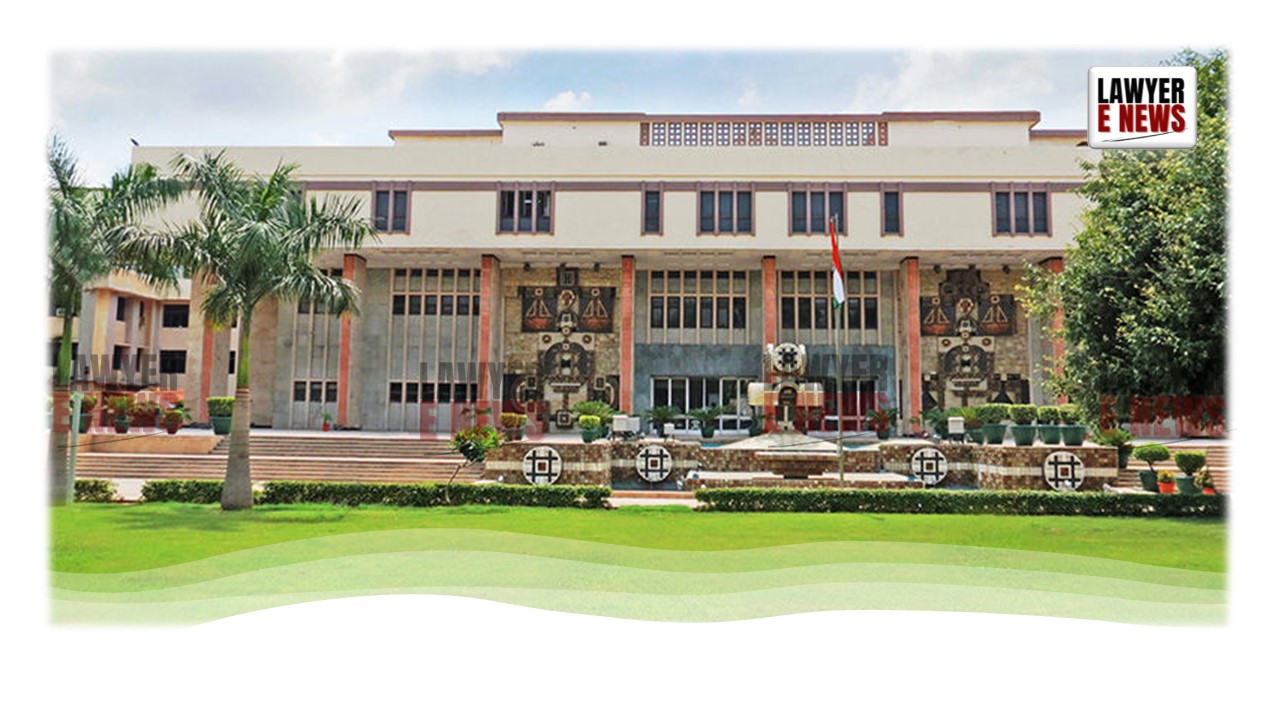
“If the Appellant Could Contest Execution, There Is No Reason Why He Could Not Have Filed the Appeal on Time”, On 23 February 2026, the High Court of Delhi delivered a firm ruling on the limits of judicial leniency in condonation of delay. Justice Neena Bansal Krishna held that a litigant who actively participates in execution proceedings but fails to file an appeal within limitation cannot later seek indulgence under Section 5 of the Limitation Act.
The Regular Second Appeal under Section 100 CPC was dismissed, affirming the order of the learned District Judge dated 24.09.2025, which had rejected an application under Order XLI Rule 3-A CPC for condonation of a massive delay of 1589 days in filing the first appeal.
The Court found that no sufficient cause had been shown and no substantial question of law arose for consideration.
Suit for Possession and Declaration Dismissed as Time-Barred
The original Plaintiff had filed a suit seeking possession of a DDA Slum Flat at Kalkaji and declaration that certain documents dated 27.03.2000 were forged and fabricated.
On 19.04.2017, the Trial Court dismissed the suit holding that the Plaintiff failed to prove possession and that the claim was barred by limitation, as the execution of the documents was within her knowledge since the year 2000.
An execution petition was filed in October 2017. Ultimately, possession was taken on 18.03.2021.
The appeal against the Trial Court’s judgment was filed only on 04.09.2021 along with an application seeking condonation of 1589 days’ delay. The learned District Judge dismissed the delay application and consequently the appeal itself.
“No Medical Record… No Proof of Incapacity”
The first ground urged for condonation was that the Appellant was a senior citizen suffering from serious ailments, physical incapacity and financial hardship.
The High Court noted that no medical documents were placed on record to show that the Appellant was incapacitated or bedridden.
The Court observed that mere assertions without documentary support cannot constitute “sufficient cause” within the meaning of Section 5 of the Limitation Act.
Even before the High Court, no medical record was produced to substantiate the claim.
“Selectively Active in Court” – Participation in Execution Fatal to Delay Plea
The second ground was inability to engage counsel due to health and financial constraints.
However, the record revealed that the Appellant had appeared before the Executing Court on multiple dates in 2018 and was fully aware of the decree and execution proceedings. He actively resisted execution until possession was taken.
Justice Neena Bansal Krishna recorded a crucial finding:
“The Appellant had failed to act diligently and has remained selectively active in approaching the Court.”
The Court categorically held:
“If he could contest the Execution proceedings, there is no reason why he could not have filed the Appeal on time.”
The appeal was filed only after dispossession in March 2021, which the Court viewed as indicative of lack of bona fides rather than genuine inability.
“Covid-19 Cannot Revive a Dead Limitation”
The Appellant also relied upon the Covid-19 pandemic and the Supreme Court’s orders extending limitation in In Re: Cognizance for Extension of Limitation.
The High Court rejected this contention, holding that the statutory period of 90 days from 19.04.2017 had already expired long before the pandemic began.
The Court noted that no explanation was offered for the period from May 2017 to March 2020.
Thus, even exclusion of the pandemic period could not salvage a delay that had already become fatal.
“Liberal Approach Does Not Mean Mechanical Condonation”
The Appellant argued that refusal to condone delay perpetuated an illegal decree and that limitation rules are “handmaids of justice.”
The Court clarified that the delay application was not rejected mechanically, but after examining the conduct, behaviour and attitude of the litigant.
Referring to settled law, the Court reiterated that courts must balance justice for both parties and cannot ignore gross negligence under the guise of liberal interpretation.
The Court also relied on the principle laid down in Basawaraj v. Land Acquisition Officer that condoning inordinate delay without sufficient cause amounts to disregard of statutory provisions.
No Substantial Question of Law Under Section 100 CPC
Since the matter was a Regular Second Appeal under Section 100 CPC, interference was permissible only if a substantial question of law arose.
The High Court found no infirmity in the District Judge’s reasoning and held that the dismissal of the delay condonation application was justified.
The Court concluded:
“There is no merit in the present Appeal.”
The Regular Second Appeal was accordingly dismissed.
Diligence Is the Price of Appellate Remedy
This judgment sends a clear message that limitation is not a mere technicality but a discipline of diligence. A litigant who actively resists execution but ignores the statutory remedy of appeal cannot later seek equitable indulgence.
By holding that “selectively active” conduct disentitles a party from liberal condonation, the Delhi High Court has reaffirmed that judicial discretion under Section 5 of the Limitation Act must be exercised on proof of genuine and sufficient cause—not on sympathy or afterthought.
Date of Decision: 23 February 2026