-
by sayum
26 August 2026 5:53 AM







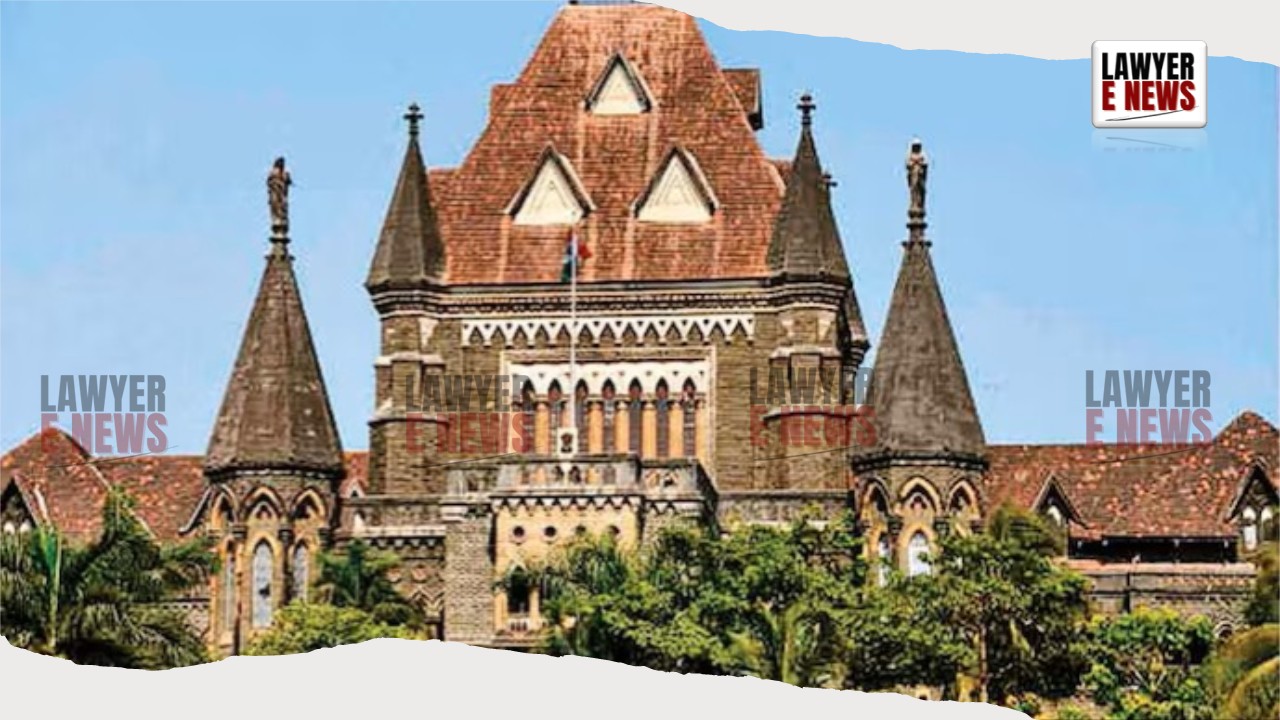
"The Sine Qua Non For Invocation of Section 23 Is That The Ownership Property of A Senior Citizen Has Been Transferred" — In a significant ruling that draws a clear boundary between genuine senior citizen welfare claims and disguised property disputes, the Bombay High Court has held that a senior citizen cannot invoke the Maintenance and Welfare of Parents and Senior Citizens Act, 2007 to seek transfer of or injunction over properties that are registered in the name of his wife, when no transfer of his own property was ever made by him in the first place. Justice Sharmila U. Deshmukh, while dismissing the writ petition unequivocally directed the Petitioner to approach the Civil Court for declaration of ownership rights — making it plain that the Senior Citizens Tribunal is not a substitute forum for resolving matrimonial property disputes dressed up as welfare claims.
The Petitioner, Bhausaheb Mhatarji Kadve, a retired Gazetted Officer and a senior citizen, filed an application on December 10, 2019 under Section 22 of the Senior Citizens Act before the Sub-Divisional Officer (Respondent No. 2), impleading only his wife as Respondent No. 3. His married daughters (Respondent Nos. 4 and 5) were not initially arrayed as parties and were brought into proceedings only at the final stage of the appellate hearing.
The Petitioner painted a grim picture of his domestic life, alleging mental and physical cruelty by his wife since the solemnization of their marriage on June 1, 1990. He further alleged that a flat at Sweety Apartments, Pune (Flat No. B-205) was purchased by him in the name of his wife's mother in March 1995 under her persistent pressure, and subsequently gifted by the mother to the wife by a registered Gift Deed in August 2015, with the stamp duty and registration charges borne by the Petitioner himself. A second flat at Bhandup was claimed to have been purchased out of funds deposited by the Petitioner in his wife's bank account, the sale proceeds of which were also utilized for purchasing another flat at Friends Colony, Bhandup, in the wife's name.
The Petitioner further alleged that his wife had assaulted him in 2015, attempted to poison him, and that she failed to render any financial assistance during his cancer treatment. He alleged theft of his life-saving medical equipment and claimed that false police complaints had been lodged against him. With this backdrop, he sought from the Senior Citizens Tribunal an injunction restraining his wife from creating third-party rights in the two flats, a direction for transfer of both flats in his name, eviction of tenants, payment of rental income, and compensation.
The Sub-Divisional Officer rejected the application on December 31, 2019, holding that the Senior Citizens Act only permits grant of maintenance and that complaints against a wife regarding ownership of property fall outside the Tribunal's purview, being in the nature of domestic violence requiring a separate forum. The Appellate Authority — the Additional Collector — partially allowed the appeal by vide its order dated December 7, 2022, and while rejecting the reliefs relating to the two flats in the wife's name, protected the Petitioner's own Jeevan Vihar flat at Bhandup by restraining Respondents from obstructing its sale. The Petitioner challenged the rejection of reliefs pertaining to the other two properties before the Bombay High Court.
Whether Wife Falls Within the Definition of "Relative" Under Section 2(g) for Maintenance Claims
The Court examined the statutory scheme for maintenance under Section 4 read with Section 2(g) of the Senior Citizens Act. Section 4 entitles a senior citizen unable to maintain himself to seek maintenance from his children or, in the case of a childless senior citizen, from his "relative" — defined under Section 2(g) as any legal heir of the childless senior citizen who is not a minor and is in possession of, or would inherit, his property after his death.
The Court noted a fundamental disqualifier at the threshold: since the Petitioner was not childless, his wife could not be brought within the definition of "relative" under Section 2(g). Moreover, no claim for maintenance was ever pressed before either the Tribunal or before the High Court. The Court held that "the statutory scheme for maintenance operates within defined categories and the wife cannot be impleaded for maintenance in a case where the senior citizen is not childless."
Whether Section 23 Could Be Invoked for Properties Registered in the Wife's Name
This formed the central legal controversy. Section 23 of the Senior Citizens Act provides that where a senior citizen transfers his property — by way of gift or otherwise — subject to the condition that the transferee shall provide basic amenities and physical needs, and the transferee defaults, the transfer may be declared void by the Tribunal on the ground that it was made by fraud, coercion, or undue influence. Crucially, Section 23 uses the broad term "transferee" rather than restricting the claim to children or relatives, thus theoretically extending to a wife as well.
However, the Court identified the decisive threshold condition. As the Court put it, "The sine qua non for invocation of Section 23 of Senior Citizens Act is that the ownership property of a senior citizen has been transferred, in any manner whatsoever, subject to the condition of providing basic amenities and physical needs." In the present case, neither flat was ever transferred by the Petitioner. The Pune flat stood in the name of the wife's mother and was gifted to the wife by her mother — not by the Petitioner. The Bhandup flat was directly purchased in the wife's name. There was no act of transfer from the Petitioner at all. Section 23 was therefore entirely inapplicable.
Whether the Senior Citizens Tribunal Could Adjudicate on the Petitioner's Claim of Beneficial Ownership
The Petitioner's real grievance was that despite funding the purchase of both flats, registered title was not in his name — a claim founded on the doctrine of resulting trust or beneficial ownership. The Court categorically rejected the attempt to convert this into a Senior Citizens Act claim. As Justice Deshmukh held, "The Petitioner's claim for ownership right in the properties is premised on the ground that the consideration in respect of the said two premises was paid by him, in which case the remedy of the Petitioner is to approach the Civil Court for seeking declaration of his right, title, and interest in these properties." The relief of injunction, the Court further held, would necessarily entail an inquiry into ownership rights, which lies entirely outside the Tribunal's statutory jurisdiction.
Whether Section 3 — the Overriding Provision — Saved the Petitioner's Case
The Petitioner sought to invoke Section 3 of the Senior Citizens Act, which grants the Act overriding effect in the event of conflict with any other enactment. The Court dismissed this argument briefly but firmly: Section 3 is attracted only when a genuine conflict between the Senior Citizens Act and another enactment is demonstrated. No such conflict was shown in the present case, and therefore reliance on Section 3 was, in the Court's words, "misplaced."
Details of the Judgment and Cases Distinguished
Justice Deshmukh carefully examined each of the four precedents cited by the Petitioner and distinguished all of them from the facts at hand.
In Nayana Sudhir Shah & Ors. vs. Sudhir Premji Shah & Ors., the subject properties were the self-acquired properties of the senior citizen himself, who held exclusive rights over them and had been fraudulently dispossessed. That factual foundation — ownership by the senior citizen — was entirely absent in the present case, where registered title stood in the wife's name.
In Ramkrishna Pandey vs. State of Chhattisgarh, a Gift Deed had been executed by the senior citizen in favour of his nephew — a direct transfer by the senior citizen himself — and Section 23 was invoked to challenge that very transfer. Again, the critical distinction: in the present case there was no transfer at all by the Petitioner.
In Sri Venkataiah vs. State of Karnataka, the Petitioner was the absolute owner of agricultural land who had been induced to execute a Gift Deed in favour of his daughters after false assurances of maintenance, which were subsequently breached. The Court found this equally distinguishable, since ownership and transfer by the senior citizen were both established in that case.
In Urmila Dixit vs. Sunil Sharan Dixit & Ors., the Supreme Court had upheld the Tribunal's power to order eviction where a senior citizen-mother had gifted property to her son under a condition of maintenance that was subsequently breached. The Court in the present case found that this decision too was inapplicable, since it pre-supposed a gift by the senior citizen to a transferee — a fundamental factual element missing from the present case.
The Court concluded that "all four decisions are clearly distinguishable on facts as none involved a situation where the property was not originally owned or transferred by the senior citizen but was purchased in the name of the respondent."
"Property Dispute Disguised As a Senior Citizens Claim Cannot Survive" — Court Confirms Appropriate Forum Is the Civil Court
Court Upholds Appellate Authority; Directs Petitioner Towards Civil Court for Declaration of Title
Finding no jurisdictional error or illegality in the impugned order of the Appellate Authority, the Bombay High Court exercised its supervisory jurisdiction under Article 227 of the Constitution of India and declined to interfere. The writ petition was dismissed, the Rule was discharged, and the Court confirmed the Appellate Authority's order in its entirety. The protection granted to the Petitioner's own Jeevan Vihar flat at Bhandup — preventing Respondents from obstructing its sale — was maintained, as it had not been challenged by either side.
The Court directed the Petitioner to seek his remedy before the Civil Court for a declaration of his right, title, and interest in the Pune and Bhandup flats if he wished to pursue the claim based on payment of purchase consideration.
This judgment serves as an important reminder that the Senior Citizens Act, while a powerful welfare legislation, operates within a defined statutory framework. Its protective provisions cannot be stretched to adjudicate upon civil property disputes merely because the claimant happens to be a senior citizen. The Court has clearly delineated that Section 23 is triggered only when a senior citizen has himself made a transfer of his own property subject to a condition of maintenance, and that a claim premised on beneficial ownership — however genuinely felt — must be agitated before the Civil Court. The judgment also clarifies that Section 3's overriding clause is not a blanket weapon and can only be activated upon demonstrating an actual conflict between the Act and another enactment.
Date of Decision: February 20, 2026