-
by sayum
03 October 2026 9:56 AM







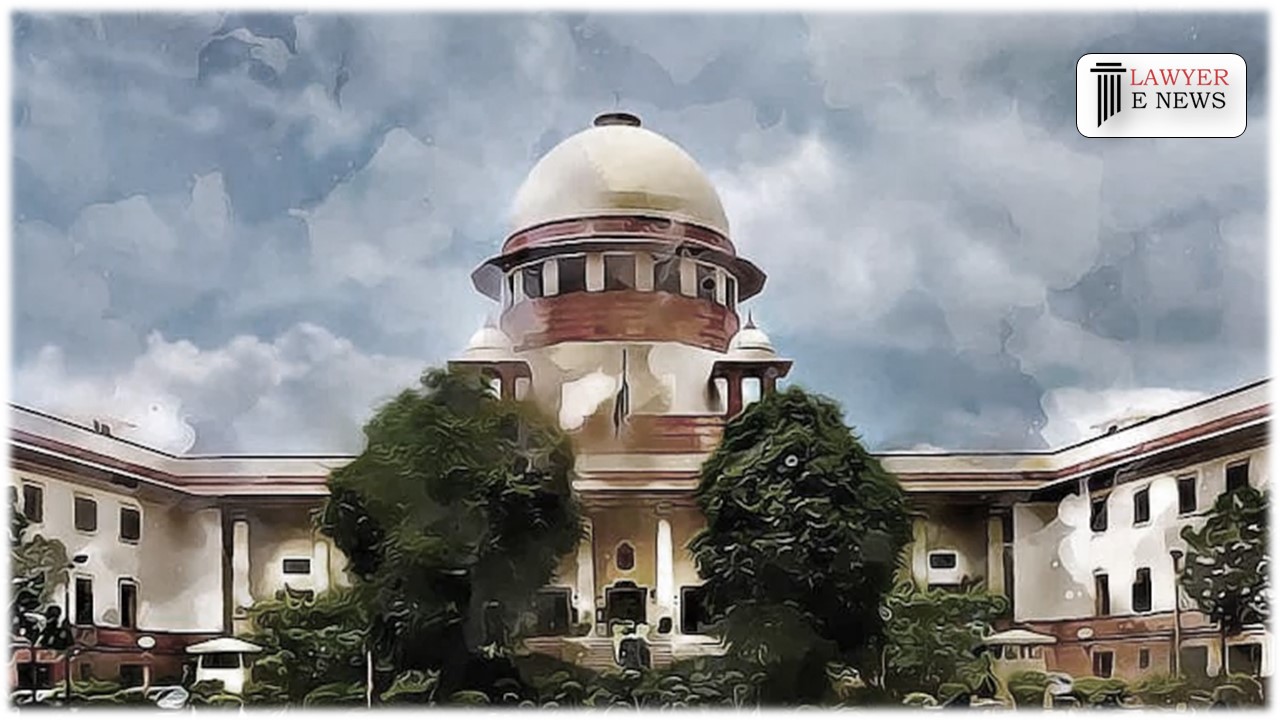
Supreme Court held in a recent Judgement (State of Karnataka Vs. M/s Ecom Gill Coffee Trading Private Limited D.D. 13th March 2023) that the burden of proving the correctness of Input Tax Credit (ITC) claims lies upon the purchasing dealer, as per the provisions of Section 70 of the KVAT Act, 2003. Mere production of invoices or payment made by cheques is not enough to discharge this burden of proof. The dealer claiming ITC has to prove beyond doubt the actual transaction, including the name and address of the selling dealer, details of the vehicle which delivered the goods, payment of freight charges, acknowledgement of taking delivery of goods, tax invoices, and payment particulars. The genuineness of the transaction has to be proved, and the burden of proving it lies upon the purchasing dealer. Mere production of invoices and payment by cheque cannot be considered sufficient proof.
Multiple appeals concerning the interpretation of Section 70 of the Karnataka Value Added Tax Act, 2003. The High Court of Karnataka had dismissed revision applications by the State of Karnataka, allowing Input Tax Credit (ITC) claimed by purchasing dealers in various cases. The lead matter, Civil Appeal No. 231 of 2023, concerns M/s Tallam Apparels, which had claimed ITC on readymade garments purchased from dealers for further sale, but had its claim disallowed by the Assessing Officer. The Appellate Authority also dismissed its appeal, but the Karnataka Appellate Tribunal allowed it, stating that the purchasing dealer should not suffer due to the default of the seller. In other cases, ITC was allowed on the grounds that the sale price was paid to the seller by an account payee cheque and copies of invoices were produced. In Civil Appeal No. 230 of 2023, M/s Ecom Gill Coffee Trading Private Limited's ITC claim for green coffee bean purchases was disallowed due to irregularities in Input Tax Rebate claimed, and the Assessing Officer found that some sellers were de-registered, did not file taxes, or denied turnover and did not pay taxes. The first Appellate Authority confirmed the disallowance, but the Tribunal allowed the appeal, stating that the purchasing dealer had purchased the coffee from registered dealers under genuine tax invoices. The High Court dismissed the revision application, relying on its earlier decision in the case of M/s Tallam Apparels.
The Supreme Court posed the question of whether the second Appellate Authority and the High Court were justified in allowing the ITC in these circumstances.
Supreme Court observed that the burden of proving the correctness of Input Tax Credit (ITC) claims lies upon the purchasing dealer, as per the provisions of Section 70 of the KVAT Act, 2003. Mere production of invoices or payment made by cheques is not enough to discharge this burden of proof. The dealer claiming ITC has to prove beyond doubt the actual transaction, including the name and address of the selling dealer, details of the vehicle which delivered the goods, payment of freight charges, acknowledgement of taking delivery of goods, tax invoices, and payment particulars. The genuineness of the transaction has to be proved, and the burden to prove it lies upon the purchasing dealer. Mere production of invoices and payment by cheque cannot be considered sufficient proof.
Supreme Court observed that as per Section 70 of the KVAT Act, 2003, the dealer claiming ITC has to prove beyond doubt the actual physical movement of goods, genuineness of transactions, and furnish details such as the name and address of the selling dealer, details of the vehicle which delivered the goods, payment of freight charges, acknowledgement of taking delivery of goods, tax invoices, and payment particulars, etc. The genuineness of the transaction has to be proved, and the burden of proof lies upon the purchasing dealer. The Supreme Court held that if the purchasing dealer fails to establish and prove the physical movement of the goods, the Assessing Officer is justified in rejecting the ITC claim.
The Court observed that if the purchasing dealer fails to provide such supporting material, the Assessing Officer is justified in rejecting the ITC claim. The Court further noted that the concurrent findings of fact recorded by the Assessing Officer on the genuineness of the transactions cannot be upset on irrelevant considerations by the second Appellate Authority or the High Court.
The Supreme Court noted that the reliance placed upon Rules 27 and 29 of the Karnataka Value Added Tax Rules, 2005 by the purchasing dealers had no substance. Merely producing tax invoices as per these rules cannot be said to be proving the actual physical movement of the goods, which is required to be proved for claiming Input Tax Credit. Producing invoices as per these rules can be said to be proving one of the documents, but not all the documents required to discharge the burden of proving the genuineness of the transactions as per Section 70 of the KVAT Act, 2003.
The Supreme Court further held that if the purchasing dealer fails to establish and prove the physical movement of the goods, the Assessing Officer is justified in rejecting the ITC claim. Therefore, the Supreme Court quashed and set aside the orders passed by the second Appellate Authority and the High Court allowing the Input Tax Credit and restored the orders passed by the Assessing Officer denying the Input Tax Credit. Appeal Allowed.
State of Karnataka Vs. M/s Ecom Gill Coffee Trading Private Limited