
-
by sayum
26 August 2026 1:49 PM







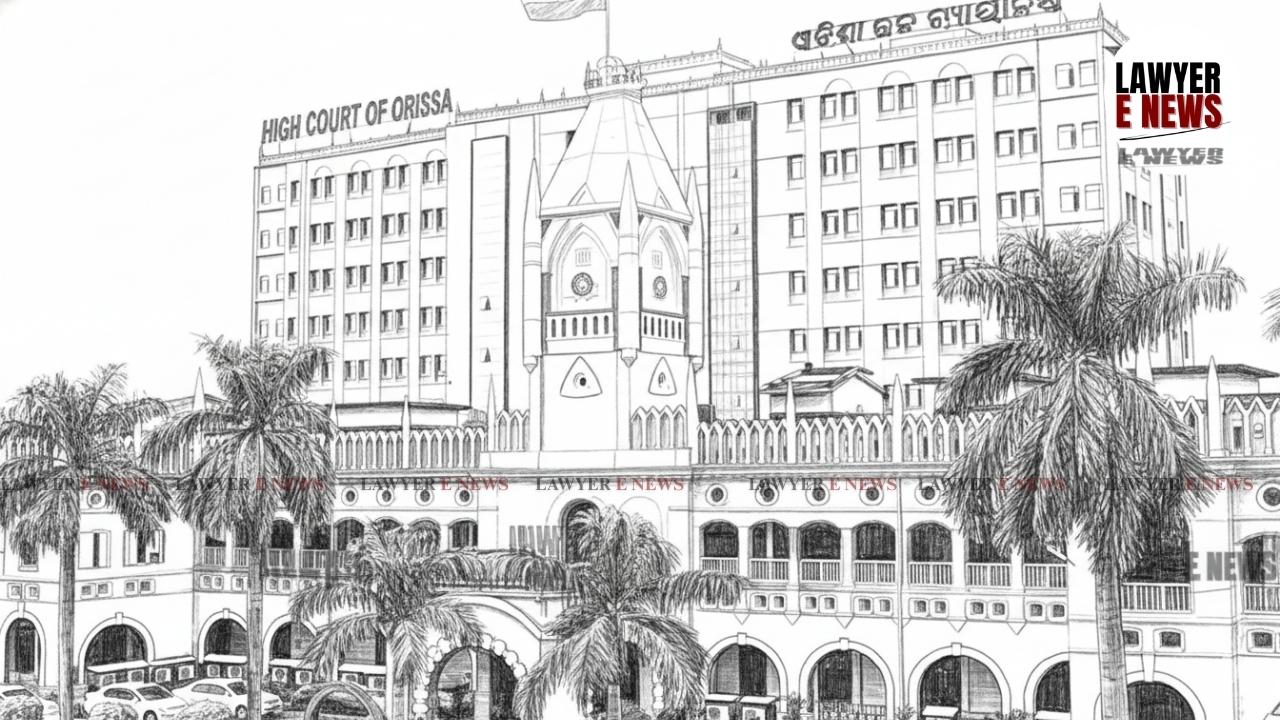
"If Suit Originally Within Limitation, It Does Not Become Barred Upon Substitution Of Legal Heirs, Otherwise Object Of Order 22 CPC Would Be Frustrated", Orissa High Court has ruled that a Power of Attorney holder authorized to demand, enforce and recover property rights can file a suit to enforce the right of pre-emption arising from a compromise decree, and that the substitution of legal heirs following the death of the original plaintiff during pendency does not render the suit barred by limitation.
Background of the Case
The dispute arose from a compromise decree passed on December 16, 2014 in a partition suit, which stipulated that if any co-sharer intended to sell his share of the property, he must give preference to other co-sharers before selling to strangers. On May 18, 2020, Defendant No. 1 sold his share to the petitioner-Defendant No. 2 by registered sale deed. On January 12, 2021, Swayamsiddha Singhsamant, claiming to be the Power of Attorney holder of his father Mahesh Prasad Singhsamant, filed a suit seeking cancellation of the sale deed on the ground that the right of pre-emption under the compromise decree was violated. The original plaintiff died on April 10, 2021, and his legal heirs—son, daughter and widow—were substituted on November 17, 2023. The petitioner-Defendant No. 2 filed an application under Order VII Rule 11 CPC seeking rejection of the plaint on grounds that it was not maintainable as filed by an unauthorized Power of Attorney holder and was barred by limitation.
Legal Issues and Court's Observations
Two principal legal questions arose before Justice Sashikanta Mishra: whether the Power of Attorney holder was competent to file the suit, and whether the suit became barred by limitation upon substitution of legal heirs beyond three years from the sale deed execution.
On the competence of the Power of Attorney holder, the Court examined Clause 2 of the Power of Attorney, which authorized the agent "to demand, recover, enforce and give good and sufficient receipts, discharges, release and indemnities for and in respect of all property, money, securities and rights to which I am or may be entitled." The Court held that this language was sufficiently broad to authorize the filing of a suit to enforce the right of pre-emption arising from the compromise decree. "The Power of Attorney also authorizes the Agent to demand, enforce, recover in respect of all property to which the Principal is or may be entitled. The Suit has been filed on the basis of Clause 9 of the compromise decree which confers on the co-sharers the right of pre-emption," the Court observed.
Addressing the validity of the claim itself, the Court clarified that whether such a claim was legally valid was a matter to be decided at trial, but the Power of Attorney language could not be said to prohibit the agent from laying such a claim. "In view of the language employed in the Power of Attorney, it cannot be said at this stage that the same did not authorize the Agent to at least lay a claim therefor," Justice Mishra held.
On the limitation question, the petitioner contended that under Section 21 of the Limitation Act, a suit by a substituted party must be deemed instituted from the date of substitution, and since the legal heirs were substituted on November 17, 2023—more than three years after the May 18, 2020 sale deed—the suit was barred under Article 59 of the Limitation Act, which prescribes three years for cancellation of an instrument.
The Court rejected this argument by applying Section 21(2) of the Limitation Act, which creates an exception to Section 21(1). Section 21(2) provides that the general rule of deemed institution from the date of substitution does not apply where a party is substituted "owing to assignment or devolution of any interest during the pendency of a suit." Since the original plaintiff died during pendency and his interest in the suit property devolved upon his legal heirs, the substitution fell squarely within this exception.
"The original plaintiff having died, his legal heirs, being his son, daughter and widow, were substituted. Moreover, the interest of the original plaintiff in respect of the suit property devolved upon his legal heirs upon his death. The question of limitation therefore, does not arise at all," the Court held.
The Court emphasized that this interpretation was necessary to preserve the legislative intent behind Order 22 CPC, which governs substitution of parties upon death. "If the suit, as originally filed, was within the period of limitation, the same shall not become barred by limitation upon substitution. Otherwise, the very object of Order 22 of CPC would stand frustrated," Justice Mishra observed.
The Court found that the trial court had unnecessarily engaged in discussion about the date of knowledge of the substituted plaintiffs regarding the sale deed vis-à-vis Article 59, when the straightforward application of Section 21(2) resolved the limitation question. The Court clarified that its order expressed no opinion on the merits of the plaintiffs' pre-emption claim, which remained to be decided at trial on the basis of evidence.
The Orissa High Court dismissed the civil revision petition, upholding the trial court's rejection of the application to reject the plaint. The Court held that the Power of Attorney holder was competent to file the suit to enforce the right of pre-emption, and that substitution of legal heirs upon the death of the original plaintiff during pendency did not render the suit barred by limitation due to the operation of Section 21(2) of the Limitation Act. The validity of the pre-emption claim itself was left to be determined at trial.
Date of Decision: March 12, 2026





