
-
by sayum
26 August 2026 1:49 PM







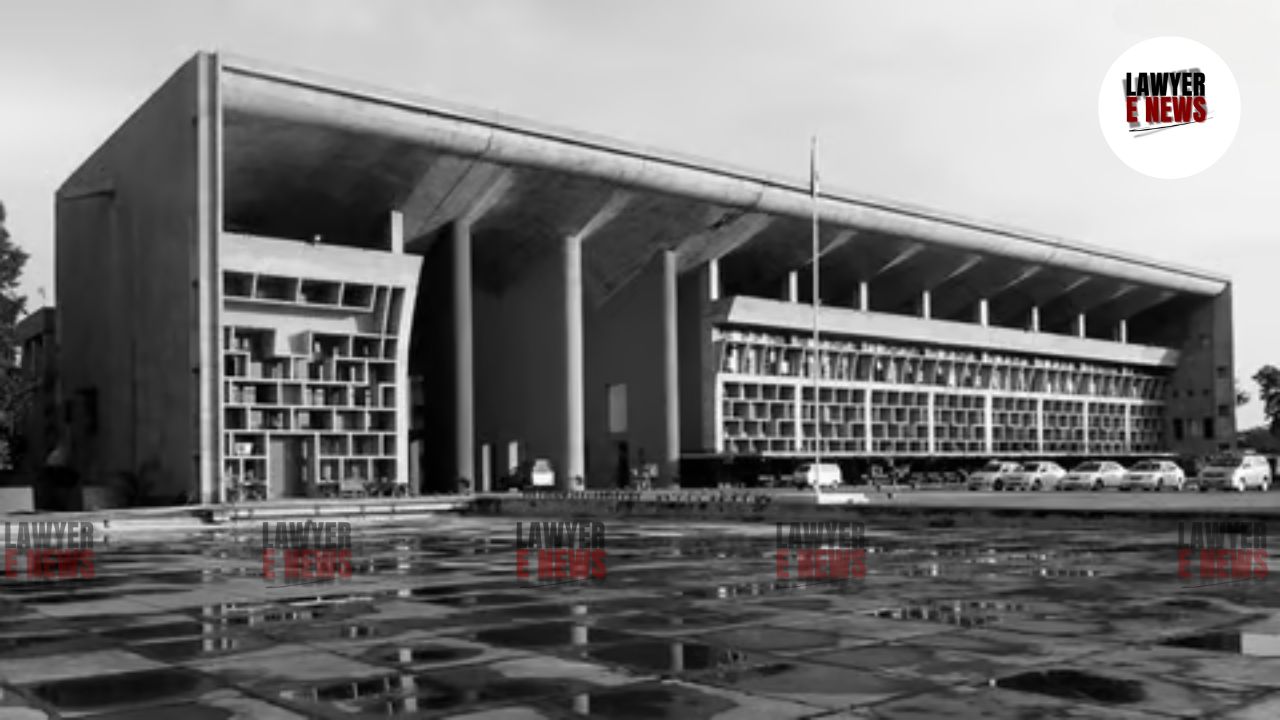
“Section 8(1)(h) RTI Act And Section 172(3) CrPC Operate Together To Protect Confidentiality Of Criminal Investigation”, Punjab and Haryana High Court delivered an important ruling clarifying the relationship between the Right to Information Act and criminal investigation records.
Justice Kuldeep Tiwari, by judgment dated 11 March 2026, held that an accused cannot use the RTI Act to obtain police case diaries or investigation records during the pendency of trial, as such material is statutorily protected under Section 172(3) of the Code of Criminal Procedure.
The Court ruled that the Public Information Officer was justified in refusing disclosure under Section 8(1)(h) of the RTI Act, and consequently orders of the State Information Commission imposing penalty of ₹25,000 and awarding compensation of ₹20,000 were unsustainable and liable to be set aside.
Background of the Case
The controversy arose when Respondent No.2, an accused in criminal cases registered at Police Station Jagraon, filed multiple RTI applications seeking access to investigation records.
Through applications filed in December 2012, February 2013 and May 2013, the respondent sought:
“Attested copy of Case Diary (Zimni), Daily Diary (Roznamcha) and inspection of the complete police file relating to FIR No.240 of 2004 and FIR No.242 of 2005.”
At the time these applications were submitted, the criminal trials arising from both FIRs were still pending before the trial court.
The Public Information Officer (PIO) partially responded by supplying certain Daily Diary Register (DDR) entries, but refused to disclose the case diary and investigation records, citing:
“Section 8 of the RTI Act and Section 172(3) of the Code of Criminal Procedure.”
Aggrieved by the denial, the applicant filed appeals before the State Information Commission, Punjab, which eventually imposed a penalty of ₹25,000 on the Senior Superintendent of Police under Section 20 of the RTI Act and awarded ₹20,000 compensation to the applicant under Section 19(8)(b).
Challenging these orders, the State of Punjab approached the Punjab and Haryana High Court through writ petitions.
Legal Issue Before the Court
The central issue before the Court was whether:
“An accused person can obtain access to police case diaries and investigation records through the Right to Information Act during the pendency of investigation or trial.”
The Court also examined whether the penalty imposed by the State Information Commission upon the police officer was legally sustainable.
Confidentiality of Police Case Diaries
The Court emphasized that Section 172 CrPC establishes a statutory framework governing police diaries maintained during investigation.
The provision mandates that police officers maintain diaries detailing investigation steps, places visited and circumstances discovered during investigation.
However, Section 172(3) CrPC expressly prohibits accused persons from calling for or inspecting such diaries.
The Court noted:
“Neither the accused nor his agents shall be entitled to call for such diaries, nor shall they be entitled to see them merely because they are referred to by the Court.”
The Court further observed that criminal courts alone possess the power to call for case diaries to assist them in adjudication, and even then the diaries are not treated as evidence but merely as an aid to the court.
RTI Act Cannot Override Statutory Protection of Investigation Records
Respondent No.2 argued that Section 22 of the RTI Act provides overriding effect over other laws, and therefore information relating to the police investigation should be disclosed.
Rejecting this contention, the Court held that the RTI Act must be interpreted harmoniously with other statutory provisions, particularly those governing criminal procedure.
Justice Tiwari observed:
“Section 8(1)(h) of the RTI Act complements and subserves the underlying objective of Section 172(3) of the Cr.P.C.”
The Court clarified that disclosure of investigation records during trial would impede prosecution and investigation, thereby attracting the exemption under Section 8(1)(h) of the RTI Act.
Supreme Court Precedents on Case Diary Confidentiality
The Court relied on several Supreme Court rulings emphasizing the confidential nature of police case diaries.
Referring to Mukand Lal v. Union of India, the Court noted that the Supreme Court had upheld the constitutionality of Section 172(3) CrPC and rejected the claim that accused persons possess an unrestricted right to inspect investigation diaries.
The Supreme Court had observed: “Public interest demands that such entries are not made available to the accused, as it may endanger the safety of informants and hamper investigation.”
Similarly, in Sidharth v. State of Bihar, the Supreme Court warned that disclosure of case diaries may: “Cause serious prejudice to others and even affect the safety and security of those who may have given statements to the police.”
Refusal to Disclose Information
Applying these principles, the High Court concluded that the Public Information Officer had correctly denied access to the police case diary.
The Court held that disclosure of investigation records while trial was pending would:
“impede the process of investigation and prosecution of offenders.”
Thus, the denial of information was fully justified under Section 8(1)(h) of the RTI Act read with Section 172(3) CrPC.
Penalty and Compensation Orders Quashed
Having upheld the legality of the refusal to disclose information, the Court examined the penalty imposed by the State Information Commission.
The Commission had imposed ₹25,000 penalty on the Senior Superintendent of Police and directed payment of ₹20,000 compensation to the RTI applicant.
The Court held that the penalty was unsustainable because:
The Court further noted that the applicant had already received the information after conclusion of the criminal trial, and therefore the award of compensation was unwarranted.
Final Decision of the Court
The Punjab and Haryana High Court allowed the writ petitions and set aside the orders of the State Information Commission dated 08 February 2016.
The Court held that refusal to disclose police case diaries during the pendency of criminal trial was legally valid, and consequently the penalty and compensation imposed under the RTI Act could not be sustained.
The judgment reaffirms the confidential nature of police investigation records and the limited rights of accused persons to access them.
The Court clarified that the RTI Act cannot be invoked as a mechanism to bypass statutory safeguards embedded in criminal procedure law, particularly the bar under Section 172(3) CrPC protecting police case diaries.
Date of Decision: 11 March 2026





