
-
by sayum
26 August 2026 1:49 PM







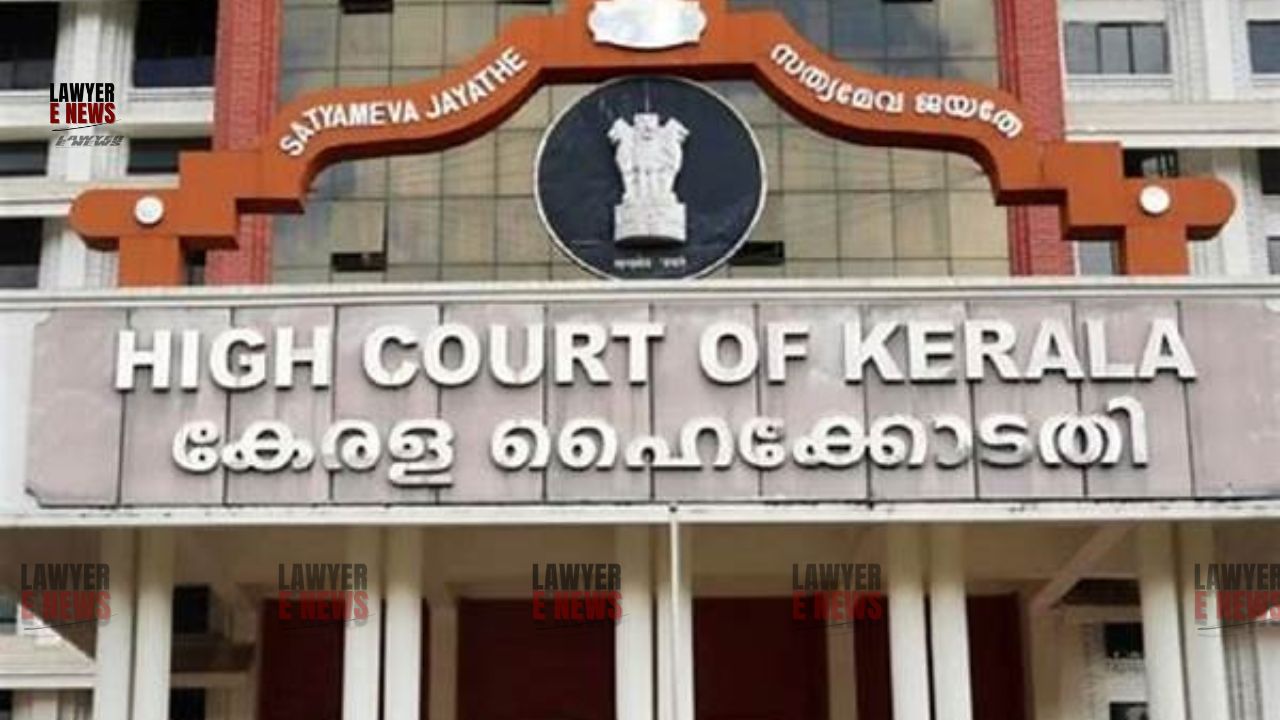
“Omission To Mention Witness In Preliminary Schedule Cannot Be A Ground To Reject Otherwise Credible Evidence”, Kerala High Court has held that a Power of Attorney holder who has personal knowledge of the transaction leading to issuance of a cheque is competent to depose on behalf of the complainant in a prosecution under Section 138 of the Negotiable Instruments Act. The Court further observed that mere omission to mention the name of a witness in the preliminary witness schedule cannot be a valid reason to discard credible testimony.
On 12 March 2026, the Kerala High Court allowing an appeal against acquittal in a cheque dishonour case and convicting the accused for the offence under Section 138 of the Negotiable Instruments Act, 1881.
Justice A. Badharudeen held that the trial court had adopted a hyper-technical approach in rejecting the evidence of the complainant’s Power of Attorney holder despite the witness having direct knowledge of the transaction.
The Court observed: “in a prosecution generated on a private complaint, if there is omission in giving the name of one among witnesses in the initial witness schedule, the same is not a reason to disbelieve the evidence of such a witness for the said reason alone.”
Background Of The Case
The case arose from the dishonour of a cheque dated 05 March 2011 for an amount of ₹2,50,000, which was allegedly issued by the accused to the complainant towards repayment of a loan.
Upon dishonour of the cheque, the complainant initiated prosecution alleging commission of the offence under Section 138 of the Negotiable Instruments Act before the Judicial First Class Magistrate Court-II, Karunagappally.
During trial, the complainant examined Dinesh Lal, the Power of Attorney holder, as PW1. The witness deposed that he was a close friend of the complainant and had personally witnessed the loan transaction and issuance of the cheque by the accused.
The prosecution also produced documentary evidence including the cheque, dishonour memo, legal notice and postal acknowledgements. However, the trial court acquitted the accused, holding that: “the complainant failed to prove the transaction and also failed to establish financial capacity to lend ₹2,50,000.”
The Magistrate also rejected the testimony of PW1 on the ground that his name was not mentioned in the preliminary witness schedule filed with the complaint.
Aggrieved by the acquittal, the complainant approached the Kerala High Court.
Legal Issues Before The High Court
The High Court examined whether the trial court was justified in acquitting the accused on two principal grounds: rejection of the testimony of the Power of Attorney holder and alleged failure of the complainant to prove financial capacity.
The Court specifically considered the evidentiary value of testimony given by a Power of Attorney holder in cheque dishonour prosecutions.
Court’s Observations On Testimony Of Power Of Attorney Holder
The High Court noted that the evidence of PW1 clearly established that he had direct knowledge of the loan transaction and the issuance of the cheque.
Justice A. Badharudeen emphasized the settled legal principle that:
“a Power of Attorney Holder is competent to file a complaint and he is equally competent to give evidence on behalf of the complainant.”
The Court clarified that such testimony is valid provided the Power of Attorney holder has personal knowledge of the transaction, otherwise the evidence may be treated as hearsay.
In the present case, the Court observed that PW1 had personally witnessed the loan transaction and execution of the cheque, and his testimony remained unshaken during cross-examination.
Therefore, the trial court was incorrect in rejecting his evidence merely because his name was not mentioned in the initial witness schedule. The High Court criticized the reasoning of the Magistrate and held that the trial court had adopted an unnecessarily technical approach.
Presumptions Under Sections 118 And 139 Of The Negotiable Instruments Act
After accepting the testimony of PW1, the High Court held that the complainant had successfully proved the transaction and execution of the cheque.
Once these foundational facts were established, the statutory presumptions under Sections 118 and 139 of the Negotiable Instruments Act came into operation in favour of the complainant.
The Court observed: “by the evidence of PW1 the complainant successfully proved the transaction that led to the execution of Ext.P1 cheque so as to canvass the benefit of the presumptions under Sections 118 and 139 of the N.I Act in favour of the complainant.”
The Court further noted that the accused had not produced any evidence nor effectively rebutted the presumptions during cross-examination, and therefore the statutory presumptions remained unrebutted.
Financial Capacity Of Complainant
The High Court also rejected the trial court’s finding that the complainant failed to prove financial capacity to lend ₹2,50,000.
The Court clarified that the burden to prove financial capacity arises only when the accused specifically challenges it during the trial.
Justice Badharudeen explained: “failure to challenge the same would stand to hold that the accused was convinced of the financial capacity of the complainant to advance the cheque amount.”
Since the accused had not raised any challenge regarding the complainant’s financial capacity during the trial, the Court held that the complainant was not required to independently prove the source of funds.
Conviction And Sentence
Finding the reasoning of the trial court unsustainable, the Kerala High Court set aside the judgment of acquittal and convicted the accused for the offence under Section 138 of the Negotiable Instruments Act.
The Court sentenced the accused to:
“imprisonment till rising of the court and to pay a fine of ₹4,00,000.”
It further directed that in default of payment of the fine, the accused would undergo six months’ simple imprisonment.
The accused was directed to appear before the Judicial First Class Magistrate Court-II, Karunagappally on 10 April 2026 for execution of the sentence.
The ruling reinforces the legal principle that technical procedural omissions cannot override substantive evidence in cheque dishonour prosecutions. The judgment also clarifies that Power of Attorney holders with personal knowledge of the transaction are competent witnesses and that statutory presumptions under the Negotiable Instruments Act operate in favour of the complainant unless effectively rebutted by the accused.
Date of Decision: 12 March 2026





