
-
by sayum
26 August 2026 1:49 PM







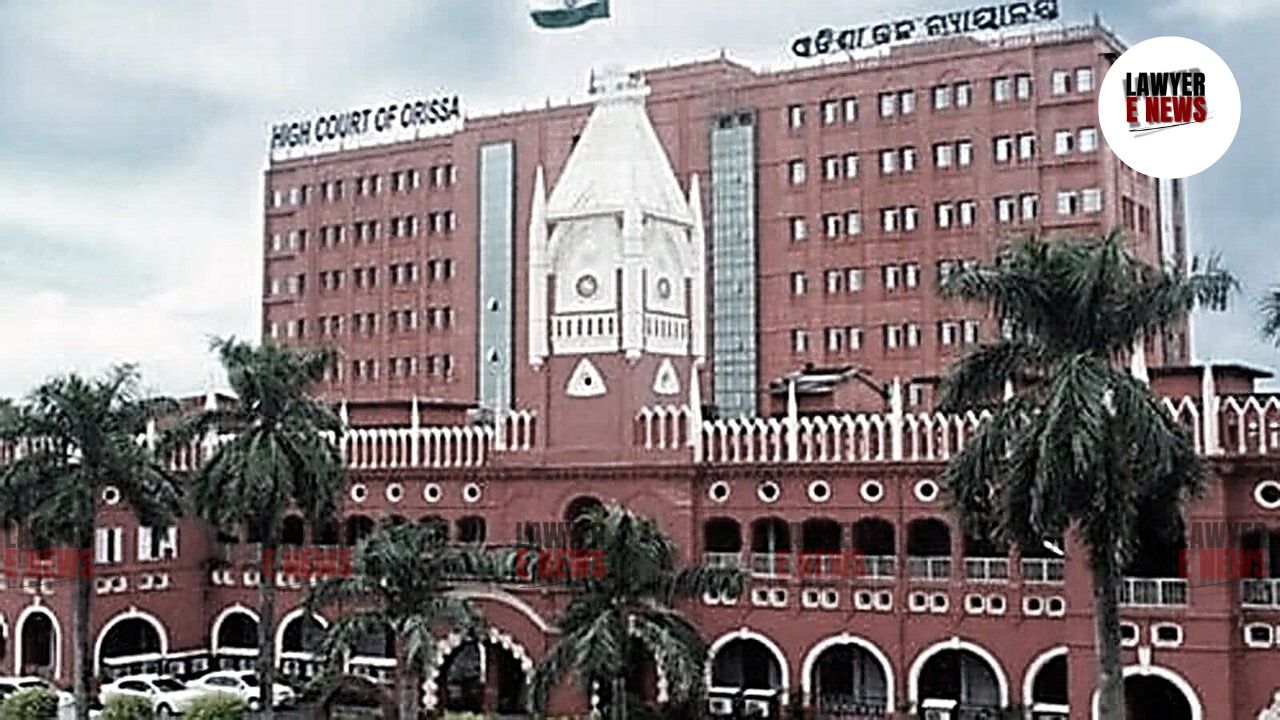
"Previous Enmity Works Both Ways - It Militates Against Normal Human Conduct That Victims Would Allow Real Assailants To Escape By Falsely Implicating Others", Orissa High Court has upheld the conviction and life imprisonment of multiple accused persons for the murder of Prakash Behera and attempted murder of Nunu Pujari, ruling that minor contradictions and embellishments in eyewitness testimony cannot demolish otherwise credible evidence, and that the presence of an injured eyewitness at the scene cannot be doubted unless material contradictions exist.
Background of the Case
The case arose from a deadly assault on September 23, 1997, rooted in eve-teasing incidents. The accused persons led by Rameya Sethi had been habitually eve-teasing Bishnupriya Behera, daughter of the deceased Prakash Behera. When the victim's father started escorting his daughter to college daily, the accused persons threatened the family. On September 21, 1997, they warned that Prakash Behera would be killed if he interfered. The following day, September 22, 1997, Rameya Sethi and his associates came to Dhanamera Sahi, posted red flags in front of the deceased's house declaring that Bishnupriya was "reserved for Rameya Sethi," and when relatives protested, Rameya threw a bomb injuring Suresh Behera while another accused, Ugrasen, assaulted Tutu Behera with a sword. A case was registered and the injured were hospitalized.
On the night of September 23, 1997, around 10 PM, when Prakash Behera, Nunu Pujari, Runa Behera and Sunil Nayak were returning on cycles after delivering food to the injured relatives in hospital, they were ambushed on Corporation Road by the accused persons who had concealed themselves behind cabins. Armed with deadly weapons including kati, bhujali, sword and iron rods, the attackers first struck Nunu Pujari and Prakash Behera. Rameya dealt bhujali blows on Nunu's neck, causing him to fall from the cycle. Kailash Ghadei struck Nunu's back with a sword while Narayan Ghadei hit his right arm. When the deceased protested and pleaded with them to stop, Rameya Sethi caught hold of him, dragged him aside and directed the other accused to kill him. All accused persons then jointly hacked the deceased to death. Nunu Pujari managed to flee and collapsed near a tyre shop where he narrated the incident to the deceased's family.
The trial court convicted the appellants under Sections 148, 302/149 and 307/149 IPC, sentencing them to life imprisonment for murder, rigorous imprisonment for five years for attempted murder, and two years for unlawful assembly. Two accused persons were acquitted while two others died during the pendency of appeal.
Legal Issues and Court's Observations
The Division Bench of Justice Manash Ranjan Pathak and Justice Sashikanta Mishra addressed three principal challenges raised by the appellants: material contradictions in eyewitness testimony, inability of witnesses to see the occurrence given the time and place, and recovery of only one weapon despite allegations of multiple armed assailants.
On the credibility of eyewitness testimony, the defence highlighted several alleged contradictions. PW-4 Nunu Pujari, the injured eyewitness, initially stated that accused Rameya chased him with a bhujali but later mentioned a sword blow on his neck. The Court held this was immaterial since there was no dispute that PW-4 sustained cut injuries. "Whether the weapon of offence was bhujali or sword cannot nullify his statement that he was so attacked," the Court observed.
The defence further argued that since PW-4 fled after the initial assault and collapsed near the tyre company, he could not have witnessed the full occurrence and his evidence should be discarded. The Court rejected this contention, noting that prosecution did not rely solely on PW-4's evidence regarding the assault on the deceased, and that the proof of assault by accused Rameya and others using deadly weapons resulting in multiple injuries was otherwise established.
Addressing various minor discrepancies pointed out by the defence—including that PW-4 did not lodge a report at the first police station he was taken to, contradictions about who accompanied him to the hospital, and his denial of a criminal case against him when PW-7 admitted such a case existed—the Court held that none of these demolished the otherwise reliable version of events. "Witnesses are not expected to recount past incidents with mathematical precision. Some improvements, contradictions, embellishments are bound to occur, which is in line with ordinary human nature," Justice Mishra observed.
The Court relied on the Supreme Court's decision in Balu Sudam Khalde v. State of Maharashtra, which laid down critical principles for appreciating injured eyewitness testimony. Quoting extensively from that judgment, the Court emphasized: "The presence of an injured eyewitness at the time and place of the occurrence cannot be doubted unless there are material contradictions in his deposition. Unless it is otherwise established by the evidence, it must be believed that an injured witness would not allow the real culprits to escape and falsely implicate the accused. The evidence of injured witness has greater evidentiary value and unless compelling reasons exist, their statements are not to be discarded lightly."
The Court further noted that even if there were exaggeration or immaterial embellishments in injured witness testimony, such contradictions should be discarded but not the whole evidence, and that discrepancies which normally creep in due to loss of memory with passage of time should be overlooked.
Regarding the First Information Report, the defence argued that the informant PW-8 named more than seven persons but could not specify the roles of all, resulting in acquittal of two accused, which suggested a distorted version. The Court rejected this argument, holding that FIR is not supposed to be an encyclopaedia but merely sets criminal law into motion. "What the witnesses say in Court only matters. Of course, wide variations from the FIR story and the version of the witnesses can be questioned but such is not the case at hand," the Court held.
On the question of visibility and identification, the defence contended that given the time and spot of occurrence at night, the eyewitnesses could not have seen the incident. The Court examined the spot map (Ext-12) which showed an electric light on a pole about 40 feet from the spot of occurrence. "It cannot be said that the spot was plunged into darkness. That apart, both parties are known to each other. So, it cannot be said that assailants were strangers so as to make them identifiable," the Court observed, noting that all accused were named individually as being part of the group that assaulted the victims.
Addressing the defence argument that only one weapon (bhujali) was recovered despite allegations that several persons were armed with deadly weapons, the Court held this weakened the prosecution case. The Court rejected this contention categorically. "It is trite law that recovery of weapon of offence is not material when there is clear ocular and medical evidence regarding the assault. At best, it would go down as a lapse in investigation, the advantage of which cannot, at least in the present case, be taken by the defence," Justice Mishra stated.
The Court examined the post-mortem report prepared by PW-10, the autopsy surgeon, which documented multiple external and internal injuries on the deceased including a deep chopped wound 16 cm x 7.5 cm on the left knee that had chopped out the medial condyle of the left femur, a cut fracture of the fibula, and other severe injuries. The autopsy surgeon opined that death was due to hemorrhage and shock from injuries caused by moderately heavy sharp cutting weapons, and that the injuries were homicidal and fatal in nature. "We thus find that the medical evidence fully supports the ocular," the Court observed.
On the question of previous enmity being grounds for false implication, the Court turned the defence's own argument against it. The evidence showed clear ill-feeling arising from the eve-teasing incidents, the posting of red flags, bomb-throwing and sword assault on September 22, 1997. "It is well settled that previous enmity works both ways. It militates against normal human conduct that by not naming the actual assailants and naming others, the victims of crime would allow the real assailants to escape. That apart, previous enmity itself provides the motive for the subsequent assault," the Court held.
The Court traced the genesis of the occurrence to the eve-teasing habit of accused Rameya and his associates, with the victim being the daughter of the deceased. "This was the bone of contention between the parties which led to red flags being posted by the accused persons near the house of the deceased with threats being given to his mother of causing his death. This was further followed by hurling of bombs causing injury to the brother and nephew of the deceased. Thus, as on the date of occurrence, there was serious ill-feeling between the two groups," Justice Mishra observed, noting that while motive is not essential in cases of direct evidence, it assumes significance when the defence raises the ground of false implication due to enmity.
The Orissa High Court dismissed both criminal appeals, upholding the conviction and sentence under Sections 148, 302/149 and 307/149 IPC. The Court held that the prosecution had successfully established its case through credible eyewitness testimony corroborated by medical evidence, and that none of the grounds raised by the accused appellants were valid or tenable. "We find the evidence overwhelming and cogent, clearly pointing at the guilt of the accused appellants," the Court held, directing that the bail bonds of the accused appellants be cancelled and that they be taken into custody forthwith to serve the remaining part of their sentence.
Date of Decision: March 12, 2026





