-
by sayum
24 August 2026 3:22 PM







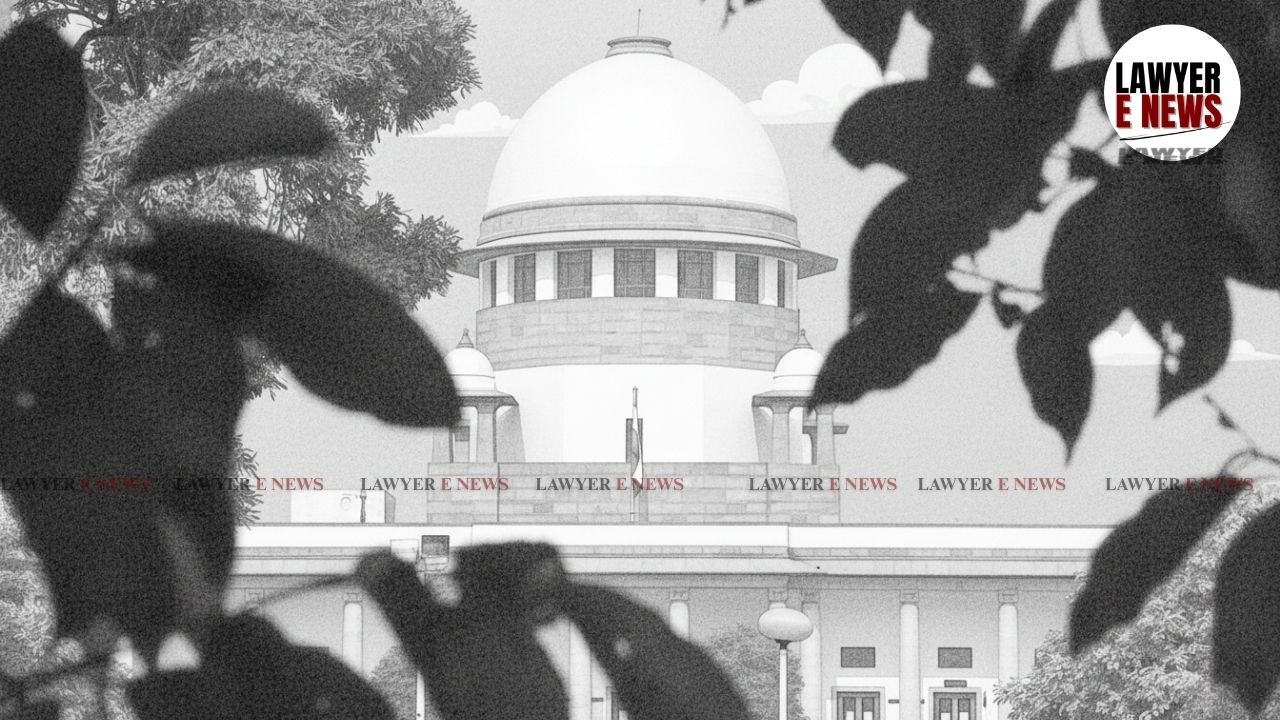
“Judicial Leniency Cannot Undermine the Gravity of Institutional Violence Against Women”, On November 28, 2025, the Supreme Court of India delivered a scathing indictment of judicial indifference to gender-based violence, cancelling the bail granted to a man accused of murdering his wife by poisoning her within four months of marriage. A bench comprising Justices B.V. Nagarathna and R. Mahadevan held that the High Court gravely erred in ignoring the statutory presumption of dowry death under Section 113B of the Indian Evidence Act and disregarded key material evidence while granting bail. In what the Court called a "perverse and legally unsustainable" order, it directed the accused to surrender immediately.
“We cannot afford to ignore that dowry death is not just a personal tragedy; it is a social crime that violates the constitutional right to dignity,” the bench observed, cancelling the bail granted to Raghvendra Singh alias Prince by the Allahabad High Court on January 9, 2025. The Court’s intervention followed an appeal by the father of the deceased, Aastha @ Saarika, who had died under suspicious circumstances after allegedly being poisoned by her husband amid persistent dowry demands. The judgment sends a stern warning that courts must not treat such offences lightly and must apply the statutory presumptions mandated by law when foundational facts are satisfied.
The Tragic Background: A Marriage That Lasted Just Four Months
The case arose out of FIR No. 415 of 2023, registered at Police Station Kotwali, Fatehpur, Uttar Pradesh, following the unnatural death of 24-year-old Aastha @ Saarika on June 5, 2023. She had married the accused on February 22, 2023. Her father alleged that the marriage was solemnised with considerable expenditure—₹22 lakhs in cash, articles worth ₹10 lakhs, and gold jewellery of ₹15 lakhs. Yet, soon after marriage, the husband and his family allegedly began demanding a Fortuner car and subjected the deceased to continuous mental and physical torture.
Aastha had returned to her parental home during the chhathi ritual and narrated the cruelty. Just days before her death, on June 2, she was sent back to her matrimonial home after assurances of safety. However, on the night of June 4, she allegedly made a distress call to her sister, stating that she had been forcibly administered a “foul-smelling substance.” She died shortly after, and the forensic report confirmed aluminium phosphide poisoning. An abrasion was also found on her forearm, suggesting physical restraint.
Legal Questions and the Apex Court’s Observations on Bail and Presumption of Dowry Death
At the core of the appeal was whether the High Court’s decision to grant bail was legally sustainable in light of the statutory presumption under Section 113B of the Indian Evidence Act and the prima facie satisfaction of the conditions under Section 304B IPC. The Court noted emphatically:
“Once foundational facts are established—death within seven years of marriage, unnatural circumstances, and cruelty soon before death—the presumption of dowry death under Section 113B becomes mandatory.”
The bench chastised the High Court for treating the matter like an ordinary bail application and failing to apply the law settled in a catena of judgments, including Kans Raj v. State of Punjab, Baijnath v. State of M.P., and Puran v. Rambilas. The Court underscored that the presumption is not discretionary and must be applied rigorously in appropriate cases.
It noted:
“The marriage took place on 22.02.2023, and the death occurred on 05.06.2023—well within four months. The consistent dying declarations, corroborated by the family, the FSL report, and post-mortem findings establish a prima facie case under Section 304B. Yet, the High Court overlooked these foundational elements entirely.”
Findings on Maintainability and Cancellation Jurisprudence
The Court also addressed and upheld the maintainability of the father’s appeal against the grant of bail. Relying on precedents like R. Rathinam v. State and Brij Nandan Jaiswal v. Munna Jaiswal, the Court confirmed the locus standi of victims’ relatives in seeking cancellation of bail under Section 439(2) CrPC.
On the distinction between annulment and cancellation of bail, the Court reiterated that:
“Annulment is permissible where a bail order suffers from legal infirmity or ignores material evidence—misconduct post bail is not a prerequisite.”
It further clarified that even if no subsequent misuse of liberty is shown, a bail order can be reversed if it is “perverse, arbitrary, or passed in violation of settled legal principles.”
The Court held:
“The High Court’s decision is flawed as it failed to consider the statutory presumption under Section 113B and overlooked consistent evidence of cruelty and dowry harassment. Such an approach undermines the legislative intent of deterrence against dowry deaths.”
Emphasis on the Societal Impact of Dowry Deaths
In a strongly worded denunciation of the dowry system, the Court stated:
“Marriage is no longer a sacred union but is often reduced to a commercial transaction, fuelled by greed and social status. This commodification of women must end, and the judiciary must not be passive in confronting such systemic oppression.”
The Court added:
“Dowry deaths are not isolated family tragedies—they are institutionalised acts of violence against women that degrade human dignity and corrode societal values. The judiciary must respond with firmness, not misplaced sympathy.”
Bail Cancelled, Accused Directed to Surrender
Upholding the complainant’s plea, the Supreme Court set aside the High Court’s order granting bail, observing that a prima facie case under Section 304B IPC was made out, and that the statutory presumption under Section 113B Evidence Act had not been rebutted. It ordered that:
“Respondent No. 1 shall surrender forthwith. If he fails to do so, the authorities shall take him into custody without delay.”
The Court, however, clarified that its findings were confined to the bail cancellation and the trial should proceed on its own merits.
This ruling reaffirms the judiciary's critical role in enforcing legal safeguards for women, especially in cases where societal norms are weaponised to justify violence and coercion. The judgment stands as a reminder that liberty must never become a shield for impunity, especially when it cloaks the crime of a young bride’s death.
Date of Decision: November 28, 2025